Summary: What does sequestration mean? What organizations are affected by the sequestration?
What does it mean?
Summary: What does sequestration mean? What organizations are affected by the sequestration?
What does it mean?

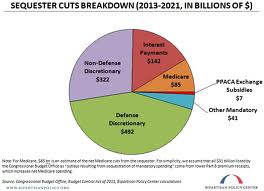
The official definition in terms of the budget is a US legal procedure in which automatic spending cuts are triggered. In a nutshell, effective March 1, 2013, the government spending cuts go into effect in an effort to try to reduce the federal deficit, which now is over $16 trillion. For 2013, the amount of spending cuts is estimated to be about $85 million, with additional cuts through 2021 for a total of about $1.2 trillion. These cuts are split evenly between defense and non-defense.
Which government funding programs are included in the “across-the-board” sequestration?
Here are the programs that are directly or indirectly affected.
Medicare reimbursement is being cut by 2% effective April 2013. This is one of the largest cuts which will have the most effect on the largest number of people/groups. From the provider side: many providers, including hospitals and physician practices, are already extremely tight with their budgets and operating just above their break-even points. With a 2% reduction in Medicare reimbursement, many organizations and practices will have to basically rob Peter to pay Paul, as the saying goes. Changes to strategic planning will be a necessity. Organizations will struggle to try to make up for the 2% reduction in Medicare reimbursement. Layoffs may be on the rise, spending for supplies will be reduced, services/departments will continue to be cut, employee benefits will be decreased, hiring freezes will be put in place, expansions may be halted, mergers and acquisitions will increase, and more organizations and practices will close their doors.
From a Medicare beneficiary perspective – There is not supposed to be any effect on Medicare beneficiaries. That being said, I believe they will be indirectly affected. Providers are going to cut back on the number of Medicare patients they will see or possibly refuse to see Medicare patients altogether. It might become more difficult to setup appointments and longer wait times in the physician offices are almost imminent. This will cause an accessibility issue, which is one of the goals of the Affordable Care Act. Will care actually be more accessible and affordable?
From a non-Medicare beneficiary perspective – This could be one way for providers to recoup a bit of the funds lost through Medicare cutbacks. We may see a rise in the cost of services for non-Medicare beneficiaries. This plays right into the hands of the healthcare exchanges. Premiums will most certainly rise when the exchanges become effective in 2014. A health insurance exchange is basically a marketplace for individuals to purchase insurance.
Reduce Medicare Part D Prescription Drug Account by $691 million.
US Food and Drug Administration (FDA) – This will substantially slow down the process for drug approval in particular which may also slow down the medical break- through process for discovering and making available treatments for many of our major diseases.
National Institutes of Health (NIH) medical research funding/grants – the sequestration includes a 5% reduction in budget for NIH which will reduce clinical research, reduce federally funded research projects, reduce research staff, and cause delays in clinical research and discovery. This one goes hand in hand with the US Food and Drug Administration spending cut.
Medical schools and teaching hospitals – Initiating spending cuts for medical schools will reduce the desire/demand for attending medical school which will of course add to the critical physician shortage which we already face. That coupled with cutbacks to funding for teaching hospitals will reduce the number of residency and training programs available. Both of these will cause a delay in medical progress along with the spending cuts issued for the FDA and NIH.
Please check back soon for Part 2 of 2.