Healthcare has changed from money is no object to money is THE object. With this in mind, Siemens Healthcare rolled out new cost-conscious systems in computed tomography, magnetic resonance imaging, ultrasound as well as an entry-level version of the imaging software called syngo.via to a warm reception at RSNA 2012.
Healthcare has changed from money is no object to money is THE object. With this in mind, Siemens Healthcare rolled out new cost-conscious systems in computed tomography, magnetic resonance imaging, ultrasound as well as an entry-level version of the imaging software called syngo.via to a warm reception at RSNA 2012.
But the thinking behind “accessible healthcare” goes deeper than dollars and deutsche marks, as explained by Norbert Gaus, CEO for Clinical Products at Siemens. “About two-thirds of the people in the world today, more than four billion, do not have access to quality health care,” Gaus told me. “These countries have programs to bring better health care to their people and this is important. So being able to provide products that fit these needs, that satisfy the price performance requirements and ease of use requirements and that still offer good and solid image quality as well as a reasonable breadth of applications is very important for the market and to improve accessibility.”
“If you look at the more developed countries, we know there is huge pressure to reduce health care costs, and people are living longer, so costs will rise again,” he continued. “So the countries have to react. This drives the need for efficiency of workflow, to see more patients in the same time. So these two trends drive innovations, not only in the high end, but also in the mid-range and at the entry level.”
At RSNA 10 years ago, a lot of new high-end equipment was standard. Today, said Gaus, you see new innovative equipment in the mid-range that drives patient throughput and also new entry-level systems. There is innovation at every level. “The market needs it and the healthcare system needs it,” he said.
Siemens designs these products at conception, not retroactively. “When you define the product and its features, when you define the architecture, you have to define the product as entry level or mid range,” he said. “Of course, innovations in high-end systems may eventually trickle down to less expensive equipment at a lower cost. How do I design a system that can do a lot, but not too much, that still provides good image quality but is not too expensive? So that the people who need healthcare and don’t have it can afford to buy it.”
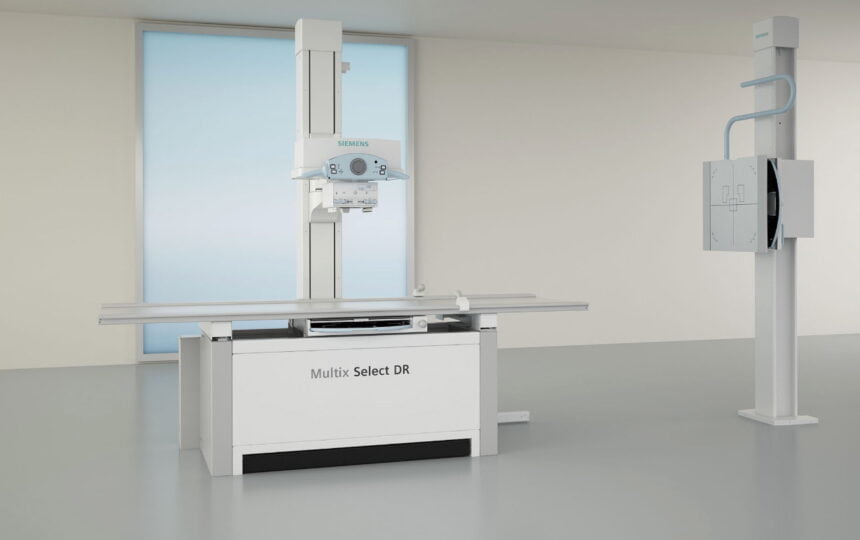
One example of such a system is near and dear to Gaus: the Multix Select DR, a digital radiography system that does X-rays. Designed, manufactured and realized in Siemens’ Chinese factory and engineering sites.
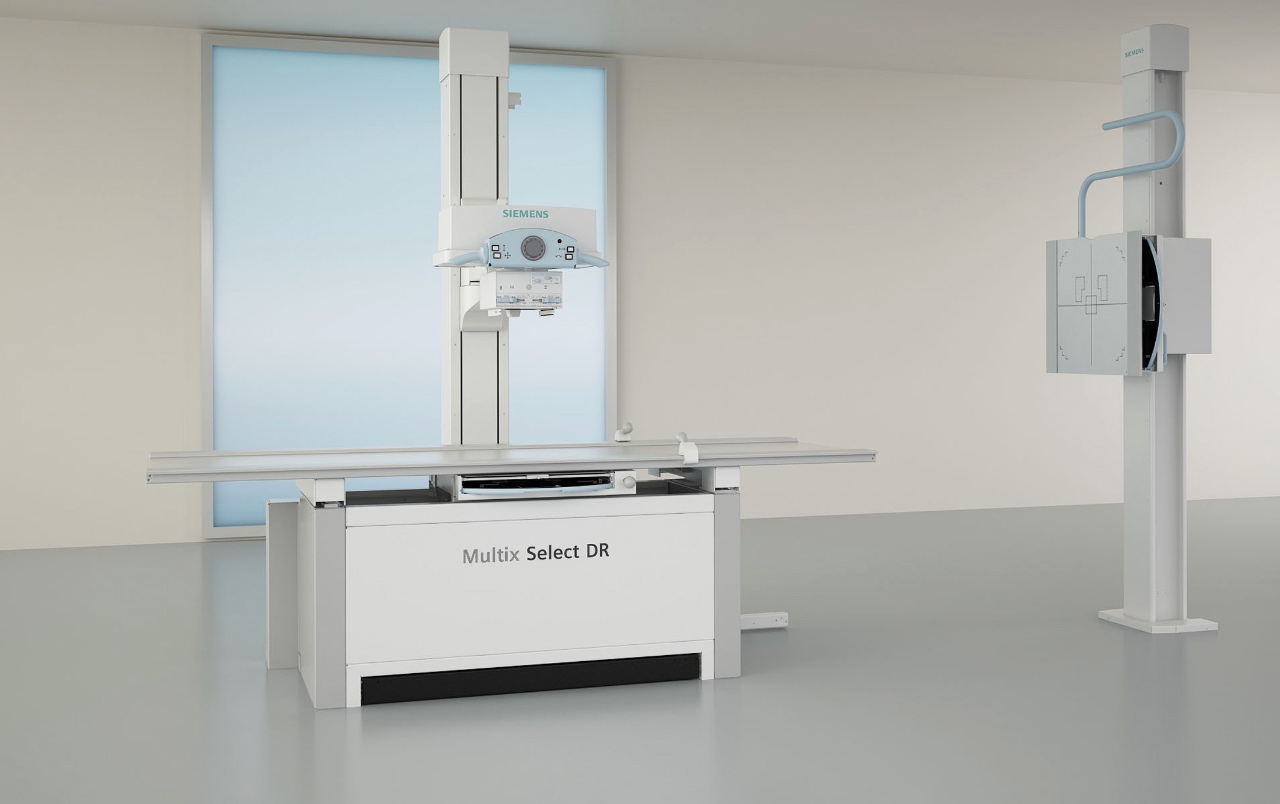
Figure 1: The Multix Select DR
“The reception is very good,” he said about the accessible healthcare program. “It’s not that I only talk to people here about high-end equipment; I’m also hearing from customers in rural Russia or rural China or for private practitioners in Germany. The first customer for the Multix Select DR made in China was a German customer!”
If you want to be an innovation leader today, you have to innovate in all three segments,” Gaus said. “The days of just the high-end are gone. And this is good, I think.”