We use cookies, including third-party cookies from Google to serve personalized ads through AdSense, to operate this site and understand how it is used. By continuing to browse, you accept this use. See our Privacy Policy and Terms of Use for details, including how to opt out of personalized advertising.
Accept
Health Works CollectiveHealth Works CollectiveHealth Works Collective
  • Health
    • Mental Health
  • Policy and Law
    • Global Healthcare
    • Medical Ethics
  • Medical Innovations
  • News
  • Wellness
  • Tech
Search
© 2023 HealthWorks Collective. All Rights Reserved.
Reading: Why Aging in Place Is Becoming a Cornerstone of Modern Healthcare
Share
Notification Show More
Font ResizerAa
Health Works CollectiveHealth Works Collective
Font ResizerAa
Search
Follow US
  • About
  • Contact
  • Privacy
© 2023 HealthWorks Collective. All Rights Reserved.
Health Works Collective > Policy & Law > Global Healthcare > Why Aging in Place Is Becoming a Cornerstone of Modern Healthcare
Global HealthcareSenior Care

Why Aging in Place Is Becoming a Cornerstone of Modern Healthcare

Dignity, independence, and lower costs: The powerful case for making aging in place a healthcare priority.

Aises Jammy
Aises Jammy
Share
4 Min Read
aging in modern healthcare
Licensed AI Generated Image from Google AI labs
SHARE

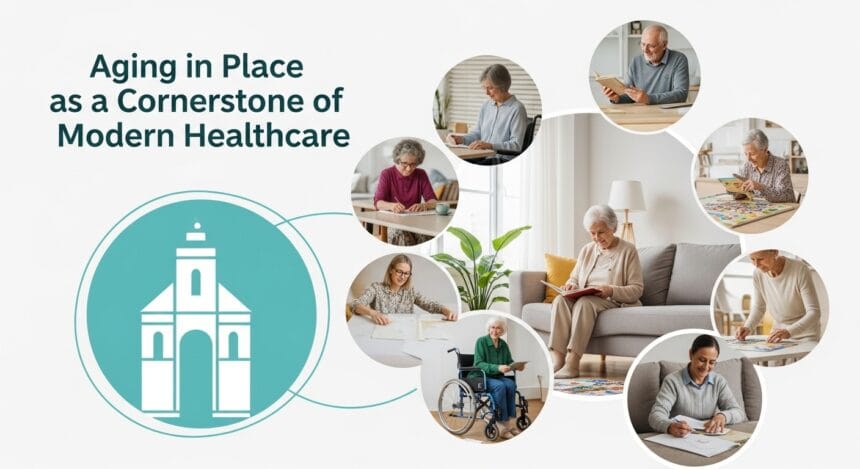
Aging in place means that you become older in your own home rather than in a hospital or nursing home. Many more are now considering this, and the healthcare system is beginning to take on this option more seriously than ever. This is changing because aging in place allows seniors to live in comfort, dignity and independence, as well as reducing the burden of health care. 

Contents
  • Comfort, Safety, and Familiar Surroundings 
  • Lower Costs for Families and Healthcare Systems 
  • Technology Is Making Aging in Place Easier 
  • Better Quality of Life for Seniors 
    • The Future of Healthcare Starts at Home 

As the world’s population matures, modern healthcare does not now only include hospitalization for illness. Now it is about prevention, daily support and long-term well-being. Aging in place fits right into this new paradigm. 

Comfort, Safety, and Familiar Surroundings 

Comfort is one of the main reasons aging in place is becoming more popular. Seniors feel safer and calmer at home. Even familiar rooms, routines, and neighbors can help to avoid stress and confusion, especially for older adults who may have difficulty remembering or moving around. 

That is why home care for seniors is such an important part of modern healthcare. In lieu of moving into a hospital or care home, older adults receive support where they live. Caregivers can help with daily tasks, medication reminders, basic health screenings and personal care, all while leaving seniors in the place they love and know. 

More Read

language barriers in healthcare
Language Barriers Are Most Underestimated Risk in Healthcare
Effective Ways to Manage Your Pain and Enjoy Your Life
Mobile Health Around the Globe: IRC Uses Mobile to Track Mortality in Africa
Strong Need for Vaccination in Low and Middle Income Countries
Mobile Health Around the Globe: Bangladesh Maternal Mobile Health Service Aims to Reach 2 Million Moms

Wellness and wellness are now more important to health in the hands of health professionals. Seniors who feel at home and are well cared for are likely to be active, healthy and independent longer. 

Lower Costs for Families and Healthcare Systems 

Long-term care and hospital stays are costly. Aging in place can help address these costs. Seniors receiving home care have fewer emergency calls and less hospital stays. 

This means less overcrowding and more resource use for healthcare systems. This means more affordable services to families. Simple home-based care is generally less costly than full time institutional care but provides good support. 

This balance of cost makes aging in place a smart move for healthcare. 

Technology Is Making Aging in Place Easier 

A third reason why aging in place is growing is modern technology. Simple devices like health apps, wearables, and remote monitoring devices allow doctors and caregivers to monitor symptoms remotely. 

These devices can check heart rate, movement, sleep and medication use. If something seems wrong, help can be sent very quickly. This enables families to avoid risks and remain secure. 

Technology allows seniors to live independently and remain connected to health-care providers. 

Better Quality of Life for Seniors 

Aging in place promotes independence. Seniors are free to make their own decisions, to schedule themselves and to be connected to the local community. This sense of control increases confidence and happiness. 

Engaging, socially and physically active can help to control loneliness and depression. Seniors are better able to function and perform when they feel respected and supported. 

The modern healthcare system is realizing that quality of life is just as important as the results of medical treatment. 

The Future of Healthcare Starts at Home 

As healthcare changes, aging in place will become even more important. It allows for prevention, reduces costs, and improves seniors‘ lives. 

Modern health care can better serve older adults by providing home-based, rather than hospital-based, care. We all deserve a healthier future, and it’s called age in place. 

TAGGED:senior care
Share This Article
Facebook Copy Link Print
Share

Stay Connected

1.5KFollowersLike
4.5KFollowersFollow
2.8KFollowersPin
136KSubscribersSubscribe

Latest News

Workers Comp Claim Denied – Now What?  -- AI-generated illustration
Workers Comp Claim Denied – Now What? 
Policy & Law
October 9, 2026
The Case for Proactive Nutrient Support and Where IV Therapy Fits In -- AI-generated illustration
The Case for Proactive Nutrient Support and Where IV Therapy Fits In
Health Therapies
October 5, 2026
Biofeedback Technology in Addiction Treatment: What the Evidence Shows So Far -- AI-generated illustration
Biofeedback Technology in Addiction Treatment: What the Evidence Shows So Far
Addiction Addiction Recovery
September 28, 2026
Charity Care Is Written Into Hospital Policy. It Rarely Makes It Onto the Bill. -- AI-generated illustration
Charity Care Is Written Into Hospital Policy. It Rarely Makes It Onto the Bill.
Business Hospital Administration
September 25, 2026

You Might also Like

eHealthGlobal HealthcareHome HealthMobile Health

Can An Medication Reminder App Boost Adherence?

April 2, 2019
healthcare claims
Global HealthcarePolicy & Law

The Role of Communication in Resolving Complex Workers’ Compensation Claims in Healthcare Settings

September 22, 2024
changes brought on by blockchain in healthcare
Global HealthcarePolicy & LawTechnology

Advantages Of Blockchain in The Healthcare Industry

April 21, 2022
healthcare jobs without a bachelors degree
CareerGlobal Healthcare

6 Amazing Healthcare Careers That Don’t Require A Bachelor’s Degree

January 8, 2021
Subscribe
Subscribe to our newsletter to get our newest articles instantly!
Follow US
© 2008-2026 HealthWorks Collective. All Rights Reserved.
  • About
  • Contact
  • Privacy
Welcome Back!

Sign in to your account

Username or Email Address
Password

Lost your password?