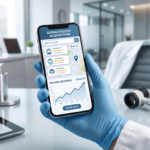
Bill Crounse, MD, Senior Director, Worldwide Health, Worldwide Public Sector Microsoft Corporation shares his insights and describes four leading trends and technologies that will transform health and health care in 2012 and beyond.
These leading technologies include: cloud computing, health gaming, telehealth services and remote monitoring/mobile health.
Telehealth, Remote Monitoring, Mobile Health
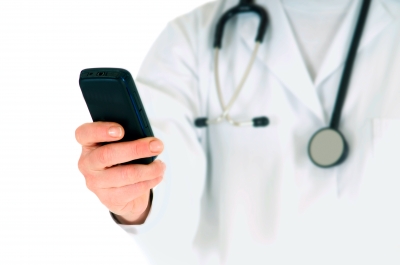
I’d like to focus on telehealth and remote monitoring/mobile health since I feel telehealth is the nucleus of patient care, and telehealth can help reduce health care costs, and improve quality health care for patients. Telehealth technology combined mobile technology such as smartphones will make monitoring patients conditions easier and more efficient, and “cheaper and more scalable.”
Patient Quality Health Care
Through the Accountable Care Organizational Model (ACO), the core concept is to improve the quality of care for individuals with the notion to reduce health care spending.
According to the CDC, chronic diseases cause 7 in 10 deaths each year in the United States, about 133 million Americans—nearly 1 in 2 adults—live with at least one chronic illness, and more than 75% of health care costs are due to chronic conditions. In 2009, the five leading causes of death were heart disease, cancer, chronic lower respiratory diseases, stroke, and accidents.
By moving points of care into the community, individuals can maintain their independence with continuous support supplied by remote patient monitoring. By transmitting personal biometics via advanced data services, patients have the opportunity to have their chronic condition managed continuously by health professionals.
With constant monitoring it is possible to identify high risk patients quickly and provide them with evidenced –based information they need to quickly resolve their condition. Instead of identifying health care risk at the critical point, telehealth can identify a situation before it progresses to the critical stage requiring potential hospitalization.
To help decrease health care costs, by identifying a potential risk early on, intervention can occur before a critical situation arises. Not only does this assist with decreasing costs, more importantly it allows individuals to be managed at home.
I recently had a casual conversation with a physician about this topic on remote patient monitoring and mobile devices, health care costs and hospital re-admissions, etc., and he said that he would love to be able to implement remote monitoring for his patients so he can readily monitor them, but he willingly admitted that he really does not know anything about it.
I agree with Bill Crounse, MD:
“Remote monitoring with advanced sensor technologies coupled with mobile devices and services as outlined above, will make it possible to care for more patients in less acute settings, including the home, and to do so at scale with fewer staff. I am particularly impressed by companies that are working with regulators (such as the FDA) to develop approved medical devices and secure gateways that facilitate clinical information exchanges.”
Stakeholders
As I wrote in my article published in HIMSS, this technology already exists, and it does not need to be developed. The problem is that this technology has been slow to adopt, but more than that, the forward thinking stakeholders involved in the deployment of this technology need the push and pull of not only industry insiders but the biggest stakeholders of all, the patient.
Individuals may have a huge role and may be able to help move the “product to market.”
The health care industry needs to not only understand the value of telehealth, but it needs to implement it.
Your turn
We would love for you to share your insightful thoughts and comments. Are you aware of the type of telehealth platforms which are available to help transform health care? What suggestions do you have to help take telehealth products to market?
As always, thank you for your time.
Connect with me | Stay in touch
Follow Barbara on Twitter
Visit Barbara on Facebook
Like Healthin30
Connect with Barbara on Linkedin
Other useful resources
Healthin30 – HealthIT
Telehealth the Nucleus of Patient Care
Patient-Centric Care at the Hub of Telehealth
Healthin30 – Telehealth
HIMSS Article by Barbara Ficarra, RN, BSN, MPA
Chronic Disease Management Through Mobile Health-Guest Post on KevinMD
Patient-Centric Care Delivered with Patient-Friendly Apps
Telehealth Tapping into Social Influence
Bill Crounse, MD HealthBlog
Bill Crounse, MD HealthTechToday
4 leading trends and technologies that will transform health and healthcare in 2012 and beyond