

Alcohol withdrawal can begin the same day a person cuts back. With a long-acting benzodiazepine, several days can pass before symptoms appear. After stopping methamphetamine, someone may sleep much of the day and still find sleep difficult weeks later. To understand a withdrawal timeline, start with what the person took, when the amount changed and how they feel now.
- Alcohol withdrawal can worsen several days after the last drink
- Benzodiazepine withdrawal depends on how long the medicine acts
- Opioid withdrawal often lasts beyond the first few days
- After stimulants, sleep and mood can change at different speeds
- Withdrawal timelines at a glance
- What to ask when arranging withdrawal care
- When to call for medical advice even if you are unsure
- Frequently Asked Questions
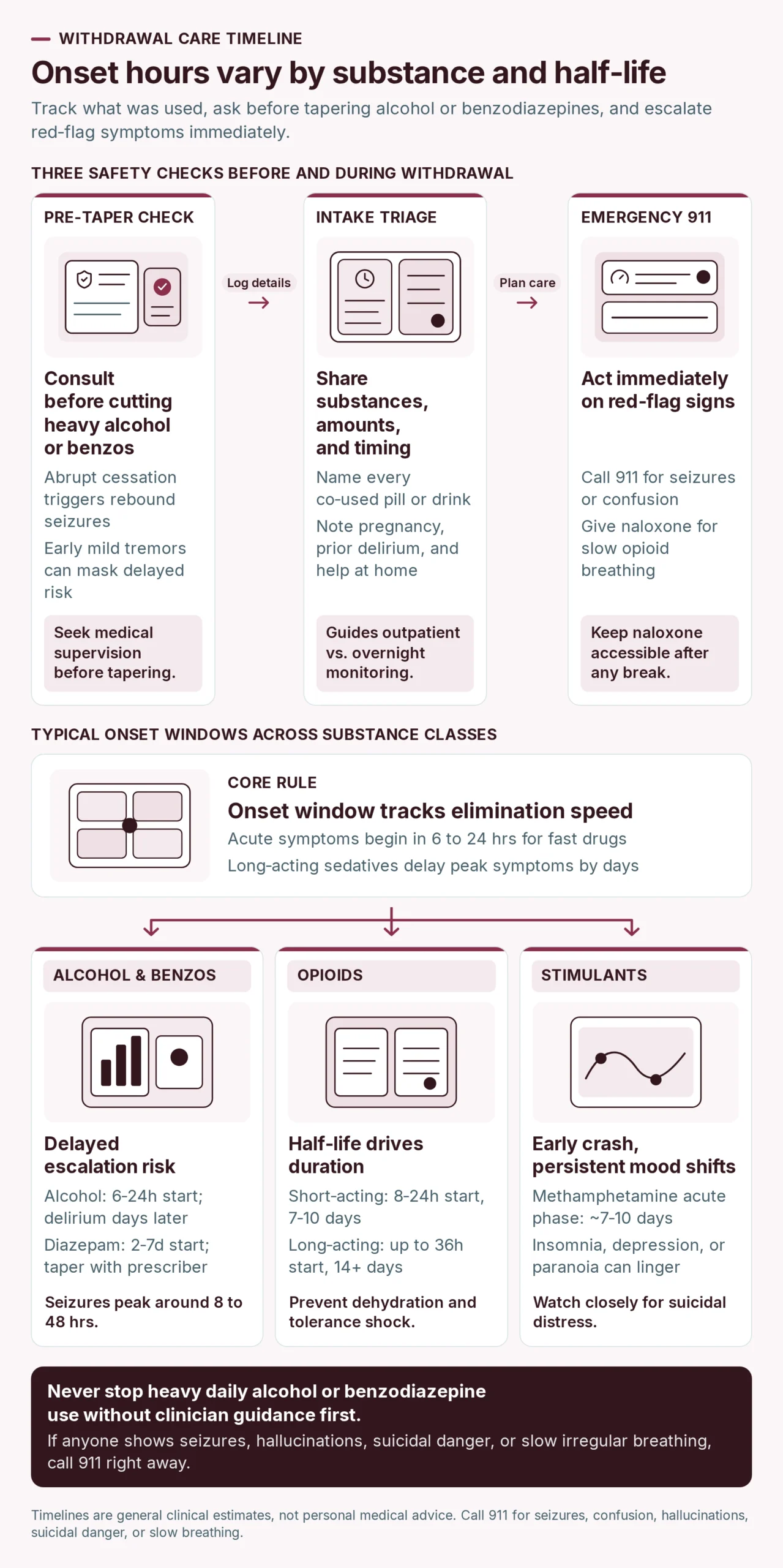
A withdrawal timeline depends on the substance and when intake changed. Alcohol and short-acting opioid symptoms often begin within 6 to 24 hours, whereas long-acting benzodiazepine symptoms may take two to seven days to appear. Anyone who drinks heavily and regularly or takes a prescribed benzodiazepine regularly needs medical guidance before cutting back, because calm early hours never rule out severe later illness.
Key takeaways
- Alcohol seizures peak around 8 to 48 hours and delirium can follow days later, while diazepam symptoms may wait two to seven days.
- Never stop alcohol or daily benzodiazepines abruptly without medical supervision; slow clinician-guided tapers prevent dangerous rebound agitation and seizures.
- Opioid withdrawal length reflects drug half-life, running roughly 7 to 10 days for short-acting opioids and 14 days or longer for long-acting formulations.
- Stimulant fatigue and sleep disruption ease after the first 7 to 10 days for many people, yet mood symptoms can persist for weeks and require prompt assessment if suicidal thoughts appear.
- Keeping naloxone accessible matters after any break from opioids because lowered tolerance raises fatal overdose risk if someone returns to a prior dose.
If you drink heavily and regularly, or take a benzodiazepine regularly, get medical advice before stopping or sharply reducing your intake. If you have already cut back and symptoms are starting, seek medical advice promptly. A seizure, severe confusion or hallucinations during withdrawal needs emergency care. Call 911 in the United States. MedlinePlus lists the emergency signs of alcohol withdrawal.
Alcohol withdrawal can worsen several days after the last drink
Alcohol withdrawal frequently deepens between 48 and 72 hours after cessation even when early trembling looks mild. Shaky hands, sweating, nausea and anxiety commonly begin 6 to 24 hours after someone stops drinking or substantially cuts back, and symptoms can appear while alcohol remains in the bloodstream. If you are calling for help, mention both the time of your last drink and when you first started drinking less than usual, notes the American Society of Addiction Medicine guideline on alcohol withdrawal.
Alcohol withdrawal is a serious condition that may quickly become life-threatening.
Frank D. Brodkey, MD, FCCM: January 1, 2025, medlineplus.govTwo complications follow different clocks. Withdrawal seizures most often occur within about 8 to 48 hours. Withdrawal delirium, which can leave a person unable to follow a conversation or recognise where they are, can develop several days after the last drink. Someone who seems only mildly shaky on the first morning can still become seriously ill. Tell the clinician immediately about any seizure or episode of delirium during a previous attempt to stop.
Benzodiazepine withdrawal depends on how long the medicine acts
Benzodiazepine withdrawal shifts according to each medication’s half-life, ranging from one day for short-acting pills to nearly a week for long-acting sedatives. With a shorter-acting medicine such as alprazolam, withdrawal can begin within one or two days of the last dose. With a longer-acting medicine such as diazepam, the typical onset is two to seven days. Those estimates describe what can happen after stopping. Feeling well the morning after a missed dose tells you little about how you will feel later in the week, per World Health Organization guidance on withdrawal timing.
Physical dependence can develop even when someone takes each dose as prescribed. Stopping suddenly can cause seizures. If you want to come off the medicine, ask your prescriber how to reduce it gradually and whom to contact between visits. Tell them if anxiety or sleeplessness returns after a dose change. The timing helps them assess whether to slow or pause the taper, as outlined in the Joint clinical guideline on benzodiazepine tapering.
Opioid withdrawal often lasts beyond the first few days
Opioid withdrawal length commonly spans one to two weeks or longer depending on whether a short-acting or long-acting drug was used. Yawning, watery eyes and a runny nose can be early signs. Muscle aches, abdominal cramps, vomiting and diarrhea may follow. For short-acting opioids, symptoms commonly start 8 to 24 hours after the last use and last about 7 to 10 days. With long-acting opioids, onset can take up to about 36 hours and symptoms may last 14 days or longer. Seek care promptly if vomiting or diarrhea makes it hard to keep fluids down. See SAMHSA’s opioid withdrawal timeline.
After time away from opioids, tolerance falls. Returning to a previously familiar amount can cause a fatal overdose. Ask for take-home naloxone and show someone close to you where it is. If a person is hard to wake and breathing slowly or irregularly after possible opioid use, give naloxone if available, call 911 and stay with them until help arrives. Review CDC guidance on using naloxone.
More Read

After stimulants, sleep and mood can change at different speeds
Stimulant withdrawal shifts quickly from heavy daytime exhaustion to stubborn insomnia and lingering low mood. After stopping cocaine or methamphetamine, someone may be exhausted, hungry or low in mood. Researchers who followed 21 inpatients through methamphetamine withdrawal found that symptoms were most intense early on and eased over roughly 7 to 10 days. Milder symptoms continued for at least another two weeks in this small group. Read McGregor and colleagues’ study of methamphetamine withdrawal.
Sleep can change direction. Someone who slept for much of the first day may later struggle to fall asleep. Depression, anxiety or paranoia can persist for weeks or months and deserve assessment. Seek urgent help for suicidal thoughts. If you are in immediate danger or cannot keep yourself safe, call 911 or go to an emergency department. See the ASAM and AAAP clinical guideline on stimulant use disorder.
Withdrawal timelines at a glance
Acute symptoms usually begin within hours for alcohol and short-acting opioids, whereas long-acting benzodiazepines can take days before first signs emerge. Comparing substance classes side by side helps patients and caregivers watch for late complications instead of relying only on how someone feels on morning one.
| Substance | Onset of symptoms | Typical duration | Primary safety focus |
|---|---|---|---|
| Alcohol | 6 to 24 hours | Several days | Seizures (8 to 48 hours) and delayed delirium |
| Benzodiazepines | 1 to 7 days | Not established by start times | Seizure risk from abrupt cessation; taper slowly |
| Short-acting opioids | 8 to 24 hours | 7 to 10 days | Dehydration and post-break overdose risk |
| Long-acting opioids | Up to 36 hours | 14 days or longer | Extended fluid loss and tolerance drop |
| Methamphetamine | Early after stopping | Roughly 7 to 10 days, with milder symptoms for at least two more weeks | Mood crashes, paranoia, and suicidal safety |
What to ask when arranging withdrawal care
Arranging safe withdrawal care starts with sharing a complete substance and medication list, past complication history, and home supervision limits with the admitting clinician. Mention pregnancy, any past withdrawal complications and whether someone can stay with you. These details help a clinician judge whether you can safely attend scheduled visits or need overnight monitoring.
Ask which facility will actually provide your care. In Oregon, for example, Oregon Trail Recovery’s detox program operates through its partner, Pacific Crest Trail Detox. Ask the admitting team who will assess you, what happens if symptoms worsen overnight and who will see you after discharge.
That last appointment matters. In a randomized trial involving 329 emergency department patients with opioid dependence, 78% of those offered buprenorphine in the emergency department and follow-up in primary care were engaged in addiction treatment 30 days later. Among patients who received a referral alone, 37% were in treatment. If you are seeking help for opioid use disorder, ask before you leave whether medication can start during the visit and when you can receive the next dose. See D’Onofrio and colleagues’ randomized clinical trial in JAMA.
When to call for medical advice even if you are unsure
Calling a clinician early is safer than guessing from symptom charts once you have reduced your intake. If you have cut back and feel unwell, reach out for medical guidance instead of waiting to confirm which timeline matches your case. Describe the exact change plainly, such as saying “I stopped drinking yesterday morning, and now my hands are trembling.” Anyone taking daily benzodiazepines or drinking heavily every day needs that conversation with a doctor before tapering.
Frequently Asked Questions
When do alcohol withdrawal symptoms start and when can severe complications appear?
Alcohol withdrawal symptoms typically emerge 6 to 24 hours after cutting back, sometimes while alcohol is still measurable in the bloodstream, yet severe complications peak later. Seizure risk rises roughly between hours 8 and 48, and delirium accompanied by deep disorientation can develop several days after stopping.
Why is stopping benzodiazepines suddenly dangerous?
Sudden benzodiazepine cessation is dangerous because physical dependence develops even under therapeutic prescriptions, leaving the nervous system exposed to rebound seizures without warning. Clinicians plan gradual dose reductions and step back the taper schedule if severe insomnia or anxiety flares after an adjustment.
How long does opioid withdrawal typically last?
Acute discomfort from short-acting opioids runs roughly 7 to 10 days after beginning within 8 to 24 hours of the last dose. Longer-acting opioid drugs delay onset up to about 36 hours and frequently stretch recovery to 14 days or more, so keeping fluids up and having naloxone nearby remains critical.
When does withdrawal require emergency medical care?
Dial 911 or visit an emergency room immediately for any seizure, hallucinations, severe confusion, suicidal ideation, or slow and irregular breathing where someone cannot be woken safely after suspected opioid exposure.