We use cookies, including third-party cookies from Google to serve personalized ads through AdSense, to operate this site and understand how it is used. By continuing to browse, you accept this use. See our Privacy Policy and Terms of Use for details, including how to opt out of personalized advertising.
Accept
Health Works CollectiveHealth Works CollectiveHealth Works Collective
  • Health
    • Mental Health
  • Policy and Law
    • Global Healthcare
    • Medical Ethics
  • Medical Innovations
  • News
  • Wellness
  • Tech
Search
© 2023 HealthWorks Collective. All Rights Reserved.
Reading: 2013: The Year of Healthcare Emancipation?
Share
Notification Show More
Font ResizerAa
Health Works CollectiveHealth Works Collective
Font ResizerAa
Search
Follow US
  • About
  • Contact
  • Privacy
© 2023 HealthWorks Collective. All Rights Reserved.
Health Works Collective > eHealth > 2013: The Year of Healthcare Emancipation?
eHealth

2013: The Year of Healthcare Emancipation?

MightyCaseyMedia
MightyCaseyMedia
Share
4 Min Read
Image
SHARE

 Image

Hang on to your hats – this one might wade into controversy.

 Image

Hang on to your hats – this one might wade into controversy.

More Read

How SlideShare Can Increase Your Hospital’s Credibility
A Challenge of Ethics on Facebook
HealthCare Social Media Review Edition #39 – Patient Engagement
A Summary of the HIPAA Privacy Rule
Top 10 iPhone Apps that Doctors and Medical Students Can Rely On

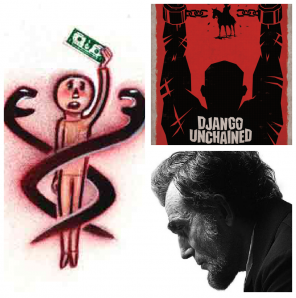
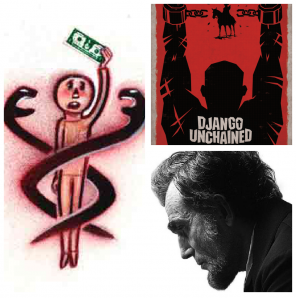
As I write this (3:30pm EST on January 1, 2013), I’m listening to a conversation on NPR about the Emancipation Proclamation, which was signed into law by Abraham Lincoln 150 years ago today. I’m also reflecting on a couple of movies I’ve seen in the last 45 days: Lincoln (over Thanksgiving weekend) and Django Unchained(on Christmas Day).

Is it time for an emancipation proclamation for patients? Or should we just saddle up and have a shootout at the plantation … um, hospital instead?

Too many healthcare transactions are still conducted over the patient’s supine form. Doctors, hospitals, and other entities in the “provider” column horse-trade with health insurers, including Medicare, in the “payer” column. That means that the patient winds up shackled. No say in how much something costs, no real voice (yet) in what happens next, little interest on the part of the two trading entities in clueing us in to what’s happening.

Some of my connections in the participatory medicine/e-patients movement use a driver-rider metaphor for transforming healthcare, with the patient moving from passenger to driver in healthcare. It’s a less controversial/confrontational metaphor than referring to patients as chattel on the medical plantation. However, I’m sticking with that plantation metaphor for the moment, because too many in the provider and payer camps are still viewing patients as meat puppets, not as full participants.

Does healthcare need an emancipation proclamation? Yes. Here’s where the metaphor shifts: let’s not wait for someone to proclaim us (patients) emancipated. Let’s break our own chains, and be our own liberators.

Let’s demand that the providers and the payers give us an equal seat at the table, and then let’s …

LEARN EVERYTHING WE CAN TO BE PRODUCTIVE CONTRIBUTORS TO THE HEALTHCARE SYSTEM.

That last statement is the core of what will emancipate healthcare: patients, providers, payers, caregivers, everyone. Shared decision making – along with “patient-centered”, that’s the new hot phrase in healthcare – can only exist if all parties are able to participate in sharing the decision-making. We must learn how to understand the language of medicine, including research statistics (by the way, many doctors aren’t great at that, either). We must learn to apply critical reasoning to what we see/hear/read in the media about risks and trends in health and disease. We need to work on getting a seat at the research table to give a hard shove in the direction of making clinical research less ivory-tower and more boots-on-the-ground.

Some recommended reading for those who’d like to emancipate themselves:

Society for Participatory Medicine blog

ePatient Dave

Susannah Fox

Dr. Ted Eytan

and our movement’s own Rosa Parks (or, dare I say it, our own Django?):

Regina Holliday

Let’s liberate ourselves, shall we?

TAGGED:ePatient
Share This Article
Facebook Copy Link Print
Share

Stay Connected

1.5KFollowersLike
4.5KFollowersFollow
2.8KFollowersPin
136KSubscribersSubscribe

Latest News

The Administrator's Guide to Auditing Regulated Waste Before an OSHA Inspection -- AI-generated illustration
The Administrator’s Guide to Auditing Regulated Waste Before an OSHA Inspection
Policy & Law
August 31, 2026
What Geographic and Specialty Variation Reveals About How Nursing Compensation Actually Works -- AI-generated illustration
What Geographic and Specialty Variation Reveals About How Nursing Compensation Actually Works
Career Nursing
August 27, 2026
Could Poor Ventilation Be Behind Your Afternoon Headaches?  -- AI-generated illustration
Could Poor Ventilation Be Behind Your Afternoon Headaches? 
Health
August 27, 2026
The Myth That Keeps People Stuck -- AI-generated illustration
The Myth That Keeps People Stuck
Addiction Recovery
August 25, 2026

You Might also Like

Do Electronic Health Records Reduce Malpractice Claims?

February 2, 2013
English: Secretary of State Henry A. Kissinger...
Social Media

Social Media Reunites Injured Soldier, Doctor Who Restored Sight

March 24, 2013
Image
Medical InnovationsMobile HealthRemote DiagnosticsSocial Media

The Healthcare Omnichannel Challenge

May 13, 2015

How To: Take Advantage of Social Media at #RSNA12

November 22, 2012
Subscribe
Subscribe to our newsletter to get our newest articles instantly!
Follow US
© 2008-2026 HealthWorks Collective. All Rights Reserved.
  • About
  • Contact
  • Privacy
Welcome Back!

Sign in to your account

Username or Email Address
Password

Lost your password?