

By using this site, you agree to the Privacy Policy and Terms of Use.
Accept
Health Works CollectiveHealth Works CollectiveHealth Works Collective
  • Health
    • Mental Health
  • Policy and Law
    • Global Healthcare
    • Medical Ethics
  • Medical Innovations
  • News
  • Wellness
  • Tech
Search
© 2023 HealthWorks Collective. All Rights Reserved.
Reading: Appointment Ready: A Practical Patient Intake Preparation Guide
Share
Notification Show More
Font ResizerAa
Health Works CollectiveHealth Works Collective
Font ResizerAa
Search
Follow US
  • About
  • Contact
  • Privacy
© 2023 HealthWorks Collective. All Rights Reserved.
Health Works Collective > Business > Hospital Administration > Appointment Ready: A Practical Patient Intake Preparation Guide
Hospital AdministrationInfographics

Appointment Ready: A Practical Patient Intake Preparation Guide

Your checklist for smoother visits: A step-by-step guide to patient intake that works for everyone.

Aaron Casselman
Aaron Casselman
Share
3 Min Read
appointment ready
photo credit: Microsoft Stock Images
SHARE

The patient intake process is one of the first steps in a healthcare visit. It allows providers to gather important information about medical history, medications, insurance coverage, and current health concerns. Arriving prepared can help appointments run more smoothly and give healthcare professionals the information they need to provide appropriate care. A little preparation before a visit can save time and reduce unnecessary stress on appointment day.

Contents
  • Gather Important Documents
  • Create a Current Medication List
  • Review Medical History
  • Complete Forms Before Arrival
    • Write Down Questions and Concerns

Gather Important Documents

Having the right documents available can make check-in much easier. Patients should bring a photo ID, insurance card, and any referral paperwork if required. It is also helpful to have contact information for primary care providers, specialists, and pharmacies. If the appointment relates to a specific medical issue, previous test results or medical records may also be useful. Bringing these documents can help providers review important information more efficiently.

Create a Current Medication List

Medication information is a key part of the intake process. Patients should prepare a list of all prescription medications, over-the-counter products, vitamins, and supplements they currently take. Including dosage information can help reduce confusion during the appointment. Healthcare providers use this information to identify potential interactions and gain a clearer picture of a patient’s overall health.

Review Medical History

Many intake forms ask about past health conditions, surgeries, allergies, and family medical history. Taking a few minutes to review these details before an appointment can help patients provide more accurate answers. It is also helpful to think about recent symptoms, when they began, and whether they have changed over time. Specific information often helps providers make more informed decisions during the visit.

More Read

Causes of the Crisis in Primary Care
Readmissions: Hard to Predict Who it Will Be and Why
Kaiser Adds 11 Neighborhood Medical Offices in Atlanta
Guest Article: Safe Social Networking is Good for Patients
Is IRO Right for You?

Complete Forms Before Arrival

Many healthcare organizations now offer digital intake forms. Completing paperwork ahead of time can reduce waiting room delays and allow staff to review information before the appointment begins. Online portals may also provide options for updating insurance information, contact details, and medical history. Some healthcare systems use secure digital tools, including platforms such as Open PGP Studio, to support information management and secure communication processes.

Write Down Questions and Concerns

Appointments can move quickly, especially when several topics need to be discussed. Creating a list of questions beforehand can help patients remember important concerns. Questions about symptoms, medications, treatment options, or follow-up care should be written down before arriving. This simple step can help patients make the most of their time with a healthcare provider.

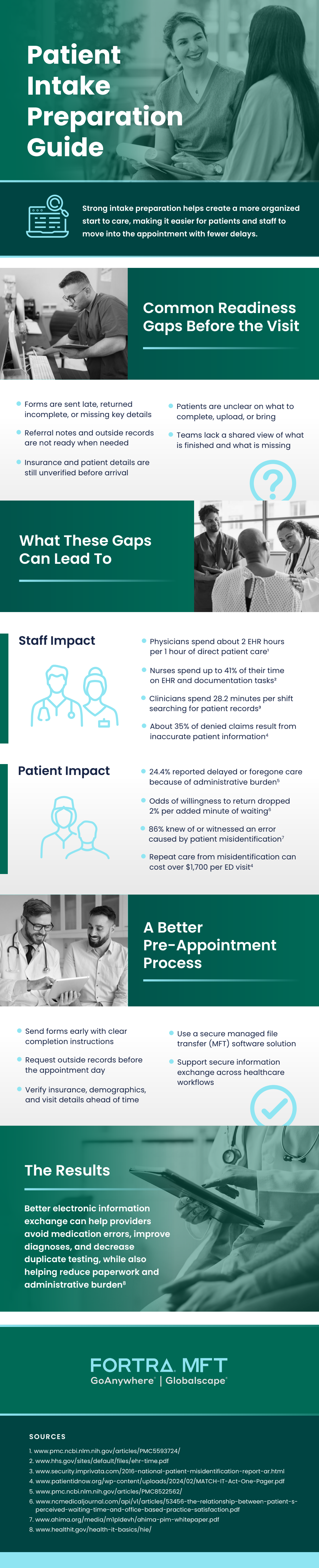
A successful healthcare visit often begins before a patient enters the office. Gathering documents, reviewing medical history, updating medication information, completing forms, and preparing questions can help streamline the intake process. These small steps support better communication and help providers focus on delivering quality care during the appointment. Look over the infographic below to learn more.

TAGGED:infographicspatient intake preparation guide
Share This Article
Facebook Copy Link Print
Share
By Aaron Casselman
Aaron Casselman is a medical writer based in central Minnesota, specializing in bioinformatics. With my Master's Degree in bioinformatics, he brings unique insights into topics related to medicine and health.

Stay Connected

1.5KFollowersLike
4.5KFollowersFollow
2.8KFollowersPin
136KSubscribersSubscribe

Latest News

The Difference Between a Sustainable NP Practice and One That Burns Out in Three Years
Career Nursing
June 19, 2026
medical facilites
Understanding Navigation Stress In Medical Facilities
Health Infographics
June 19, 2026
patient loyalty
First Impressions Matter: Why Patient Loyalty Starts At The Front Desk
Health Infographics
June 19, 2026
The Invisible Bond Between Physical and Emotional Pain
Mental Health Wellness
June 16, 2026

You Might also Like

Cleveland Clinic CEO Recommends Changes to Current ACO Rules

June 3, 2011
Health ReformHospital AdministrationMedical RecordsPolicy & LawPublic HealthTechnology

HIPAA Challenges

September 1, 2013

Implementing a Paperless Credentialing System

January 7, 2016
Outdoor Containment Setup with Medical Personnel in Protective Gear Walking Towards Tent During Autumn Season in a Forest Environment
HealthHospital Administration

Engineering Temporary Hospitals for Extreme Weather

April 24, 2025
Subscribe
Subscribe to our newsletter to get our newest articles instantly!
Follow US
© 2008-2025 HealthWorks Collective. All Rights Reserved.
  • About
  • Contact
  • Privacy
Welcome Back!

Sign in to your account

Username or Email Address
Password

Lost your password?