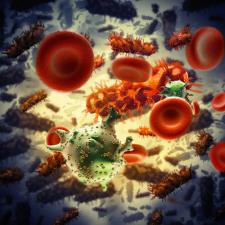
 The warnings keep coming. The studies keep warning. We are overdoing it on antibiotics. They are over-prescribed by our doctors. They are over-supplied to our farm animals. And we seem to be heading in exactly the wrong direction.
The warnings keep coming. The studies keep warning. We are overdoing it on antibiotics. They are over-prescribed by our doctors. They are over-supplied to our farm animals. And we seem to be heading in exactly the wrong direction.
It was only two months ago that the Centers for Disease Control and Prevention (CDC), the government watchdog of our long-term health and safety, came out with its remarkably sobering report on our antibiotics binge.
The CDC found that every year, more than two million people in the U.S. get infections that are resistant to antibiotics and at least 23,000 of them die as a result. According to the agency, it is our overuse of antibiotics which is “the single most important factor” leading to this dire result.

Dr. Steve Solomon, the Director of the CDC’s Office of Antimicrobial Resistance, describes it as a process that may soon reach crisis proportions:
Every time antibiotics are used in any setting, bacteria evolve by developing resistance. This process can happen with alarming speed. . . . These drugs are a precious, limited resource — the more we use antibiotics today, the less likely we are to have effective antibiotics tomorrow.
This will not only lead to an even greater number of superbug attacks and resulting deaths. It will also undermine our ability to treat diseases generally. Some of our most important medical treatments — such as joint replacement, organ transplants and cancer therapy — depend on controlling for infections. “If the ability to effectively treat those infections is lost,” the CDC warns in its report, “the ability to safely offer people many of the life-saving and life-improving modern medical advances will be lost with it.”
So what is the solution to this escalating health threat? It is seemingly so simple. Rein in the antibiotics. The CDC estimates about half of the antibiotics prescribed for people are not needed or not prescribed appropriately. With some more education and awareness, not to mention a firm hand from the CDC and FDA, this should be an easy fix. We are already beginning to see some internists and pediatricians taking a more vigilant approach to prescribing antibiotics.
It is with our treatment of food-producing animals, however, where we seem to be facing the most stubborn resistance. That is where roughly 80 percent of our antibiotics go; about 30 million pounds worth a year. And not simply to treat disease. Most of it apparently is used for so-called “non-therapeutic” uses such as growth promotion, feed efficiency, weight gain and routine disease prevention. This is what ensures our plump, juicy meats despite what can at times be horrid and inhumane living conditions for our livestock.
Much of the public health and veterinarian community has been trying for years to put a stop to this antibiotics abuse. They have made very little progress. The government — both Congress and the Obama administration — is largely to blame. It is doing nothing to deal with this emerging health hazard and acquiescing to a powerful industry lobby that wants to make sure it stays that way.
That was the ultimate conclusion of a study issued last month by the Johns Hopkins Center for a Livable Future (CLF). It set out to gauge how far we have come since a another Johns Hopkins study from 2008 — titledPutting Meat on the Table: Industrial Farm Animal Production in America — made what are considered by many to be landmark recommendations on how to save our food supply. Top of the list was the call for a ban on non-therapeutic use of antibiotics in food animal production. Here we are five years later and according to the new study the situation has actually gotten worse.
“There has been an appalling lack of progress,” said CLF Director Robert Lawrence. And it is all because of “lack of action or concern by Congress and continued intransigence of the animal agriculture industry.” Bob Martin, who headed the original study, echoed this consternation: “In a couple of areas the Obama administration started off with good intentions, but when the industry pushed back, even weaker rules were issued. We saw undue influence everywhere we turned.” He concluded with the sentiment that seems to be shared across the public health field and certainly among the who’s who of public health and policy experts who worked with him on the 2008 study — “Inaction was inexcusable five years ago, now it is unconscionable.”
The end result of this legislative and regulatory failure is more power to the superbugs and more victims of their plague. They jump with ease from animal to human through the soil, air, water, and ultimately, our food supply. Rep. Louise Slaughter (D-NY), a long-standing proponent of tighter controls in this area, put it a bit more starkly in a recent interview with the Washington Post: we are raising our cows, chickens and hogs “in wretched, unspeakable conditions,” keeping them fat and healthy through antibiotics, “and we all eat that junk.” Hopefully, this latest sounding of the alarm will finally spur the government to do something to stop it.
This article originally appeared in Whistleblower Insider.
(superbugs / shutterstock)