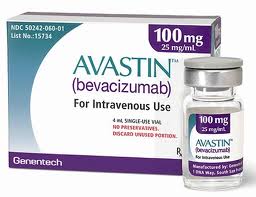
The use of Avastin for breast cancer was addressed by the U.S. Food and Drug Administration this week. The outcome was devastating for Roche and an emotional one for many women who believe the FDA is subjecting them to a death sentence. As usual, there are a variety of perspectives to take into consideration.
The history: In 2008, Avastin was given preliminary approval by the FDA for the treatment of breast cancer on the condition that the company would do more studies to demonstrate its effectiveness. Many women have been successfully treated with Avastin — a billion dollar drug for Roche.
But when Roche submitted the required follow-up studies in 2010, the data showed that there was no benefit from the drug for treating breast cancer. Studies did not show significant impact on mortality or improvement in quality of life. In addition, the drug was associated with some significant side effects such as high blood pressure and blood clots.
In December, 2010, an FDA panel voted to withdraw the drug’s approval as a treatment for breast cancer. Roche appealed the decision, and earlier this week, an FDA panel hearing the appeal unanimously decided, in a 6-0 vote, to withdraw the drug’s indication for breast cancer. The final decision on whether or not Avastin loses the indication is ultimately up to the FDA Commissioner, Dr. Margaret Hamburg.
If Hamburg supports of the panel’s recommendation is critical. At the same time, this will fuel even more emotion and protests among patients. Here’s why:
• From the FDA’s side: The FDA issued a provisional approval with the explicit understanding that the final decision would be based on more conclusive studies. If the FDA maintains the drug’s approval despite the lack of scientific data, this would likely impact all of their future decisions to offer provisional approvals for potentially life-saving drugs.
• From the patients’ side: Women who have benefited from the medication have clearly voiced their opinion that the doctors and patients, not regulators, should decide whether or not to get potentially life-saving treatment.
An important fact to keep in mind is that Avastin will remain on the market because it is FDA-approved for certain types of lung, colon, kidney and brain cancers. Therefore, Avastin will still be available “off label” for treating breast cancer when patients and their doctors believe that it is the best option. In those situations, the only real challenge will be a barrier to access is a financial one since expensive drugs used “off-label” are frequently not a covered benefit and very few women can afford to $80,000 per year out of pocket for Avastin.
Roche is understandably passionate about making this drug available to women, and they will be pursuing additional studies to prove its effectiveness. But, in the mean time, there is a solution that’s not been discussed and doesn’t involve beating up on insurance companies: For women who decide (despite the data) that they want or need Avastin, Roche could simply decrease the cost.
What do you think?
Create Health,
Archelle
Sources:
FDA begins process to remove breast cancer indication from Avastin label
www.fda.gov/newsevents/newsroom/pressannouncements/ucm237172.htm
A version of this blog was originally posted on EmpowHER.