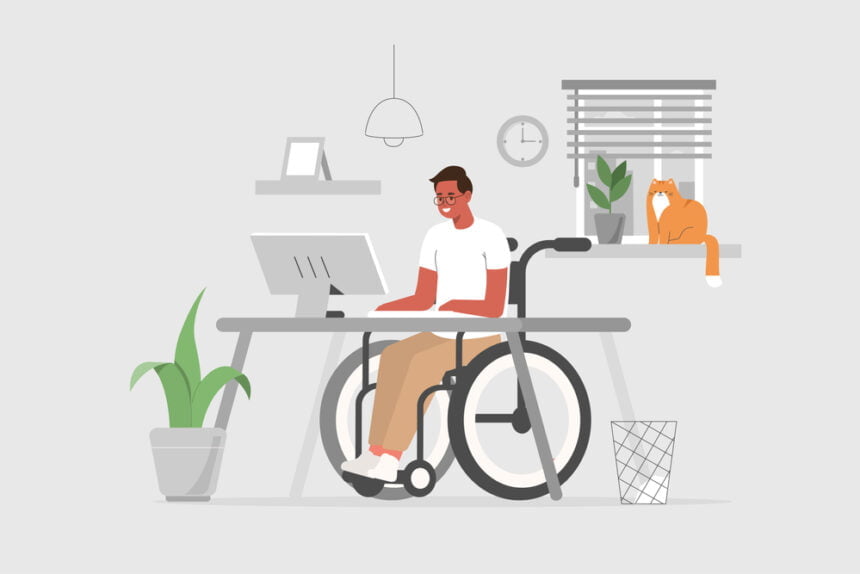
Every business legally must adhere to the terms of the Americans with Disabilities Act and medical practices are no exception. According to the California Medical Association, lawsuits targeting physician offices are on the rise.
Listed below are important things to keep in mind when ensuring your medical practice’s ADA compliance.
Ensuring Your Medical Practice Physically Accessible
Traveling via wheelchair, Segway, or with a cane is perfectly possible nowadays, due to standards implemented by the ADA. You should be familiar with these expectations and make sure your medical practice is wheelchair accessible.
You can read the ADA wheelchair guidelines here. It is also a good idea to learn about the standards from other countries, because you can get some ideas on how to make things easier for wheelchair users even if they aren’t outright required under the ADA.

Most commonly we imagine automatic doors and ramps, but you must also ensure that your practice has large enough hallways and corridors for people using a cane. The floors should also be slip resistant, so that they can use their cane without fear of it slipping.
You also want to make sure that you have things spaced out enough for people with a Segway to get through. You will want to also consider having a charging station, so that Segway users can power their machine as needed.
Ensuring Your Medical Practice’s Website is Accessible
Your medical practice’s website also needs to be accessible under the ADA. Failure to comply can result in lawsuits that can get into the hundred thousands.
But failure to comply can also cost your medical practice more than money. Since the goal of a medical practice is to help all patients, it looks especially bad if there is discrimination, which can occur when not all users are able to navigate your site. Oftentimes, especially in times of the pandemic, appointments are made online and sometimes even services are given virtually. You must ensure your practice provides virtual care for all, beginning with ensuring all users can navigate your site.
“Web accessibility” refers to the set of technologies, application and design standards that facilitate the use of Web sites following the guidelines of “design for all”, which is the basis for Internet access under the ADA. The basis for developing an accessible website lies in understanding that people navigate the Internet in different ways and that is it is very important to take that into account when creating web pages for optimal accessibility. Here are examples of some users that might need assistance accessing your medical practice’s website:
- Users with total blindness who use a screen reader program to access the content of the browser, listening to it through the speakers or reading it with their fingers using a Braille line.
- Users with low visibility, partial vision or color blindness, who use screen magnification systems, resort to increasing the size of the letters or require an effective color contrast between the text and the background.
- Users with limited motor skills in their hands, who cannot use the mouse and access web content exclusively with the keyboard on their computer or do so through voice recognition systems, navigating by means of verbal instructions given to their computer.
- Users with total deafness who require textual alternatives to multimedia sound elements.
The Web Content Accessibility Guidelines (abbreviated as WCAG) 2.0 cover a wide range of outlines for creating accessible web content. Following these guidelines allows you to create content that is more accessible to a greater number of individuals with a variety of disabilities. Following these guidelines can often help make Web content more usable for all users.
WCAG 2.0 is the successor of the policies outlined under WCAG 1.0 [WCAG10. There are a lot of overlapping guidelines, but you should generally follow the stipulations outlined under the WCAG 2.0 standards.