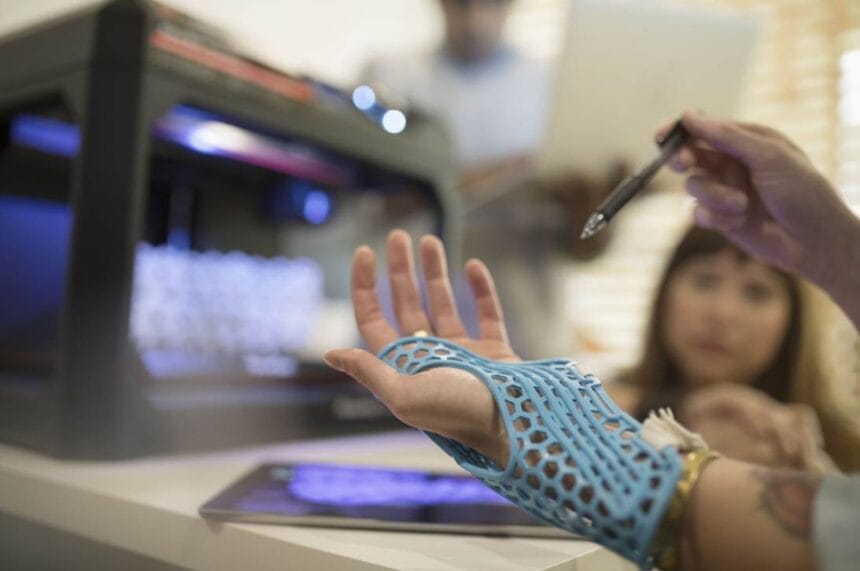
Three-dimensional printing has moved far beyond early prototypes and novelty uses. In healthcare, it now plays a growing role in patient care, medical education, and device development. By allowing faster production, greater customization, and improved precision, 3D printing is changing how medical professionals approach treatment and innovation.
Personalized Devices and Implants
One of the most significant advances in medical 3D printing is personalization. Traditional manufacturing relies on standard sizes, which may not fully meet individual patient needs. With 3D printing, implants, prosthetics, and orthopedic supports can be designed using patient-specific imaging data.
Custom-fit devices improve comfort and function while reducing the risk of complications. Surgeons can plan procedures more effectively when implants align closely with a patient’s anatomy. This approach has been especially impactful in orthopedic, dental, and craniofacial applications.
Surgical Planning and Training Tools
3D printing has also changed how medical teams prepare for complex procedures. Anatomical models created from scans allow surgeons to visualize structures before entering the operating room. These models provide a physical reference that can improve precision and reduce unexpected challenges during surgery.
More Read
Medical education benefits as well. Students and residents can study realistic models that represent a wide range of conditions. Unlike cadavers or limited samples, printed models can be reproduced as needed and tailored to specific learning goals.
Faster Prototyping of Medical Devices
Innovation cycles in healthcare technology often face delays due to lengthy design and testing processes. 3D printing shortens development timelines by allowing rapid prototyping. Engineers and clinicians can test multiple design iterations quickly, identifying improvements early.
This flexibility supports collaboration between designers and medical professionals. Feedback can be incorporated in real time, leading to safer and more effective tools. In some cases, 3D printing complements established production methods such as plastic injection molding, which remains important for large-scale manufacturing once a final design is approved.
Bioprinting and Tissue Research
Bioprinting represents a developing frontier in medical research. Scientists are exploring ways to print tissue-like structures using living cells. While full organ printing remains a long-term goal, progress has been made in creating tissue models for drug testing and disease research.
These printed tissues help researchers study how cells respond to treatments without relying solely on animal models. This approach may improve early testing accuracy and reduce development time for new therapies.
Supply Chain and On-Demand Production
Healthcare systems have faced supply disruptions in recent years. 3D printing offers a way to produce certain tools and components locally, reducing dependence on long supply chains. Items such as surgical guides, braces, and replacement parts can be printed on demand.
On-site or regional production supports faster response times, particularly during emergencies. It also allows facilities to adapt designs based on immediate clinical needs.
Regulatory and Quality Considerations
As medical 3D printing expands, regulatory oversight remains essential. Devices must meet strict safety and performance standards. Advances in materials, software, and quality controls are helping align printed products with regulatory requirements.
Hospitals and manufacturers continue to develop best practices to ensure consistency and patient safety. Clear guidelines support responsible adoption while encouraging continued innovation.
3D printing is steadily becoming a practical tool across many areas of medicine. Its ability to support personalization, speed development, and improve preparation has a real-world impact on patient outcomes. As technology and standards advance, 3D printing will likely play an even greater role in how healthcare solutions are designed and delivered. Look over the infographic below to learn more.