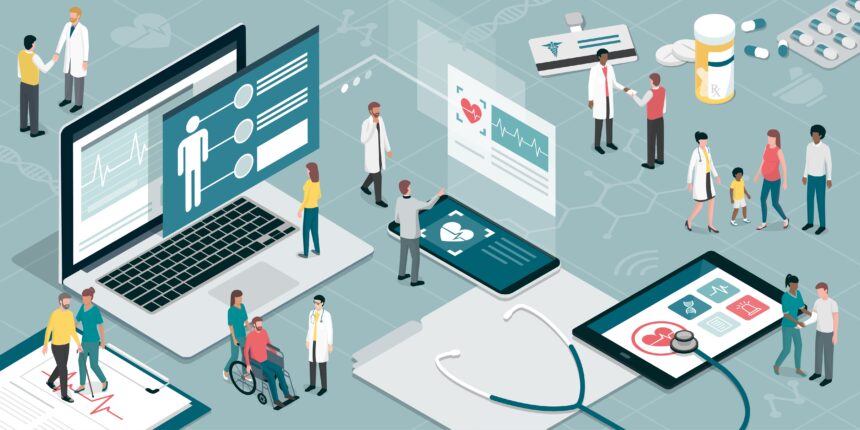
Despite the rapid evolution of modern technology, certain industries have been stifled in regards to its adoption. The medical and healthcare industry is one of those. According to Power Consulting Healthcare IT Solutions, in many hospitals and offices, the staff is still using — and relying heavily — on fax machines. While fax machines still work and have stood the test of time in the business world, they are definitely outdated. Surprisingly, they’re not the only thing health care professionals and hospital personnel are using that could do with a major upgrade. The good news is that most health and wellness organizations are slowly coming around to the idea of modern tech. Insurance companies are also starting to see the true benefits of updating their processes. It’s possible that 2018 will finally be the year everything is modernized in the industry. There are a handful of technologies on the verge of kick-starting a major transformation. Let’s take a closer look at some of them, especially the ones that will make an impact this year.
Blockchain
Bitcoin and similar cryptocurrencies use an incredibly secure platform called blockchain. It is essentially a digital ledger that keeps a public record of all transactions happening on the network. Just because it’s public doesn’t mean it’s not secure, though. Only basic information about the transaction that took place is recorded and stored, and no one can alter said information. In fact, the only way the blockchain is updated is when a transaction occurs between two parties. You may be wondering what this technology has to do with healthcare and how it can be used. Interestingly, it’s a great alternative to the industry’s modern records services. With the technology, users can build a decentralized and secure record system that allows only authorized parties to gain access. This is more beneficial than a single client-server database that one individual or a small team has ultimate control over. There are already companies working on innovative solutions as we speak.
Real-Time Location Data
Using geotags, healthcare professionals can keep track of one another, equipment and even patients. This further boosts the insights and efficiency with which a team can work, and it also helps them organize various elements. This kind of setup is called a real-time location system, or RTLS. Medical equipment and machines are costly, so hospitals usually have a limited supply. Even with a manual tracking process in place, it can be difficult to discern who has what and for how long. Through the use of modern location data, however, physicians can tap into a central system to see where a device they need is. Better yet, they can see who has it and what they’re using it for. This is especially helpful in emergencies where one patient may need a treatment sooner. The same process can be used to track a patient’s journey through a hospital or office. Imagine knowing exactly how long it takes someone to check in and get from the waiting area to an exam room.
Internet of Medical Things (IoMT)
As you might have suspected, the term IoMT — or Internet of Medical Things — is a play on the Internet of Things movement. It follows a lot of the same principles with the exception of a larger, connected infrastructure. In layman’s terms, IoT refers to the smart and connected nature of modern devices. They are more aware of what’s happening around them and also more efficient. It’s a blanket term that refers to everything from smart fitness trackers to smart home tech. Of course, in the healthcare industry, the devices are infinitely more complex. We’re talking about brain- and body-imaging hardware, tools, sensors, connected systems and much more. Opening up these devices to more public access — even with great security — introduces a whole host of new risks. That’s why, even though adoption of this tech is happening currently, it’s being done slowly and carefully. That’s not even including the regulatory and legal hurdles that need to be addressed in regards to this type of technology.

Big Data
This ties in nicely with the section above about IoMT, because all those smarter, more connected devices will be receiving, recording and transmitting data. That same scenario applies to nearly everything in the healthcare industry, from patient records to staffing and payroll to hospital vacancies. Big data will revolutionize the industry in ways we cannot even understand yet.  Nurses, customer service staff, physicians and anyone who works in the industry will soon be tasked with pouring over this data and information, taking in various insights and readings. There will be contextual and personalized data for patients, describing their visit, checkups, and health status. There will be property- and structure-based insights about the building or office itself. There will even be data pertaining to the organization of staff, what days they might have off or which doctors they’re working alongside and if they get along. Anything and everything that happens in a digital space is recorded and stored for later. That will allow more advanced insights and better strategies going forward, provided the data is processed and studied. That likely means many more IT and data analytics opportunities will appear in the healthcare industry over the next decade. Whatever the case, these technologies are sure to make an impact over the coming year. The medical and healthcare industry is changing as we speak, hopefully making the jobs and tasks of everyone working in it that much easier.