The advancement of IT has made our lives so much easier and it has made an impact across different industries. One such area that modern technologies have found application in is medicine.
There are numerous areas in which technology has been harnessed to help save lives. From the operating room to the ambulances, modern healthcare could not be imagined without all the gizmos physicians use to treat us. Lately, medical workers are discovering ever newer and better apps that help them communicate among each other, as well as directly with patients. Secure messaging has taken over medicine, as the two have become dependent on each other. Apart from secure messaging services, there are other examples on how the IT sector has paired up with healthcare to provide better treatment to those who need help the most.
Medical records
Paperwork had been a burden in medicine for centuries. As the number of patients grew exponentially during the last decades of the 20th century, it was becoming impossible to keep track of all their medical records in paper. Primary healthcare units had entire basements stacked with files that were both impractical to search and presented a fire and a health hazard.
More Read
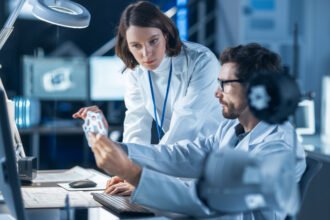
This all changed with the introduction of electronic medical records that were searchable and easy to navigate. EHRs have been evolving ever since and today hospitals purchase their own software that is ever more user-friendly, allowing the doctors to access the patient’s history via a single click or a swipe of a finger.
Live chat
In the past, it was, quite obviously, necessary for the patient to be physically present during the examination. This is still requisite today but only for the first couple of visits. Many clinics offer long distance care from there on, saving time both for their medical staff and for the patients.
If a patient is away on an important business trip, he or she can hold a live video conference with the doctor or a team of doctors assigned to their case. This means that non-urgent cases are easily treated without the need to be physically present. Furthermore, patients can send their medical records or other files via e-mail or special secure messaging apps some medical centers have adopted.
Secure messaging
Perhaps the biggest issue the introduction of IT to healthcare has had to face is the issue of confidentiality. Effective and fast communication is one thing, but sharing private information on patients and stopping the dissemination of this data is a whole different ballpark. The aforementioned messaging apps have had to constantly increase the level of security and privacy.
While doing so, they disregarded the issue of functionality, so they failed to contextualize the patient and became harder to navigate. However, a recent positive trend in secure messaging ensures that each patient gets a separate chatroom where the entire team of doctors can collaborate in utter privacy.
Robotic surgeries
The operating room became especially interesting for IT experts, so they introduced a number of novel technologies into it to assist surgeons. Firstly, the scanning equipment became less uncomfortable for the patient as the monitoring systems became advanced and hi-tech. The surgeries themselves are now less invasive than they were, let’s say, two decades ago.
Furthermore, the surgeons not only receive tech support but in some cases robots have completely taken over their jobs. From people who cut open the patient, they have transformed into machine operators that don’t even have to be in the same room during the operation! This is especially important at times of an outbreak of an airborne virus when doctors have limited access to the patients due to isolation. A robotic surgery is more precise in nature, so the recovery time is quicker and the scaring is not as serious if the incisions were made by a human, regardless of how skillful they are.
Medical research
People tend to forget that the patient is not at the dead center of medicine; as an important part of this science is research. Universities and hospitals have their own research centers where they develop new medications and cures on daily basis. These institutes are “mini-factories” for the production of antibodies against various kinds of viruses and diseases.
Vaccines for MMR, polio or malaria are developed here to be used across the planet. Modern technologies have made their production faster and more precise, so fewer mistakes are made and nearly all drugs have the desired effect. IT doesn’t necessarily have to save lives directly but its use in medicine is a covert one as well. Without us knowing it, technology is behind many medicines that we depend on to protect our health.
Final Thoughts
It would be impossible to imagine modern medical procedures and illness treatment without the influence of the IT sector. These two industries simply go hand in hand, ensuring that billions of people worldwide receive proper healthcare.