Open sesame?
Open sesame?
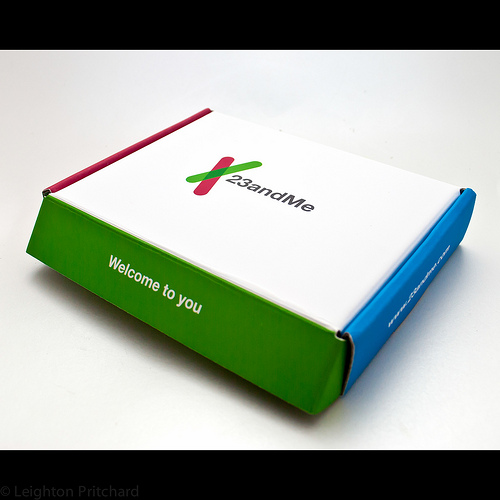
Lukas Hartmann shares a great, detailed story (My deadly genetic disease was just a bug) of what happens when a self-described nerd is “confronted with a life threatening situation,” in this case a message about him from 23andMe that read:
“Has two mutations linked to limb-girdle muscular dystrophy. A person with two of these mutations typically has limb-girdle muscular dystrophy.”
Turns out this was the result of an error by 23andMe’s computer system. Now I’m all for patients having control over their lab results and getting away from the paternalistic idea that all results have to be filtered through a doctor. I support the new rule that gives patients direct access to their lab data. Still, this report on 23andMe is troubling and demonstrates what can go wrong when lab results are misinterpreted – either by patients, or, in this case, by a computer program.
Since I am stuck at the Cartoon Guide to Genetics level, I asked a scientist friend for his interpretation. Here’s what he told me:
The errors made by 23andMe are pretty basic:
1. Lumping all forms of limb girdle muscular dystrophy into one entity and calling a biallelic mutation based on monoallelic mutations in two different diseases
2. Even calling a compound heterozygote based on two different mutations in the same gene is sloppy because they could both be in the same copy of the gene, leaving the other copy functional.
Reporting such stuff directly to the patient when their output leaves much to be sorted out is a setup for false positives. And using single nucleotide polymorphisms in the first place is less than reliable in diagnosing disease. The results can be correct, but they can also be the genetic version of racial profiling.
23andMe is an expression of the approach that fancy software is more important than careful medicine.
There are definitely great opportunities to leverage knowledge and patient data to assist in diagnosis, treatment and clinical research. Companies like iCardiac, SimulConsult and Brain Resource are doing just that. But the technology has to be based on hard science and careful programming, and we still need expert physicians and scientists to interpret the results.
photo credit: widdowquinn via photopin cc