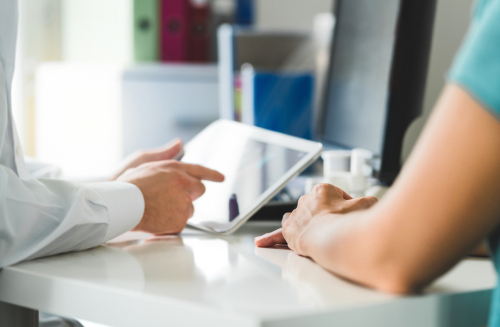
While many employers and employees don’t think twice about bringing personal digital devices into the workplace, meaning smartphones and tablets, the healthcare industry is unique in that personal devices haven’t always been welcome. In fact, the BYOD policy – which is the “Bring Your Own Device” policy has been around for quite some time. It’s understandable when you give thought to the amount of sensitive and personal information that is used, but at the same time it’s a policy that many have fought back against.
So how exactly has the BYOD policy changed and what does it look today and going into the future? Let’s take a closer look.
What Are the Top Challenges BYOD Poses?
When looking at why the BYOD policy has become such an issue there are a few factors at play. Obviously, data security is a big thing, as the entire healthcare sector want to be sure that information is safe and secure at all times. However, there is more to it than that. The hospitals, clinics, labs, and research facilities often have infrastructure issues that affect the cellular coverage as well as the Wi-Fi coverage.
Hospital Issued Devices are Still Preferred
No matter how the BYOD policy has changed, and even eased up in the past couple of years, statistics show that 59% of nurses still prefer to have a hospital issued device. Now that number does change when speaking to physicians, as this Spoke BYOD infographic shows. Only 38% of physicians preferred to have a hospital issued device.
Not Necessarily Holding People Back
Studies have also gone on to show that despite BYOD policies being in place and the institution not allowing personal devices, 63% of physicians still use them and 41% of nurses still use theirs. It’s clear the policy isn’t having the kind of impact it was intended to have.
Why Are Staff Pushing to Bring their Own Device?
So why is there a push from staff to be able to use their own devices? Well it makes communications between other co-workers easy, it can make response times faster, it can help streamline work, and there is a cost-saving since it’s not hospital issued.
The Healthcare Sector is Showing Signs of Embracing BYOD
Now here’s where things get interesting. Where it used to be that it was frowned upon to bring your own device, today many healthcare facilities are actually encouraging staff to use their own device, at least partially. This evolution is still relatively new and one that isn’t necessarily industry-wide at this point. Obviously, data security has to be a big issue, and that’s something many are playing catch-up with. Suddenly the need for secure texting and BYOD security has come into the spotlight.
A Changing Landscape
The use of personal digital devices in the healthcare sector is very much a hot topic at the moment and is getting a fair amount of attention. Both staff and employers are working together to figure out the best way to go about forming an effective and smart BYOD policy.