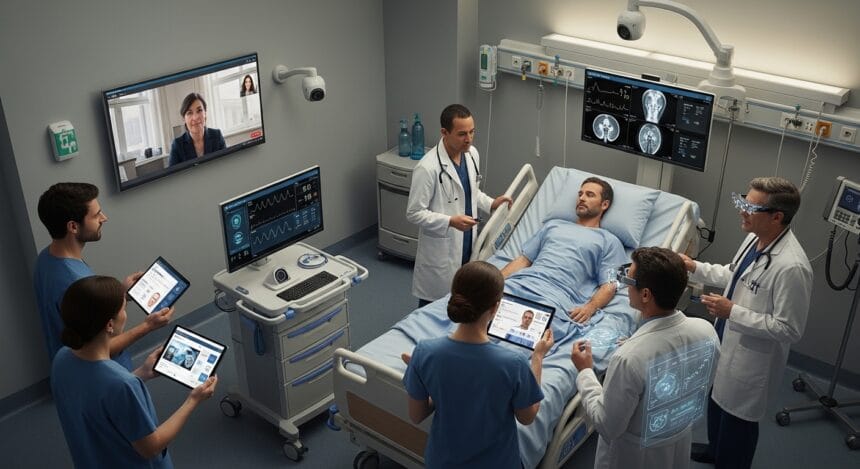
Video systems reshape health care delivery by enabling real-time telehealth consultations and improving collaboration across distributed care teams. Selecting the right system depends on aligning clinical requirements with technical performance and compliance standards to ensure scalable care delivery. High-quality video and low-latency connections are critical to accurate assessments and timely decision-making. Integration with electronic health records (EHRs) and clinical platforms further enhances workflow efficiency and data accessibility.
- Use Cases Driving Adoption of Video Systems
- Core Features to Evaluate in Health Care Video Systems
- Top Companies Offering Video Systems for Health Care
- How to Match Video Systems With an Organization’s Needs
- Operational Considerations for Health Care Organizations
- Compliance, Security and Risk Management
- Implementation Best Practices
- Choosing the Right Video System for Long-Term Health Care Success
Use Cases Driving Adoption of Video Systems
There is a growing reliance on video for remote consultations and stronger patient engagement in diverse clinical environments. Telehealth consultations and virtual visits enable efficient patient-provider interactions by supporting real-time communication without geographic constraints. Remote patient monitoring strengthens chronic care management through continuous data collection and sustained patient engagement. In critical settings, telestroke and tele-ICU improve response times and clinical outcomes by connecting specialists to urgent cases when immediate intervention is required.
These capabilities reduce hospital readmissions and support more proactive care delivery. They also help optimize resource allocation by allowing providers to manage more patients without compromising quality. As adoption grows, health care systems expand access to care while maintaining consistent clinical standards.
Core Features to Evaluate in Health Care Video Systems
Health care organizations must prioritize HIPAA compliance and strong data security measures to protect sensitive patient information and maintain trust. Integration with EHR and electronic medical record (EMR) systems supports seamless workflows and efficient data exchange in clinical environments. High video quality and reliability enable accurate diagnostics and clear communication between providers and patients.

Scalable deployment options allow systems to expand alongside organizational growth and care demands. User-friendly interfaces improve adoption rates among clinicians and patients, ensuring consistent use and better overall outcomes. These factors also help reduce operational friction and support faster clinical decision-making. Well-integrated video systems contribute to improved efficiency and patient satisfaction.
Top Companies Offering Video Systems for Health Care
Health care organizations evaluating video systems must consider providers that deliver secure, high-performance solutions tailored to clinical environments. The following companies offer specialized video technologies to support diagnostics and scalable health care operations.
1. Z-Band
Z-Band makes enterprise-grade video distribution systems, focusing on one-way facility-wide communication. Its offerings include Z-TV, which distributes high-definition video without consuming network bandwidth, and Z-IP, an internet protocol television (IPTV) platform that enables streaming across multiple devices. It also provides Z-FLEX for centralized content management and ZHC-Insight for remote monitoring and diagnostics. Over 500 hospitals nationwide rely on its solutions, demonstrating strong adoption in large-scale health care settings.
Its systems can deliver hundreds of digital channels in patient rooms and common areas, supporting entertainment and patient education initiatives. Z-Band concentrates on infrastructure-level video delivery that enhances in-hospital experiences and operational efficiency. Its hybrid radio frequency and internet protocol approach reduces bandwidth strain, while centralized content control allows health care organizations to manage messaging and digital signage across entire facilities.
2. Webex
Webex delivers health care-focused solutions that offer secure, scalable video communication for clinical environments. It includes tools, like Webex Instant Connect, which enables browser-based telehealth visits without downloads and integration into EHR systems to streamline scheduling and care delivery. The platform emphasizes security and compliance, meeting HIPAA standards while supporting encrypted communication and secure data sharing.
Health care organizations use it for virtual consultations and cross-site collaboration, with uptime rates as high as 99% to ensure reliability. Webex embeds video directly into clinical workflows to enable more efficient, end-to-end care coordination and a stronger alignment with health care-specific operational needs.
3. Philips
Philips produces a range of health care solutions that combine video-enabled care and connected devices to support modern clinical environments. It offers virtual care platforms that connect remote specialists with bedside teams to enable real-time collaboration and more informed decision-making across departments. These systems integrate imaging and communication workflows so that providers can access and share clinical data efficiently.
Philips embeds video capabilities directly into clinical operations rather than treating them as stand-alone tools. It creates a unified ecosystem that improves workflow efficiency, scalability and patient outcomes. This integrated approach reduces fragmentation across systems and supports more coordinated, patient-centered care. It also enables health care organizations to scale services more effectively while maintaining consistent quality and compliance standards.
4. VSee
VSee combines video visits, remote patient monitoring and workflow automation within a single system. Its offerings include VSee Clinic for virtual care, customizable intake and scheduling tools. It also has application programming interfaces (APIs) that allow organizations to embed telehealth into existing applications, along with support for connected medical devices. The platform emphasizes rapid deployment and customization through no-code and low-code tools, which enable health care providers to tailor workflows to specific clinical needs.
It demonstrates measurable impact, including up to a 90% reduction in patient wait times, a 300% increase in provider productivity and a 10% increase in billable patient visits. VSee focuses on giving organizations greater control over their telehealth infrastructure, which makes it well-suited for complex and highly customized care delivery environments.
5. Doxy.me
Doxy.me is a browser-based telehealth platform designed for simplicity, accessibility and secure virtual care delivery. Its core features include HIPAA-compliant video visits, patient queues and screen sharing. It also supports integrated workflows, like scheduling and payments, all accessible without downloads or logins. The platform operates at a global scale and supports more than 1 million health care providers across over 150 countries, reflecting strong adoption and reliability.
Its ease of use allows patients to join sessions through a single link on any device, reducing friction and improving engagement across diverse populations. Doxy.me prioritizes a streamlined experience and is ideal for small to midsized practices seeking a fast and efficient entry into telehealth.
How to Match Video Systems With an Organization’s Needs
Health care organizations must align system selection with their size, whether supporting small practices or large health systems, to ensure the solution fits operational demands. Specialty-specific requirements shape platform features and functionality, as different clinical areas depend on tailored capabilities. Patient demographics and levels of digital accessibility also influence usability, affecting how easily individuals can engage with the system.
Budget constraints and resource availability further guide decision-making, especially when evaluating deployment and maintenance costs. Interoperability with existing systems is critical to avoiding workflow disruptions and ensuring continuity of care. Long-term scalability also matters, as organizations need solutions that can adapt to dynamic clinical needs and technological advancements.
Operational Considerations for Health Care Organizations
Organizations must assess network capacity and hardware readiness to ensure reliable system performance. IT support and implementation timelines influence deployment success, which affects how quickly solutions can be integrated into existing workflows. Staff training is critical to adoption, ensuring clinical and administrative teams can use the system effectively and consistently.
Ongoing technical support helps address issues quickly and minimizes downtime. Clear implementation planning reduces disruptions during rollout and improves user confidence. Continuous training and updates ensure teams stay aligned with changing features and best practices.
Compliance, Security and Risk Management
Regulatory compliance, including HIPAA and regional standards, remains essential for all health care video systems to ensure the protection of sensitive patient data. Business Associate Agreements define clear responsibilities between health care providers and vendors, supporting accountability and risk management.
Organizations must address data privacy risks through proactive security strategies that include encryption and continuous monitoring. Regular audits and compliance checks help maintain adherence to regulations. Strong governance frameworks further support consistent policy enforcement across systems. These measures collectively strengthen trust while reducing the risk of data breaches and legal exposure.
Implementation Best Practices
Organizations benefit from pilot programs before full-scale implementation, allowing teams to test performance and identify potential issues early. Aligning video systems with clinical workflows improves adoption and operational efficiency by reducing disruption. Comprehensive staff training supports consistent usage across clinical and administrative teams.
Feedback collected during pilot phases can guide system adjustments and optimization. Clear communication during rollout helps build user confidence and engagement. Ongoing evaluation ensures the system continues to meet clinical and organizational needs. Strong leadership support also reinforces adoption and encourages consistent use across departments. These strategies help maximize return on investment and long-term system effectiveness.
Choosing the Right Video System for Long-Term Health Care Success
Selecting the best video systems for health care requires balancing compliance, usability and scalability to meet clinical and operational demands. The right solution improves patient outcomes while enhancing efficiency across care delivery and coordination. Health care leaders should align video system investments with long-term digital transformation goals to ensure sustainable growth and innovation.