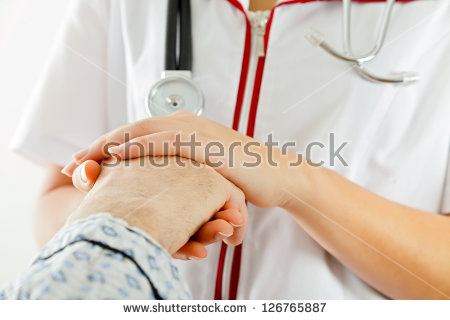
 A recent post on the AAMC blog AM Rounds, 2013 Humanism in Medicine Essay Contest: Caregiving As Good Doctoring, shares a recorded version of David Duong’s essay of the same name.
A recent post on the AAMC blog AM Rounds, 2013 Humanism in Medicine Essay Contest: Caregiving As Good Doctoring, shares a recorded version of David Duong’s essay of the same name. Duong, a third year student at Harvard Medical School, earned 2nd place in the Arnold P. Gold Foundation sponsored contest by responding to the call for essays reflecting on “…the barriers to humanism in medicine today…and…who the ‘good’ doctors are.”
In his essay, Caregiving as Good Doctoring, Duong shares the fortuitous experience of serving as translator by default, being the only Vietnamese speaker available to a family in need of assistance at his training hospital. The patient, Mr. N, was flanked by eight family members all earnestly trying to understand options around end-of-life care for their father succumbing to Stage IV colorectal cancer. It was his job to gently translate details and options given by the attending physician, and as he describes, guide the family through this emotional time.
As Duong retells the story of his time with Mr. N’s family, it is apparent he has learned firsthand the personal and professional ‘benefits’ that result from more intimately participating in the healthcare journey of patients. Following are excerpts, but the full essay is one worth reading in its entirety, as well as shared with caregivers young and old throughout the health sciences. Research may exist that supports empathy to be lost by the third year of medical school, but Duong’s words that follow speak to an awareness and empathy of someone firmly grounded in what it means to “walk with you and yours through this (healthcare) journey”. Enjoy!
…In this intimate role as a caregiver, I am reminded of a phrase in Vietnamese that people offer each other at grave moments, when life seems beyond our control, when long-fought battles are lost, or when death takes its final grip: “chia buồn” or “share in the sorrow.” The phrase means that we share in the emotions, the experiences, the bullets that life fires at each of us. The phrase, gently intoned, is intended to ease the burden, to say, “I am here and will walk with you and yours through this journey”…
…What an honor, a privilege, and at times a burden, it is to undertake a profession that constantly invites us to engage and intersect with humanity at its most fragile moments. Therefore, it is our privilege and responsibility as good doctors and medical caregivers—along with our colleagues in social work, chaplaincy, and nursing, among many others—to strive to deliver the best care to our patients. In Dr. Francis Peabody’s statement to the 1925 graduating Harvard Medical School Class, he averred that “the secret of care for the patient is in caring for the patient,” which resonates with our 21st-century mainstream society rhetoric of the “patient-centered” approach. It is not surprising, then, that the highest ideals in medicine have remained constant…
..Throughout my third year of medical school, I have realized that there is no medicine to alleviate fear—the fear of illness, the fear of your body in someone else’s hands, or the fear of dying. But I have also learned that by caring for the patient, by placing the patient at the center of our medical practice, we can establish a trust relationship that just might lessen that fear. By doing so, we humanize our practice, share in the life of our patients and, in return, grow more deeply human…
(patient-centered care / shutterstock)