You better start swimmin’ Or you’ll sink like a stone,
For the times they are a-changin’
– Bob Dylan

Healthcare has been changing in drifts and shifts over the past few centuries and Nothing will ever be the same again.

You better start swimmin’ Or you’ll sink like a stone,
For the times they are a-changin’
– Bob Dylan
Healthcare has been changing in drifts and shifts over the past few centuries and Nothing will ever be the same again.
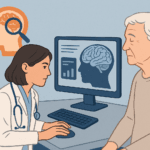
Tim Berners-Lee (father of Internet) made the biggest financial sacrifice in recent times when he refused to patent his hyper text transfer protocol and instead threw it open for the Aam Aadmi. The times of the mai-baap Doctor are numbered. The patient has taken his rightful place as the center of the new healthcare ecosystem, with all other stakeholders working to woo that customer. The recent regulations regarding generic medications will only strengthen this position. Since patient, and not the doctor, will now make the purchasing decision, all stakeholders in this ecosystem (Pharma, labs, hospitals) need to reconsider their strategies and focus on the true consumer.
Many savvy Indian entrepreneurs have already smelt the coffee. Now, many stages of healthcare services can be accessed online. You can track your health using Smartphone apps and websites. When unwell, you can check your symptoms to arrive at a presumptive diagnosis online. It’s easy to search for a suitable physician in your geographical area who you might want to consult. Compare rates and services at various hospitals. Book your appointments. Receive your lab reports and prescriptions in the comfort of home. Join social support groups and get information about alternate treatments or therapies. Store all your health records digitally and get second opinions from anywhere in the world. Doctors can monitor their patients remotely and even tweak treatments from a distance. They can discuss treatments and obtain referrals in secure online platforms. The effect of Internet and social media is just too huge to be ignored.
To borrow an analogy from Jed Weissberg, MD, Senior Vice at Kaiser Permanente, the Choluteca Bridge is a metaphor for today’s healthcare ecosystem. The Choluteca Bridge was built by the U.S. Army Corps of Engineers in 1930 with design strength to withstand the worst of hurricanes that affected the area. When Hurricane Mitch came in 1998, it destroyed 150 Honduran bridges, but not the Choluteca Bridge. Instead, the storm rerouted the Choluteca River. This rendered the huge, strong and beautiful bridge useless as it served no purpose in the changed environment.

The true potential of healthcare social media has not even been scratched on its surface yet. The focus on cloud computing and Big data can work wonders in the field of medical communications. At Digital MedCom solutions, we currently tag 30,000 Indian physicians via weekly emails and popular social media platforms. Our aim to have an active social database of all 500,000 practicing Indian physicians (or at least the approx. 250,000 active onliners) within the next 2 years is not as farfetched as it may seem. All the stakeholders in healthcare, except the patient, seem to be ignoring social media at present. Unless steps are taken to remedy this inertia, traditional healthcare industry is destined to go the Choluteca Bridge way.