

-860x1216.jpg)
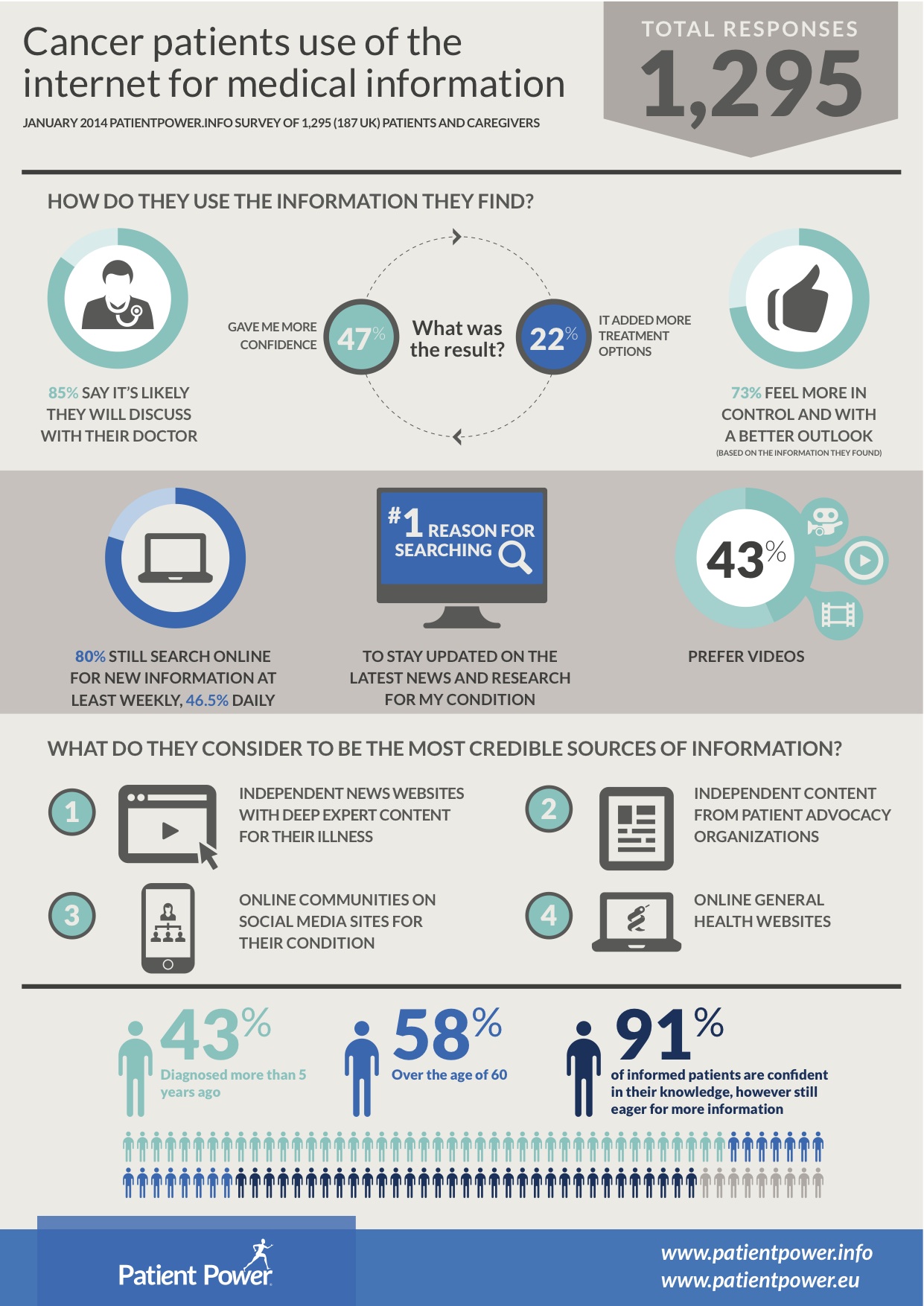
A recent survey of cancer patients by Patient Power yielded amazingly powerful results.
Almost 1300 patients responded to the survey, 72% from the US and the rest from Europe, Australia, New Zealand and South America.
All were cancer patients. 1.8% had been just diagnosed, 8.7% diagnosed less than a year ago, 27.2% 1-3 years ago, 19.1% 3-5 years ago, 23.3% more than 5 years ago, and 19.6% more than 10 years ago, showing a wide breadth of experience in dealing with the disease.
A recent survey of cancer patients by Patient Power yielded amazingly powerful results.
Almost 1300 patients responded to the survey, 72% from the US and the rest from Europe, Australia, New Zealand and South America.
All were cancer patients. 1.8% had been just diagnosed, 8.7% diagnosed less than a year ago, 27.2% 1-3 years ago, 19.1% 3-5 years ago, 23.3% more than 5 years ago, and 19.6% more than 10 years ago, showing a wide breadth of experience in dealing with the disease.
Most patients surveyed were somewhat confident in their knowledge about their health (63.2%). 28.0% were very confident and 7.7% were not very confident.
Patients surveyed were then asked for what reason primarily they searched online for health information. 89.5% answered that they wanted to stay updated on the latest news and research. 67.2% wanted to hear from an expert. 59.5% wanted to gain basic understanding of a health concern, 61.0% wanted to hear from or meet others with the same condition and 38.4% wanted to verify what a doctor had said.
When asked about devices used for online access, most patients (36.8%) used a desktop computer, 35.6% used a laptop, 20.8% used a tablet and 6.2% used a smartphone.
The video interview was the most popular and most helpful format for information (43.8%). Following video, was online written material (27.3%), and transcripts of interviews (10%). However, when patients surveyed checked the “other” box for this question, many of them further indicated that ALL of the formats were helpful.
Patients surveyed noted that they checked for online updates surprisingly often. 41.3% of respondents checked daily for updates. 38.3% checked weekly and 13.3% checked monthly.
When asked specifically about checking online for updates, the majority of patients surveyed (69%) said that they relied on “alerts” from the website and that they would check when they received an “alert”.
Online information (from the Patient Power website) seemed to be really very helpful for patients in discussing their health with a doctor. 47.4% of patients were very likely and 37.5% were somewhat likely to discuss their online findings with their doctor. It was very interesting to note the results of these discussions.
47.1% of patients said that online information gave them more confidence in discussions with their doctor. And while 19.2% said that the discussions confirmed their treatment plan, 22.2% said that the online information actually added new options to the discussion.
The last question in the survey asked patients if their outlook for dealing with their illness has improved (specifically if they had gained a better understanding of their illness and options for a treatment plan) because of information gleaned online.
An overwhelming 72.9% replied “Yes” to this question.
This new survey really shows how patients search for and use information from the internet to educate and empower themselves. And they bring this information to their medical team for discussion – a discussion which 22% of the time results in new options added to the treatment plan. Knowledge is power and knowledge empowers!
Below is a powerful infographic showing the results of the survey:






.jpg &description=Patient+Survey+Shows+How+Patients+Use+Online+Information)