

Have you ever thought about how we evolved and the implications for health care? For millennia, we sought the help of a physician when we sensed something awry in our daily sensations. Sometimes this is as subtle as ‘I just don’t feel right,’ but sometimes it is as dramatic as an athletic injury or a tooth ache. Those latter circumstances are strong motivators to seek health care services because of the associated pain. Somewhere along the evolutionary road, we developed a nervous system with pain receptors, vital sensors that can help prevent injury.
Have you ever thought about how we evolved and the implications for health care? For millennia, we sought the help of a physician when we sensed something awry in our daily sensations. Sometimes this is as subtle as ‘I just don’t feel right,’ but sometimes it is as dramatic as an athletic injury or a tooth ache. Those latter circumstances are strong motivators to seek health care services because of the associated pain. Somewhere along the evolutionary road, we developed a nervous system with pain receptors, vital sensors that can help prevent injury. These benefits are most obvious in people with various forms of neuropathy. It is common for them to develop serious burns that they aren’t aware of; pressure ulcers, etc.
By contrast, we did not develop sensations for some equally serious health-related phenomena. For instance, the elevation of blood pressure is virtually undetectable until it gets to acute-crisis levels (hence the term ‘the silent killer’). Most folks can tolerate a blood glucose level of 150 to 200 (normal is around 100) or even higher without having much in the way of symptoms. This is why so many cases of type II diabetes go undetected years before they are picked up because of some other downstream symptom.
When you get into the realm of preventative care, it is even more curious. Though current evidence overwhelmingly supports daily cardiovascular exercise, most of us feel a very strong pull toward the easy chair or the sofa. Likewise, we can overeat slightly or overtly for years and ‘suddenly’ notice that we’ve gained 10 lbs. There is no symptom of high cholesterol, though we now know it to be a precursor of serious cardiac disease. Somehow our knowledge of pathophysiology seems to be ahead of our evolutionary development.
These latter challenges have become the bane of health care policy makers. We can’t get people to pay attention to diet, exercise and other preventative tasks because there is no symptom associated with unhealthy behavior — until its often too late. In fact in many cases, it seems that the unhealthy behaviors are in themselves psychologically rewarding so we are really swimming upstream here.
Enter the modern era of wearables and sensors. Sensor technology is going through a sort of Moore’s law type period, with personal health technologies experiencing exponential improvements. The technology is becoming cheaper, smaller, easier to power, etc. The most mainstream example of how this can affect health care are the systems that combine continuous glucose monitoring with insulin pumps in type I diabetes (so-called artificial pancreas).
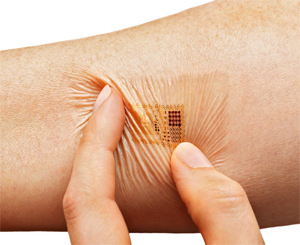
The sensor industry is exploding with interesting innovations. Boston-based MC10 can put sensors and associated electronics into a flexible substrate allowing for devices the size and thickness of a postage stamp to be employed in vital sign sensing.
OMsignal is weaving sensors into fabrics enabling a t-shirt that can sense all manner of vital signs.

Quanttus has technology enabling continuous blood pressure monitoring in a wrist-worn device. Proteus Digital Health has an ingestible radio chip that enables true tracking of medication adherence.
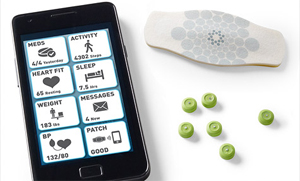
With all of the attention to nano technologies, it is not farfetched to imagine sensing of phenomena such as the level of cholesterol in the blood.
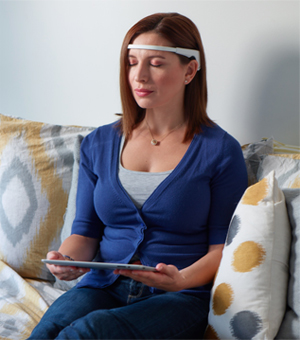
Are there examples of products on the market today that bring this vision to life? I can think of three. The Muse, by InteraXon, is a wearable EEG device that enables biofeedback and enhanced mindfulness training.
BioBeats senses your heartbeat and uses software algorithms to create music that relieves stress.

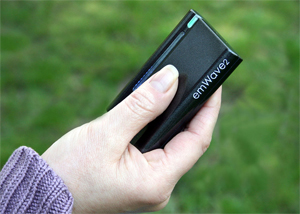
HeartMath uses a wearable sensor to give you biofeedback on your heart rate and improves focus, mindfulness and stress response.
So what if high blood pressure was like a broken arm? Think how health care delivery and prevention would change. With the evolution of new sensors, we will be finding out in our lifetimes. Imagine, with me, how this is going to change health and wellness in the future.




