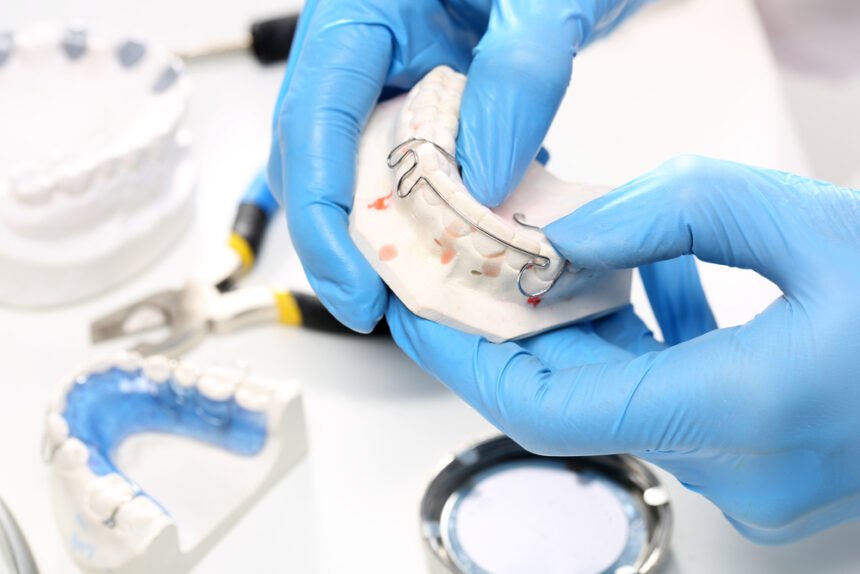
Interceptive Orthodontics
is a phased type of orthodontics. Growth is utilized to correct developmental occlusion problems. Staging the treatment can correct immediate problems and future issues. Interceptive orthodontics simply means diagnosing and treating malocclusions as soon as they are detected. The American Academy of Orthodontics now says all children should have an orthodontic assessment no later than the age of seven. In the past, orthodontic treatment did not begin until around age 12-14. This is when all the permanent teeth are already erupted or very close to it. It was also common for your dentist to remove permanent teeth to correct the bite and allow for room for the final phase of tooth movement. Modern orthodontists now advocate a way to keep permanent teeth, with phased interceptive orthodontics. In interceptive orthodontics, children are treated at much earlier ages (usually between age 7-11 years old) to take advantage of continuing growth. Patients at this age tend to be more receptive to, and compliant with treatment. Interceptive orthodontics allows for fewer teeth to be extracted and also allows for better end results.
Why Does My Child Need Interceptive Orthodontics?
Parents and patients need to understand that when interceptive orthodontics is performed there is usually more than one phase of of treatment. Phase two will begin when all the permanent teeth are in place. Going through phases allows for the second phase to be shorter in duration, since the major corrections happened in the interceptive orthodontics phase. Sometimes interceptive orthodontics are needed to correct problems related to skeletal development, and sometimes it is needed as a direct result of oral habits. –Correction of Thumb Sucking and Pacifier Habits. Persistent thumb sucking, and extended use of a pacifier effect the development of the mouth. Thumb sucking, and pacifier use after the age of three could result in: – a reshaped jawbone given its soft and pliable nature – mis-aligned teeth growing out of position – narrower dental arches -extreme tongue thrust habits – protruding front teeth which may be more susceptible to injury – ?open bites? that would require extensive orthodontic treatment to straighten
Some developmental issues requiring interceptive orthodontics include:
-constricted palate, causes misalignment of back teeth commonly called crossbite -crowding of teeth -uneven development of upper and lower jaw
Examples of Interceptive Orthodontics:
–Expansion of the upper jaw to eliminate a crossbite –Expansion of one or both jaws to create space for overly crowded teeth –Early removal of specific baby teeth to facilitate the proper eruption of permanent teeth –Maintaining space for permanent teeth after the premature loss of a baby tooth –Reducing the protrusion of upper incisors to decrease the likelihood of fracture from trauma
What are the advantages of interceptive orthodontics?
Some of the most direct results of interceptive treatment are: -Creating room for crowded, erupting teeth -Creating facial symmetry by influencing jaw growth -Reducing the risk of trauma to protruding front teeth -Preserving space for unerupted teeth -Expanding the palate to properly position back molars -Reducing the need for tooth removal -Reducing treatment time
Is your child a candidate for Interceptive Orthodontics?
Orthodontics is not just for improving the appearance of the smile. Orthodontic treatment improves malocclusions. According to dentaly, malocclusions occur as a result of tooth or jaw misalignment. Malocclusions affect the way you smile, chew, clean your teeth or even the way you feel about your smile. Recent studies have shown that malocclusions left untreated can result in problems as we age. Crowded teeth are much more difficult to brush and floss which may contribute to tooth decay and periodontal disease. Protruding teeth are more susceptible to accidental chipping. Crossbites can result in unfavorable growth and uneven tooth wear. Openbites can result in tongue-thrusting habits and speech impediments.
Interceptive Orthodontics Conclusion
In the end, orthodontics is not just about a pretty smile. It adds to ones function and ability to maintain healthy teeth throughout their lives.