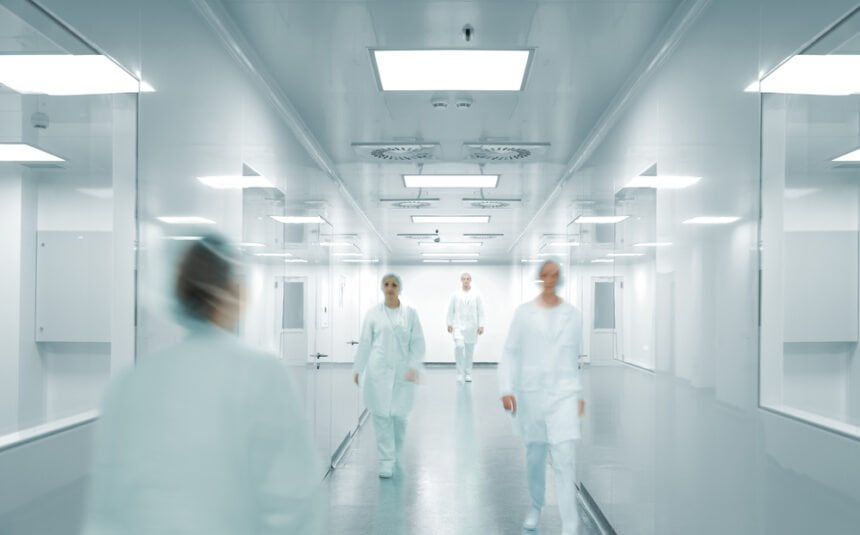
We don’t think of hospitals as being particularly dangerous or hostile. Research labs are also considered fairly mild-mannered. However, we forget how much safety gear and protocol is in place to protect the scientists, staff, and patients alike. Scientists, technicians, nurses, patients, and other supporting staff are all exposed to situations in which they can be severely harmed or contract a dangerous disease.
Today we take a look at all of the measures the medical environment takes to protect their staff and everyone else they care for.
Eyes Are Such A Delicate Feature
With the moist nature of our eyes, we are prone to be susceptible to disease and infection should something get into our eyes. The eyelashes certainly work hard at keeping most things out but in a lab or surgical room, the eyes need extra protection from splatters and flying debris.
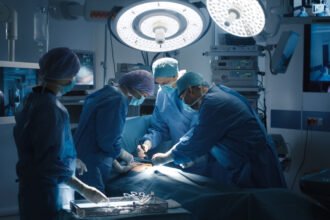
People who test tissue, blood, or other fluid samples really have to take precaution to ensure that nothing gets into their mucous membranes and their eyes. Surgical doctors and supporting staff are subject to sudden bursts of blood and fluid from their patient or possibly bone fragments if they are using a bone saw. Pathologists who perform autopsies experience similar possible situations. No one wants to contract a disease, infection, or simply be hurt on the job. Safety eyeglasses, and prescription safety glasses have been employed for a long time to protect from the dangerous possibilities.
The Hands Touch Everything
If you actually sat down and thought about how much you use your hands, you would be amazed at what they come in contact with on a daily basis. Now, imagine you work in the health field and what you could spend your days touching.
There are a lot of hidden dangers in the medical environment that can wreak havoc on a person’s life. No matter what the environment is (lab, hospital, doctor’s office, etc) there are certain things that are now in place to protect the staff from infection and disease.
One of the most obvious is the use of gloves. They were gloves for everything and they only wear them for that task on hand. Need some blood drawn? That requires fresh gloves. If they come back to check your temperature, a new pair of gloves. When they enter the room they will wash their hands, use hand sanitizer, and usually, they perform both. Because so many illnesses and diseases can float around the air for just a little bit and live, they have to take that measure so that they aren’t passing anything on to you.
In the hospital setting, patients are often sick with a lowered immune system. No medical person wants to pass on another illness to someone who is already suffering. If germs are spread that easy, you could see a facility-wide tragedy as the infections run their course.
Needle Safety Is Important
There are so many scenarios in what can happen with a needle, it’s simply not funny. Firstly, when it comes to their patients, there are strict protocols in place to ensure that needles are safe. All needles have to be opened in the presence of the patient so that they know they are fresh and sanitary. If anything happens to the needle, such as being dropped or broken, the needle is dispensed into a special hazmat container. A fresh one is then opened and the procedure continues. If the tech is trying to draw blood and not successful in the particular area, they often move to a new area. Now the tech must dispose of that needle and open a fresh one to continue on the new area.
Secondly, needlesticking is a medical staff’s worst nightmare and it can happen anywhere. It can be accidental by reaching into a hazmat container (some containers are now designed so that one cannot do that), an inspection on an unconscious patient who has a needle on their person, or simply taking a shortcut and ignoring protocol. Needlesticking leaves a person vulnerable to possible infections and diseases in the medical environment. Given that it most often happens in environments with a large number of diseased and hurt patients, the fear can be exacerbated.
Masks To Protect The Lungs
Have you ever noticed that in Japanese culture, they tend to wear masks when they are ill? It is to keep them from spreading their germs to other people but continue working throughout their day. Medical environments do a similar thing but to protect themselves from the environment.
In labs, scientists often wear masks so that they don’t breathe in anything that could be coming off their sample that could make them sick. In surgical rooms, masks are used to protect the nurses, techs, and doctors from splashes of bodily fluids and debris flying. In the hospital or doctor’s office, they are used to minimize the spreading of germs and protecting a person who has a fragile immune system.
In all of these scenarios, the masks also work to protect the samples and patients that are being worked on. Samples in the lab are in such a delicate state that any change in the environment can destroy the sample. In a cooled room, warm breath from the technician or scientist can literally damage the sample. Patients who are being worked on are also in a fragile state with a lowered immune system that can be an inviting hotbed for disease and infection. A medical employee whose child caught a cold will likely wear a mask more often just to ensure they don’t pass it on. Even if they are not showing signs of infection! A doctor who has just gotten over an illness may wear a mask at work for the same reasons. Just to be on the safe side.
All of these situations are things we may not think about but are a true reality of the medical world. There are lots of things to think about, protocols to follow, and laws so that the staff and you are protected to the best of anyone’s abilities. It may frustrate you but trust us, it’s much safer for you in the long run.