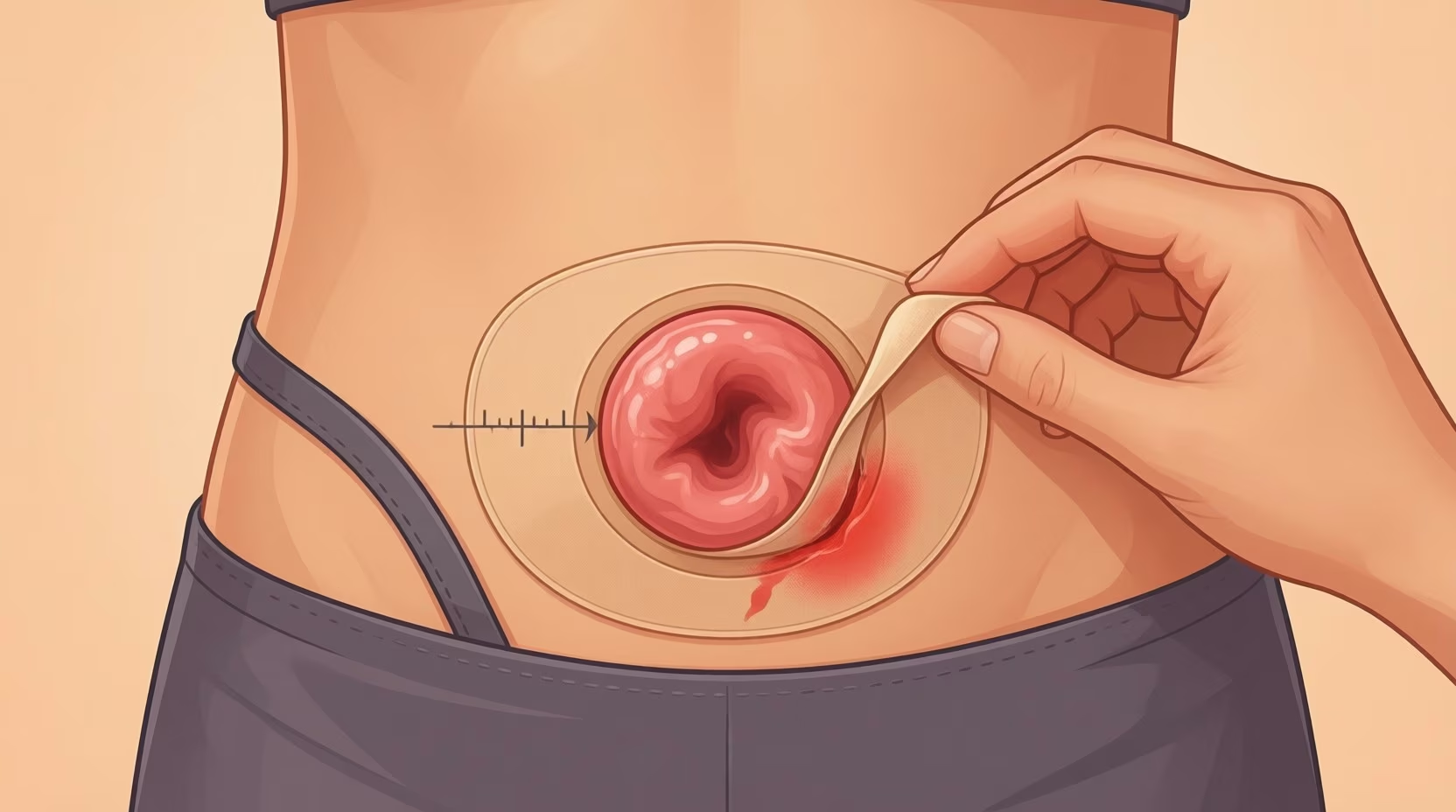
Roughly 725,000 to 1 million people in the United States live with an ostomy, based on broad UOAA estimates, and others require one after bowel or bladder surgery. Most patients will tell you that the stoma itself is rarely the hardest part to manage. The real day-to-day challenge comes down to the small area of skin surrounding it.
Peristomal skin care involves keeping the abdominal tissue around your stoma clean, dry, and protected from stoma output and mechanical stripping. Routine visual checks at each barrier change, accurate stoma sizing, plain warm water cleansing, and early guidance from a WOC nurse prevent most irritation and seal failures.
That tissue, called peristomal skin, spends nearly all of its time covered by an adhesive skin barrier. Stool or urine can touch it whenever the seal isn’t tight, and the barrier gets peeled off and cleaned on a regular schedule. Peristomal skin complications are among the most common issues people with an ostomy face, yet they’re also among the most preventable. Here is what healthy peristomal skin looks like, what usually goes wrong, and when you should get professional help.
- Healthy skin baseline: Intact peristomal tissue matches the rest of your abdomen without redness, weeping, itching, or burning.
- Primary irritation triggers: Output leaks from a poor barrier fit, skin stripping during fast adhesive removal, product sensitivities, hair follicle trauma, and trapped moisture.
- Daily protection: Clean with plain warm water, re-measure your stoma as contours change, and peel barriers back slowly.
- When to call a WOC nurse: Persistent redness, weeping sores, frequent pouch leaks, pain under the barrier, or changes in stoma color and shape.
What Healthy Skin Looks Like
Healthy peristomal skin looks just like the rest of the skin on your abdomen. It stays intact, free of redness, rashes, blisters, open sores, or weeping, and it doesn’t itch, burn, or hurt. A quick way to check is to compare it with the skin on the opposite side of your belly. Both sides should look about the same.
The stoma itself looks quite different. It stays moist and ranges from pink to red, much like the inside of your cheek. Because it has no pain-sensing nerves, you might not feel anything if it gets rubbed or nicked. That lack of sensation is a major reason regular visual checks matter so much.
The United Ostomy Associations of America (UOAA) recommends building a habit of inspecting the skin during every barrier change. A brief visual check at each change catches most problems while they’re still minor.
The Most Common Causes of Irritation
Peristomal skin irritation usually starts when stoma output leaks under the barrier, adhesive removal strips the outer skin layer, or trapped moisture and product sensitivities inflame the tissue.
More Read

Leaks and a Poor Fit
Output reaching the skin is one of the most common causes of sore peristomal tissue. Stool, especially the liquid output from an ileostomy rich in digestive enzymes, and urine can irritate exposed skin quickly. You’ll typically see red, moist, or raw patches right next to the stoma.
Usual culprits include a barrier opening cut too large, a seal that lifts inside a skin fold or crease, or a barrier left in place too long. Stomas often shrink during the first few weeks after surgery, and abdominal contours shift with weight gain or loss, so a size that once worked well may stop fitting properly. Re-measuring regularly is one of the simplest ways to protect your skin.
Mechanical Injury From Removal
Pulling a barrier off too quickly, or changing it more often than needed, can strip away the top layer of skin. Damaged tissue looks shiny, red, or patchy, sometimes showing small torn spots. Peeling the barrier back slowly while supporting the underlying skin, along with using a medical adhesive remover when needed, cuts down on this kind of trauma.
Sensitivity to Products
Some people develop reactions to a specific adhesive, tape, or skin care product. The redness often matches the footprint of the product that touched the skin, and it may itch or blister. You should switch products with clinical guidance, since the actual trigger isn’t always obvious.
Hair Follicle Irritation
When hair trapped under the barrier gets pulled out during each change, small red bumps can form around the follicles. Carefully trimming hair in the area, instead of dry shaving, usually resolves the issue.
Moisture and Heat
Sweat, high humidity, and moisture trapped beneath the barrier can soften the skin and leave it fragile. Sometimes a fungal rash takes hold, showing up as red, itchy skin with small satellite spots along the edges. Clearing this up requires targeted treatment chosen by a clinician, not guesswork.
Everyday Habits That Protect the Skin
Consistent daily ostomy care protects your peristomal skin from chemical irritation and adhesive trauma before sores can form. Washing with plain water, letting the skin dry completely, sizing the barrier opening accurately, and peeling adhesives away gently keep the barrier seal reliable between changes.
- Clean with warm water and dry thoroughly. Plain water is usually enough. Skip soaps containing oils, moisturizers, or heavy fragrances, as they can leave a film that keeps the barrier from sticking.
- Measure the stoma regularly, especially during the first few months after surgery and after any noticeable weight change.
- Change on a routine schedule, before the adhesive starts breaking down, and swap the pouching system promptly if output creeps under the barrier.
- Remove gently. Start at one top corner and work your way down slowly, pressing the skin away from the adhesive as you go. An adhesive remover makes this much easier on fragile tissue. Safe n Simple offers a practical guide on how to remove medical adhesive from skin safely.
- Skip home remedies under the barrier. Lotions, oils, and household ointments can break the seal or irritate your skin further.
- Add accessories only with clinical advice. Barrier rings, stoma powder, or skin barrier films help in specific cases, but they work best when matched to the root cause. Certain options, such as convex barriers, should only be selected after a professional assessment.
When to See a WOC Nurse
A wound, ostomy, and continence (WOC) nurse is a specialist trained to evaluate stomas and protect the skin around them. Many patients only meet with one in the hospital, but outpatient clinics are widely available and well worth requesting. Book an appointment if you notice any of these general caution signs:
- Redness, rash, or broken skin that persists across changes or keeps coming back;
- Open, bleeding, or weeping skin around the stoma;
- Leaks that happen repeatedly, or a barrier that no longer holds as long as it used to;
- Itching, burning, or pain underneath the barrier;
- A noticeable bulge developing around the stoma or a shift in abdominal contour;
- Changes in the stoma itself, such as swelling, shifting color, or the stoma pulling below skin level.
Following the steps outlined in the Peristomal Skin Assessment Guide for Consumers will help you proactively monitor the condition of your peristomal skin at home. While the guide doesn’t replace the advice of a medical professional, it is a helpful tool for people with an ostomy. If you’re experiencing pain or significant complication with the operation of your ostomy, seek advice from a WOC nurse.
WOCN Society, in WOCN Peristomal Skin Assessment Guide for ConsumersStandard emergency care guidance recommends getting urgent medical attention if the stoma turns dark purple or black, if heavy bleeding starts, or if output stops alongside pain, abdominal swelling, or vomiting.
If you don’t have a regular WOC nurse, ask your surgeon’s office for a referral, or check UOAA’s ostomy skin care resources and online locator to find outpatient ostomy support near you.
FAQ
How to get stoma paste off skin?
Remove stoma paste gently using a warm, damp washcloth or a medical adhesive remover wipe or spray while pressing your skin slowly away from the residue. Never scrub or pick hardened paste off dry skin, since forced peeling strips the top epidermal layer.
How can I help my peristomal skin heal?
Start by checking your barrier fit and re-measuring your stoma so no liquid output can pool against raw skin. Clean the area with plain warm water, pat it dry completely, and skip oily soaps or household lotions that block adhesion. Peel barriers off slowly from top to bottom using an adhesive remover, and schedule a visit with a WOC nurse if redness, weeping, or burning lasts across multiple pouch changes.
Protecting Peristomal Skin Over the Long Term
Healthy skin around your stoma forms the foundation of living comfortably with an ostomy. A snug fit, gentle adhesive removal, simple water cleaning, and a quick visual check at every change help prevent common complications. When trouble does show up, early support from a WOC nurse usually resolves it before it turns into a frustrating cycle of leaks and raw skin.
This article is for general information and is not a substitute for advice from a doctor or ostomy nurse.