Certainly, when learning to play an instrument or perform a particular pose in yoga class, repetition and practice is important in order to succeed and ultimately to improve. Athletes train their muscles to remember particular movements so that when in competition, they can perform at very high levels without even giving a thought to mechanics. Similarly, a concert pianist or violinist are able to guide their hands along the keyboard or strings even under the pressures of playing at Carnegie Hall.
Certainly, when learning to play an instrument or perform a particular pose in yoga class, repetition and practice is important in order to succeed and ultimately to improve. Athletes train their muscles to remember particular movements so that when in competition, they can perform at very high levels without even giving a thought to mechanics. Similarly, a concert pianist or violinist are able to guide their hands along the keyboard or strings even under the pressures of playing at Carnegie Hall. A recent article in the Wall Street Journal by Doug Lemov discussed the utility of rehearsing activities commonly performed at a particular job in order to free up the brain for other more complex tasks. As the author suggests, there are limitless applications for this type of “brain-training” in business, medicine and other technically challenging professions.
In medicine, the old adage of “see one, do one, teach one” has been the standard for educating young medical students and physicians. Much hands on experience is gained during the years of training in our current system. As Mr Lemov describes in his WSJ article, practicing one task until it is nearly automatic allows us to devote more of our brainpower to other more complex tasks. Practicing skills allows us to not only improve at a particular movement but more importantly helps us respond to a particular situation quickly, calmly and automatically. This can be a life saving proposition in the practice of medicine, particularly in emergencies. I suspect in medicine, we could improve upon the old adage and adapt it to “see one, do many, teach several” in order to apply these principles more fully.
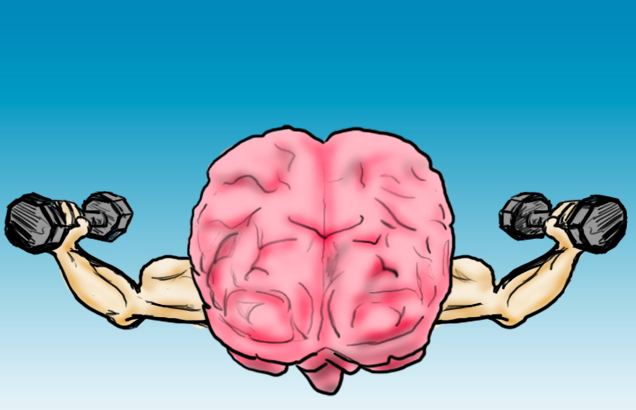
A recent article in the New York Times described “brain training” techniques that are being marketed to children between the ages of 11 and 21. Unlike traditional tutoring, these classes focus on brain exercises such as number recall, sequence memorization, and visual manipulation tasks in the face of distractions. Similar to practicing repetitive mechanical tasks until they become second nature, “brain training” is designed to help students focus on complex mental tasks in the face of significant auditory and visual distractions. The theory behind the process is that through the performance of mental exercises, we are able to sharpen and brighten the brain’s skills–similar to how a professional golfer may perfect his or her golf swing.
More Read

I believe that the practice of medicine may very well benefit from incorporating these types of mechanical and cognitive practice sessions into physician education. Today, medical centers are beginning to use simulators to train surgery residents to perform procedures. Physicians in training should begin by utilizing simulators to develop muscle memory –then move to assisting and performing actual surgical procedures in order to perfect their skills. Certainly, simulators do not replace the experience gained in the operating room but can improve safety and expose trainees to more opportunities to learn. Additionally, physician-patient interactions could be simulated and practiced using actors as patients. Many medical schools are already using simulated patients to evaluate competency in patient interactions. In my medical school training at Wake Forest University I benefited greatly from interacting with simulated patients. Not only did I learn how to perform a history and physical exam I was also given direct feedback from the patient–I learned the importance of making eye contact, expressing emotion and forming a connection with the patient in a short exam room interaction. By putting even more emphasis on “practicing” these interpersonal interactions, physicians in training will be more prepared to handle complex situations such as delivery of bad news, angry families or other challenging patient interactions. Most importantly, through a combination of both physical and mental “practice” we are able to perform at very high levels in very chaotic situations and environments such as the trauma suite in the Emergency Room or in the Operating Room.
Practice makes perfect in sports, music and in medicine. As medicine becomes more complex and more advanced technologies are made available, it is essential that physicians are able to become proficient and able to treat patients under pressure. Moreover, the doctor-patient relationship is critical to success. Physicians must constantly work to improve our ability to connect with patients. Although practice may not always make us perfect, practice will make us better physicians and ultimately help to improve patient outcomes.