We use cookies, including third-party cookies from Google to serve personalized ads through AdSense, to operate this site and understand how it is used. By continuing to browse, you accept this use. See our Privacy Policy and Terms of Use for details, including how to opt out of personalized advertising.
Accept
Health Works CollectiveHealth Works CollectiveHealth Works Collective
  • Health
    • Mental Health
  • Policy and Law
    • Global Healthcare
    • Medical Ethics
  • Medical Innovations
  • News
  • Wellness
  • Tech
Search
© 2023 HealthWorks Collective. All Rights Reserved.
Reading: mHealth: Prevention is Better Than Cure
Share
Notification Show More
Font ResizerAa
Health Works CollectiveHealth Works Collective
Font ResizerAa
Search
Follow US
  • About
  • Contact
  • Privacy
© 2023 HealthWorks Collective. All Rights Reserved.
Health Works Collective > Technology > Medical Devices > mHealth: Prevention is Better Than Cure
DiagnosticsMedical DevicesMobile HealthTechnology

mHealth: Prevention is Better Than Cure

benw123
benw123
Share
3 Min Read
Image
SHARE

Image

Image

Prevention is better than cure, Desiderius Erasmus once said. While we continue to see the exciting development of more efficacious and tolerable treatments coming to market, a new form of prevention, or more precisely, detection, is growing quickly and it is fuelled by digital health.

Often, the survivability of terminal disease is enhanced greatly by early detection and treatment, as opposed to trying to cure the disease itself. But detection requires regular checks, and in the main, this means a trip to see your doctor. For many, this only happens when a symptom presents itself, and of course further specialist tests are needed before a solid diagnosis may be given.

More Read

What I Learned at the HIMSS Conference About Developments in Health IT for the Rest of 2012
Entrepreneurs Hacking Healthcare [PODCAST]
Person-Centered HealthCare: How mHealth Technologies Are Benefiting Patients
Healthcare Data Survey Shows Providers Are Easy Prey For Hackers
Time for some healthcare New Year’s resolutions

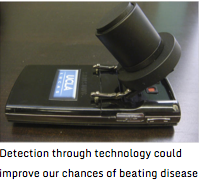
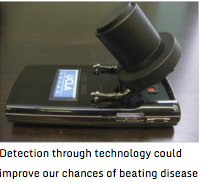
However, today, as we walk around with smartphones, equipped with cameras, internet access and modest processing power, we may be carrying the future of diagnosis in our pockets. Technology in the form of apps for diagnosis, apart from being free and discreet to use, could be applied regularly by individuals whenever they felt the need. Imagine how early some diseases could be caught, potentially improving survival rates countless times over. This idea has not gone unnoticed in the technology community.

Indeed, evidence of the interest in this approach can be measured in the incredible venture capital investment into healthcare startups. Search for “health” on the TechCrunch website and there are news items on a daily basis discussing the latest Silicon Valley investments. The numbers are hardly modest either; seven figure dollar sums are being ploughed into these small enterprises.

Aside from the massive healthcare benefits, while clearly being the most important of all, there is also the financial improvement for government-provided healthcare and medical insurance providers. Tests and treatments cost money, especially over the lifetime of treatment patients can expect. Tackle a patient’s potential disease early through detection, and costs could plummet.

Outwardly, these digital investments – and their frequency – do feel a little like the dot com bubble in the nineties, but with the opportunity to improve healthcare outcomes from technology comes hope of a return. Indeed, there is a $10m reward for the first device to correctly diagnose up to 15 diseases in the human body. The rules are specific, with the device essentially requiring a size largely equivalent to a smartphone.

What’s interesting is that this new tech is another way in which digital media is enriching and evolving the healthcare landscape. For a while now, digital communications have been used to reach healthcare professionals and patients, while social media allows peer-to-peer connectivity, disease awareness and support. Now a new channel of opportunity and safety could be opening up.


 
TAGGED:patient engagementself-monitoring
Share This Article
Facebook Copy Link Print
Share

Stay Connected

1.5KFollowersLike
4.5KFollowersFollow
2.8KFollowersPin
136KSubscribersSubscribe

Latest News

What Hospitals Need to Know About EU MDR -- AI-generated illustration
What Hospitals Need to Know About EU MDR
Business Hospital Administration
August 18, 2026
How to Choose an On-Demand Medical Interpreting Provider for Your Hospital -- AI-generated illustration
How to Choose an On-Demand Medical Interpreting Provider for Your Hospital
Health care
August 12, 2026
The Chemistry Of Drug Consistency -- AI-generated illustration
The Chemistry Of Drug Consistency
Policy & Law
August 12, 2026
Dental Materials Through The Decades -- AI-generated illustration
Dental Materials Through The Decades
Dental health Infographics Specialties
August 12, 2026

You Might also Like

On the Road Again for Cancer Connections

April 10, 2014
David Lee Scher MD
BusinesseHealthMedical InnovationsTechnology

Q & A Part One: Technology and Healthcare Efficiency—Not Always the Perfect Match

May 30, 2014
diagnosis
Diagnostics

Diagnosis Is a Cause Everyone Can Get Behind

October 10, 2013
CardiologyMedical DevicesMedical InnovationsTechnology

The Value And Criticism Of Robot-Assisted Heart Surgery

May 15, 2019
Subscribe
Subscribe to our newsletter to get our newest articles instantly!
Follow US
© 2008-2026 HealthWorks Collective. All Rights Reserved.
  • About
  • Contact
  • Privacy
Welcome Back!

Sign in to your account

Username or Email Address
Password

Lost your password?