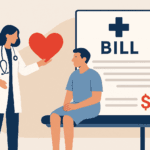

Before we can even begin to talk about mitigating risk, we have to know the types of risk out there. Risk Management is an integral part of any healthcare system.
Strategies for healthcare systems to avoid loss stem from risk assessments made across the board: from the administrative to the clinical practices.
Before we can even begin to talk about mitigating risk, we have to know the types of risk out there. Risk Management is an integral part of any healthcare system.
Strategies for healthcare systems to avoid loss stem from risk assessments made across the board: from the administrative to the clinical practices.
More Read

The process of risk management reflects the clinical decision making of a physician: the risk must first be diagnosed, then assessed, a measured probable outcome (prognosis) is made and finally, management of the risk is initiated. By following this well-known process, physicians can address potential trouble areas in a systematic way.
Defining Risk | Risk Management
A risk is defined as an undesirable situation where there may be 1) harm to a patient, 2) liability of healthcare providers or 3) financial loss for the institution. Examples might include malpractice cases, lack of compliance with documentation procedures, a patient complaint that requires investigation, medical records released without proper consent or occurrence reporting related to a sentinel event.
Risk may be financial, or, qualitative. These risks can be identified and rectified through data that is collected by an institution. Security risks, particularly as they pertain to information technology, can also be measured.
Risk Management | Qualitative and Quantitative
Qualitative risk, such as occupational health and communication, can impact patients, their families and employees of a healthcare institution. These risks are usually uncovered by “walk-thrus” of a facility, through patient or employee complaints, or part of audits wherein an investigation follows.
In any field, but particularly in healthcare, uncertainty is the crux on which employees and consumers of an organization must balance. Risk management programs allow the organization to develop strategies to foresee and prevent probable risk, either through reducing the negative effect, avoiding the risk altogether when possible, or transferring the risk.
Risk Management | Strategies
Ultimately if a risk can’t be transferred or avoided, then accountability for the risk must be taken by the organization, and strategies must be put in place based on the lessons learned during the event to prevent it from happening again.
These strategies could include new patient monitoring techniques, pre-op checklists and direct and accessible chain-of-command procedures for staff in the event of a disaster.
Policies should also be in place to discourage, and ultimately punish, behavior that is directly related to an outcome associated with risk. This may include zero-tolerance policies for employees, reeducation requirements after certain events, or enforced leaves.
Risk Management | A Final Word
The most effective approach to risk management is the pragmatic approach: there is a constant need to balance risk and reward, and they must be reevaluated in real-time. Risk can be assessed based on the severity of the risk and the likelihood of it occurring. Taking a statistical approach, we can create probabilities on which to base our decisions about implementing new strategies. As the healthcare universe continues to evolve, our numbers are bound to change, so we need to remain vigilant about objectively assessing risk across the board to create the safest environments for our patients, and continue to work efficiently and economically in our hospitals and clinics.