By using this site, you agree to the Privacy Policy and Terms of Use.
Accept
Health Works CollectiveHealth Works CollectiveHealth Works Collective
  • Health
    • Mental Health
  • Policy and Law
    • Global Healthcare
    • Medical Ethics
  • Medical Innovations
  • News
  • Wellness
  • Tech
Search
© 2023 HealthWorks Collective. All Rights Reserved.
Reading: Person-Centered HealthCare: Mayo Clinic’s Three “P”s
Share
Notification Show More
Font ResizerAa
Health Works CollectiveHealth Works Collective
Font ResizerAa
Search
Follow US
  • About
  • Contact
  • Privacy
© 2023 HealthWorks Collective. All Rights Reserved.
Health Works Collective > Business > Hospital Administration > Person-Centered HealthCare: Mayo Clinic’s Three “P”s
BusinessHospital Administration

Person-Centered HealthCare: Mayo Clinic’s Three “P”s

docnieder
docnieder
Share
4 Min Read
Image
SHARE

Image

Image

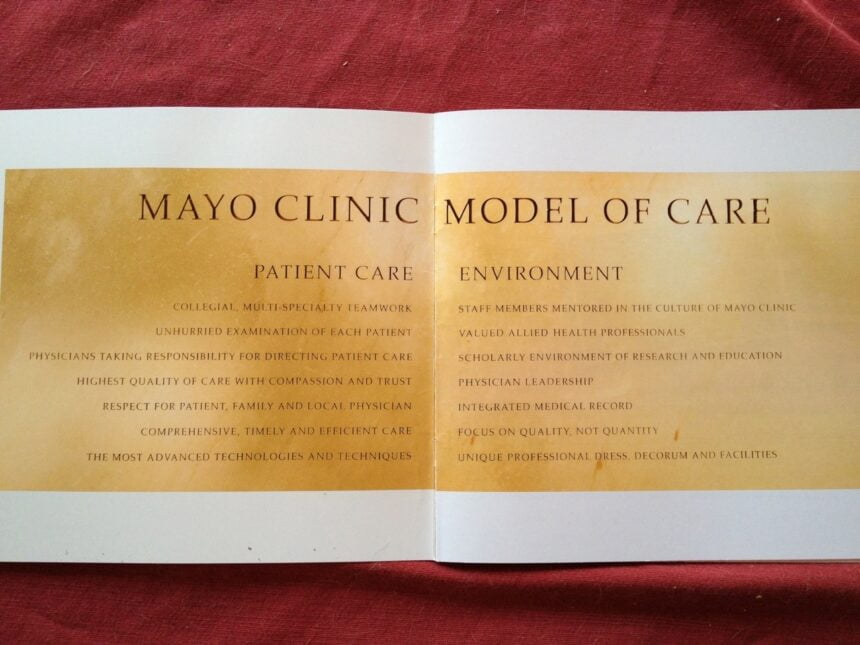
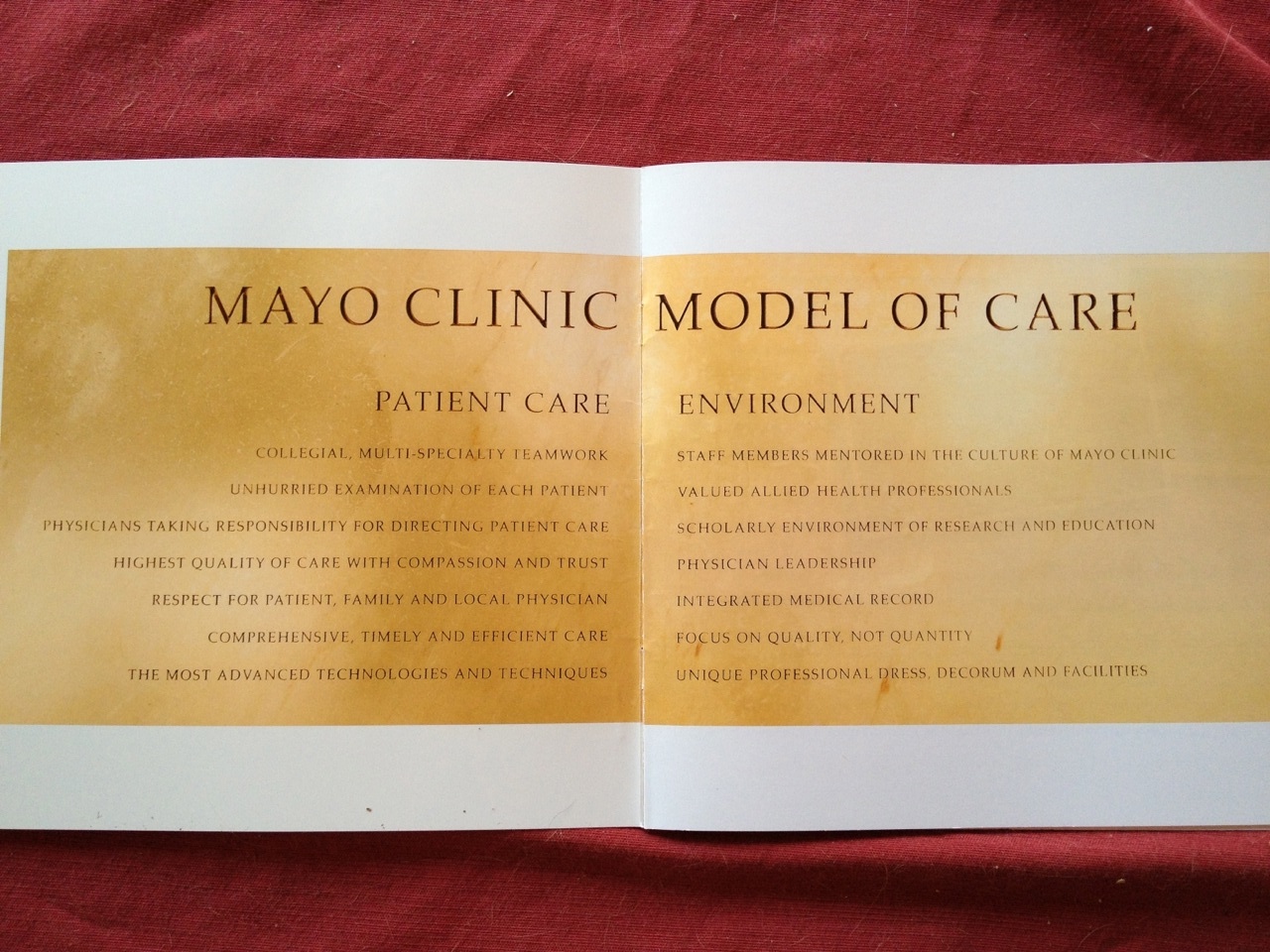
Last week I attended the Mayo Clinic’s Annual Social Media Summit in Rochester. What most impressed me had nothing to do with the conference. On Tuesday afternoon before the Summit began I toured Mayo Clinic. It was supposed to be for an hour but lasted more than two because our group, consisting of one doctor and nineteen PR professionals, was so interested in the information being fed to us. I don’t know why the publicity folks were so intrigued, but for me, Mayo’s philosophy of “”patient-centered, physician-led” care hearkened back to a time when the patient-physician relationship was inviolate. It was stimulating to realize that my instincts of how medicine is best-practiced are right on target. Image
My myopic opinion regarding the fragmentation of healthcare sees the destruction of the patient-physician relationship by multiple entities, who are primarily interested in a piece of the economic pie, as central to our healthcare mess. At Mayo, no project moves forward unless there is a physician who champions it and it is the physician’s responsibility to ensure that every project is dedicated to improving some aspect of patient care. Physicians are salaried so they spend the time necessary to care for patients and are not incentivized to increase the numbers of patients seen or do procedures to enhance the bottom line. 
More Read

Socialcam: Mobile Video Sharing Made Easy
Hospital Mortality Rates Rise in July
Healthcare: Get Ready to Shake, Rattle and Roll
Talking Healthcare with Martha Coakley, Attorney General and Candidate for MA Governor
Nurse Staffing and Care Quality

Every person I met who worked for Mayo reiterated the importance of putting patient care and comfort first. It was incredibly refreshing. The Mayo logo emphasizes a patient-first policy as well. I’d seen the logo multiple times but somehow never thought about what the three shields represent. Our tour guide explained: Patient care, research and education. The educational aspect was obvious as we walked multiple floors of patient care areas. I noticed no TVs in patient waiting rooms but many had computer screens where patients could learn about their conditions.

It is a refreshing and calming atmosphere without the cacophony of media noise. There is art everywhere. Waiting rooms are spacious and well-lit. Meditation rooms and educational spaces abound. 


Mayo has always represented excellent healthcare in my mind. Patient reports that come to me after a visit there are extraordinary due to the extent of the integrative care the patient experiences from multiple medical disciplines coming together. I expected to be impressed. I did not realize I would also be reassured. Putting patients first is what I’ll continue to strive to do, despite insurance interference, governmental policies or EHR dysfunction.

Editor’s Note: Take a look at these photos that the author, Kathy Nieder, took during her tour of The Mayo Clinic.  Looks to me like a good Healing Environment!

Image
Waiting Area on a Children’s Floor in the Gonda Building


Image
Original Joan Miro Paintings


Image
Original Medical Library in the Plummer Building


;


Editor’s Note: I have included a video on the Mayo Clinic’s Patient-Centered mission:

If you like this post, please read other posts in the series on the Person-Centered HealthCare main page. And if you have a story to tell that may be a fit with our series, please comment below or email me at joan@socialmediatoday.com


TAGGED:mayo clinicPerson-Centered HealthCare
Share This Article
Facebook Copy Link Print
Share

Stay Connected

1.5kFollowersLike
4.5kFollowersFollow
2.8kFollowersPin
136kSubscribersSubscribe

Latest News

new talent in nursing
The Fast-Track Paths Bringing New Talent Into the Nursing Workforce
Career Nursing
November 30, 2025
AI agents in healthcare
AI Agents in Healthcare: How Sully.ai’s Virtual Team is Transforming Hospital Operations
Hospital Administration Technology
November 26, 2025
hospitality jobs health benefits
The Health Benefits of J-1 Hospitality Careers
Career
November 23, 2025
healing care
Why Healing Spaces Depend On Healthy Building Systems
Infographics News
November 19, 2025

You Might also Like

The ACA has put patients at the center of healthcare services. A patient-centric healthcare approach in this digital era means a revised definition of quality in the physician-patient relationship. When it comes to healthcare services, patients shell out a hefty amount from their pocket and want nothing less than the best. The services in healthcare are no longer limited to just cost as consumers now evaluate quality and experience in the same equation. Research highlights from the 2015 Healthcare Consumer Trends by National Research Corporation states that reputation in healthcare matters more to consumers when choosing a brand than any other industry, e.g. hospitality, retail, airline, etc. The new generation of quality measurements in healthcare require a different mind-set and a different 'toolbox' to handle the hurdles. It’s the need of the hour for healthcare providers and others across the healthcare value chain to adopt the patient-centric approach for surviving in the vast competitive ocean of healthcare services. Patient-centric care is an approach that develops through effective communication, empathy and a positive physician-patient relationship. The primary purpose is to improve patient care outcomes and satisfaction and to reduce patient symptoms and unnecessary costs. It’s a win-win situation for both physicians and patients. While healthcare providers are able to support their patients in becoming more compliant with treatment and management of their conditions/diseases, patients feel more satisfied with the care that they are receiving. PwC’s Health Research Institute’s annual report 2016 states that health systems should keep an eye on the consumer experience as they expand and extend. More partnerships and more caregivers could mean confusion for patients and poor customer experiences. To differentiate their practice among competitors, patient satisfaction can be used as a competitive distinguishing factor. Although patient satisfaction cannot really provide tangible benefits, but an experience that exceeds patient expectations for what a practice/hospital can provide is very important as it creates loyal patients who return for future health needs and refer their family and friends. Happy and satisfied patients are a secret marketing weapon for healthcare providers, whether they are physicians, dentists, physiotherapists or hospitals. Your patients are the new-age digital health decision-makers. In this era of Internet and social media, they now have multichannel access to information related to health. Needless to mention, they have gained new power to make their decisions; whether it’s choosing a healthcare provider or referring a physician to family and friends. By converting your satisfied patients to be your brand advocates, you can capitalize and use their voice as an effective marketing strategy to reach out to many other potential patients. To strive and thrive, in the U.S. many healthcare organizations are applying patient-centric approaches to healthcare. It’s all about what matters to patients, so it makes a lot of sense for the healthcare industry to place patients' healthcare experience at the center of their policies and procedures. The best deliverables are a combination of great communication for a positive physician-patient relationship, disciplined measurement and analysis of patient feedback and commitment to technology innovation – the formula for improving patient engagement and care.
BusinessHealth ReformWellness

The Link Between Patient Satisfaction and Long-Lasting Relationships

April 28, 2016

Cost of Medical Errors: $17 billion

April 7, 2011
BusinesseHealthMedical RecordsTechnology

Analytical Marketing Helps Breakthrough Medicine Reach Patients

January 13, 2018

Yanking Avastin’s Breast Cancer Indication –the Right Thing To Do

November 19, 2011
Subscribe
Subscribe to our newsletter to get our newest articles instantly!
Follow US
© 2008-2025 HealthWorks Collective. All Rights Reserved.
  • About
  • Contact
  • Privacy
Welcome Back!

Sign in to your account

Username or Email Address
Password

Lost your password?