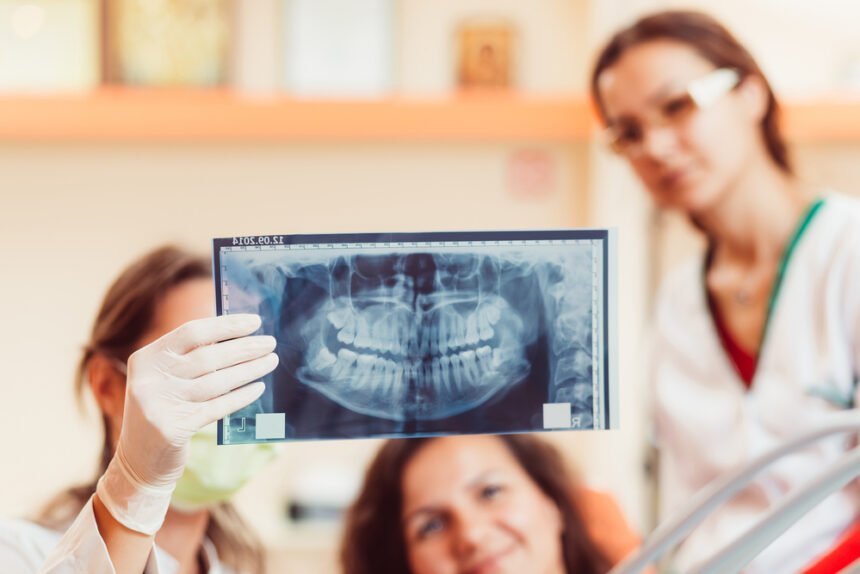
Typically, at least once a year, your dentist is going to ask for a fresh set of dental x-rays. There has been a lot of fear and misconceptions with the process and science of x-rays spread over the years, leaving us to wonder: how safe dental x-rays really are.
To find out the truth, we consulted with professionals like Manhattan dentist Dr. Sidhu. We found out everything that you need to know about dental x-rays.
Why are they needed?
There are a lot of things that you need to ask yourself when choosing a dentist. The first question that we asked was why are x-rays needed at all? When you have a specific dental issue, your dentist will take a single x-ray of the problem tooth to see what might be going on under the surface of your teeth, so why take them routinely?
To answer this, we first needed to understand what an x-ray does. An x-ray works by sending a beam through your mouth. Some parts of your mouth will allow the beam to pass through it while others will not. Bone will not allow it to pass through, making dental x-rays a great way of seeing what is going on under your gums.
Dental x-rays are an important type of dental technology that will reveal what is happening under the surface of your teeth. If you have a cavity, it might not be visible with the eye, but an x-ray would be able to reveal that there is tooth structure missing. X-rays will also show any infections that might be brewing under the tooth, indicating abscess or periodontal disease.
Annual x-rays are requested to make sure there are not any issues brewing where you cannot see them. X-rays can also be compared each year to look for signs of trouble before trouble reveals itself. It is much easier to fix dental issues if you nip them before they have turned into a painful problem.
Types of Dental X-rays
There are a few different types of dental x-rays. They include:
- Full Mouth Series: These x-rays are done every 3 to 5 years. They are made up of a series so individual x-rays, combining bitewing and periapical x-rays. New patients will be asked to have these done to give the dentist some background information and give them a place to start.
- Bitewings: Bitewing x-rays are four x-rays that are taken once a year. They are taken of the molars to show any cavities that might not be noticeable from the outside.
- Periapical: These are individual x-rays that show your tooth from the tip all of the way to the root. These are great for diagnosing issues, because you can see if there is any infection or problem along the root of the tooth.
- Panoramic: Panoramic x-rays are a single photo of the entire mouth, like a panoramic view. These are used by orthodontists to get a view of the teeth on the whole, but they can also be used to diagnose jaw problems.
Safety Concerns
Now that we have gone over the types of x-rays and why they are needed, let’s go over whether there is any reason to be concerned about your safety. The concern is outdated. X-rays used to use radiation to take a picture of the interior part of your body, but modern technology has that using less and less all of the time.
The fact is that the annual four bitewing x-rays that you get emits about .005 mSV, making it one of the lowest radiation doses in the medical or dental fields. You get more radiation on a daily basis just by going about your day. The amount of radiation that you are getting is less than you would from living in a house with granite countertops. All organic matter contains a small amount of radiation as well. It is reported that the annual radiation you get for food is the equivalent of 60 dental x-rays.
Ultimately, it never hurts to be cautious and to ask, but the radiation that you will get from your dental x-rays is so incredibly minimal that it will not affect you. Not getting x-rays done when you need them would be far more damaging in the long run. So, get your annual x-rays and rest easy that they are not a safety concern.