By using this site, you agree to the Privacy Policy and Terms of Use.
Accept
Health Works CollectiveHealth Works CollectiveHealth Works Collective
  • Health
    • Mental Health
  • Policy and Law
    • Global Healthcare
    • Medical Ethics
  • Medical Innovations
  • News
  • Wellness
  • Tech
Search
© 2023 HealthWorks Collective. All Rights Reserved.
Reading: Self-Tracking Is Just the Beginning for Wearables Applications
Share
Notification Show More
Font ResizerAa
Health Works CollectiveHealth Works Collective
Font ResizerAa
Search
Follow US
  • About
  • Contact
  • Privacy
© 2023 HealthWorks Collective. All Rights Reserved.
Health Works Collective > Technology > Medical Devices > Self-Tracking Is Just the Beginning for Wearables Applications
eHealthMedical DevicesMedical InnovationsMobile HealthTechnologyWellness

Self-Tracking Is Just the Beginning for Wearables Applications

Jocelyn Scheirer
Jocelyn Scheirer
Share
3 Min Read
wearable tech ling tan
SHARE

Do you have any bad health habits you’d like to get rid of? Smoking? Overeating? Slouching? Too much wasted time surfing the internet? 

A wearable sensor may be in your future to help you modify your behavior.

The majority of wearable sensors in the market right now are designed to help people to develop good, healthy habits. They track loads of items having to do with fitness – calories, heart rate, steps achieved – and the list goes on.  They work by reminding you to do good things for yourself such as exercise, eat properly and get enough sleep.

Do you have any bad health habits you’d like to get rid of? Smoking? Overeating? Slouching? Too much wasted time surfing the internet? 

More Read

5 Common Misconceptions about Dietary Treatment for Osteoporosis
Don’t Underestimate Email Marketing in Healthcare
5 Ways Doctors Can Connect With Their Patients
Get Your Healthcare Practice’s Website Mobile-Ready
Sleep Study Sleeplessness: Causes, Coping, and Solutions

A wearable sensor may be in your future to help you modify your behavior.

The majority of wearable sensors in the market right now are designed to help people to develop good, healthy habits. They track loads of items having to do with fitness – calories, heart rate, steps achieved – and the list goes on.  They work by reminding you to do good things for yourself such as exercise, eat properly and get enough sleep.

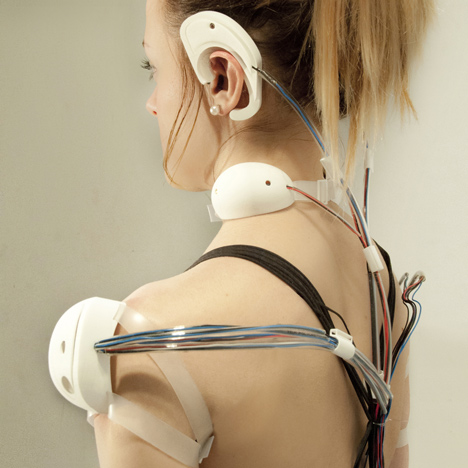
But what about a sensor that rebukes you when you’ve indulged? A trend toward “Punitive Technology” includes some experimental devices that buzz, shock or otherwise punish the wearer when an unwanted behavior occurs. Probably the most extreme example I’ve seen of this is Ling Tan’s Reality Mediators for Bad Habits and Laziness, which delivers electric shocks and looks like some kind of medieval torture device:
wearable tech ling tan

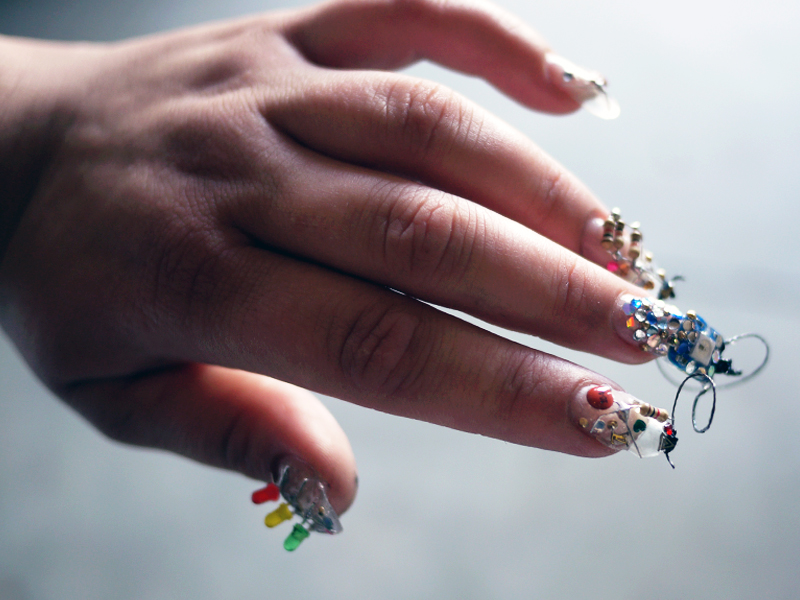
Less scary and more artistic are the fingernail art sensors developed by students at Art Center College in Pasadena. Their prototypes are designed to be glued to the nails in a pop up salon and programmed individually to buzz the user at appropriate times (when a cigarette is picked up, etc.). The technology appears to still be in concept stage, but it has the promising element of customization and a buzz seems a lot more user-friendly than an electric shock.

I spoke with Rob Morris of the MIT Media Laboratory’s Affective Computing Group, who had recently built himself a self-shocker to deter him from using Facebook too often. He told me, “This was meant to be a provocative design piece, to be funny and touch a nerve with people. But we learned a great deal. Like other ‘aversion therapy’ sensors I’ve tried, the first thing that needs to be conquered is the tendency to get false positives. If that happens, it’s pretty annoying, and it’s game-over pretty quickly.” 

I guess the lesson here is that bad habits die hard, and wearables that try to address them can die pretty quickly if designers aren’t savvy.


TAGGED:wearable tech
Share This Article
Facebook Copy Link Print
Share

Stay Connected

1.5KFollowersLike
4.5KFollowersFollow
2.8KFollowersPin
136KSubscribersSubscribe

Latest News

grief affects brain
How Grief Affects The Brain And Body
Infographics Mental Health
June 19, 2026
The Difference Between a Sustainable NP Practice and One That Burns Out in Three Years
Career Nursing
June 19, 2026
medical facilites
Understanding Navigation Stress In Medical Facilities
Health Infographics
June 19, 2026
appointment ready
Appointment Ready: A Practical Patient Intake Preparation Guide
Hospital Administration Infographics
June 19, 2026

You Might also Like

Mazor Spinal Robot Receives Both FDA and European CE Approval (Video)

June 7, 2011
Image
Global HealthcareMobile Health

Mobile Health Around the Globe: IRC Uses Mobile to Track Mortality in Africa

December 24, 2012

Online Patient Communities Garner Interest at Social Media Week, Toronto

February 19, 2012

Hoarding Worse As You Grow Older – Depression not OCD Partly to Blame

May 25, 2011
Subscribe
Subscribe to our newsletter to get our newest articles instantly!
Follow US
© 2008-2025 HealthWorks Collective. All Rights Reserved.
  • About
  • Contact
  • Privacy
Welcome Back!

Sign in to your account

Username or Email Address
Password

Lost your password?