I’m back in Iowa today, after spending most of last week in New York City. I was visiting my sister, who lives in the 400 block of West 148th Street. You can imagine my surprise when I pulled out my phone while having a slice of pizza after an evening of live music at The Outlaw Roadshow and saw that there was a case of Ebola in the city.
I’m back in Iowa today, after spending most of last week in New York City. I was visiting my sister, who lives in the 400 block of West 148th Street. You can imagine my surprise when I pulled out my phone while having a slice of pizza after an evening of live music at The Outlaw Roadshow and saw that there was a case of Ebola in the city.
Surprise took an ever so slight turn into fear when I learned that the infected individual lived in the 500 block of West 147th Street, and had ridden the same subway line as we had. Then my rational mind chimed back in with all of the facts about how Ebola is and is not transmitted, and how improbable the outcomes I worried about actually were. Still, I washed my hands very thoroughly when I got back to the apartment. Sure, that’s not a bad thing to do for a host of reasons after a night out in the city (especially as we enter flu season), but to be honest, there was still a little tinge of fear motivating my actions.
What I was experiencing was the rapid oscillation between the two types of thinking envisioned by dual process theory: a fast thinking, error-prone type of gut instinct, and a slow thinking, less error-prone type of reasoned thought. The thing is, while I’m not an infectious disease specialist, or even a medical doctor, I do have a biology degree and advanced training in public health, which gives the slow thinking part of me something to process. For others, it is easier for the fast thinking part of the brain to dominate. This is especially true when the thing we’re thinking about evokes fear, as Ebola most certainly does because of how lethal it tends to be.

Much has been written about how difficult it is to spread Ebola, how unlikely it is to catch it, and how useless it is to worry about it. But, if you’ll notice, that hasn’t done much to alleviate much of the fear experienced by the public, or the overreactions taken to quell that fear by instituting mandatory quarantines for health workers returning from Western Africa–including the now notorious case of the nurse in New Jersey.
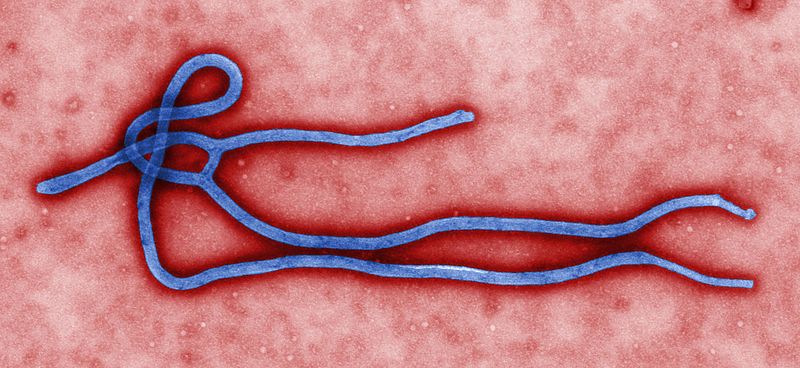 Instead of offering yet another post that says “Stop worrying about catching Ebola,” I want to write a post that reframes the discussion much like the way Amazon.com sells complementary goods. They use a “Customers who bought this item also bought this other item” approach. So, think of this as the “If you’re scared of catching Ebola, you should also be even more scared of catching the flu.”
Now, I could pick a great number of other accidents, illnesses, and conditions that are more likely to be experienced by the average American than Ebola, but given the time of year, I think the flu highly appropriate. Now, many people very quickly say “The flu may be spread more easily than Ebola, but it isn’t as deadly as Ebola if you catch it.”
This is a matter of perspective. It is true that the flu is typically less lethal. We speak of the case fatality rate–that is, of the people who have the disease (the cases), how many die? For flu, the estimates of the case fatality rate are somewhere between 0.1% and 2.5%. However, there is also the H5N1 strain of avian influenza, which the World Health Organization estimates has a case fatality rate of roughly 60%. By comparison the average Ebola case fatality rate is about 50% (ranging from 25% to 90% historically). So, yes, the typical flu is far less fatal than Ebola, but there are strains of flu that appear to be just as fatal as Ebola. We should be especially worried about such high fatality, easily transmitted diseases, but I don’t need to pick something so exotic to make my point.
For now, let’s focus on the typical seasonal flu–and let’s assume the 0.1% case fatality rate. We also know that from year to year anywhere between 5 to 20% of the U.S. population contracts the flu. The current U.S. population is 319.2 million people. So, if we multiply that figure by 0.05 or 0.2, we estimate that between 16 and 64 million people in the U.S. will get the flu this year. Those are our cases. Then, remember, we assume that 0.1% of those cases will result in death. So we multiply again, and predict that between 16,000 and 64,000 people in the U.S. will die of the flu this year. By contrast, there have been 4 confirmed cases of Ebola initially diagnosed in the U.S. this year, and only one of those persons has died. So, even if we use this most conservative estimate of flu mortality, the flu is 16,000 times worse than Ebola on a population level.
It all comes down to the fact that on the individual level, case fatality rate–the lethality of the virus–is the most important factor in making us fearful (it tells us our rough probability of dying from the disease if we contract it), while on the population level, case fatality rate is only part of the story–ease of transmission can lead to much worse outcomes in the aggregate (because so many more people contract the disease to begin with). So, I’m not saying don’t be worried about Ebola–it is a truly scary disease. I’m just saying don’t be complacent about the flu just because it seems less deadly on a person-by-person basis.
It is possible that more Americans will die from the flu this year than there are cases of Ebola worldwide, and we have the ability to prevent that. Remember that there is a vaccine to guard against the flu that can keep you from getting sick, but which may also prevent others from getting sick or dying as your vaccination helps to break the transmission cycle. Perhaps, if we were as scared of the flu as we were of Ebola, we would do something about it. In fact, University of Chicago professor Harold Pollack recently took to Twitter to offer people $10 if they’d simply go get a flu shot. He’s willing to spend up to $1,000 to put his money where his mouth is, and hopefully others will pick up where he leaves off. So, if fear’s not your motivator, maybe a free lunch is. Just remember to wash your hands before you eat.