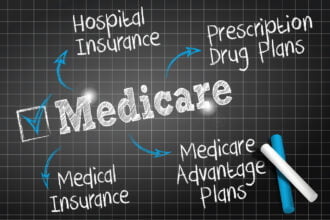
Although I’m still working and not yet at an age when Medicare comes into play, I have great concerns about the increasing number of physicians who are opting out of the Medicare program. A recent article in the Wall Street Journal states that according to the Centers for Medicare and Medicaid Services, 9,539 physicians opted out of Medicare in 2012. That was approximately triple the number of doctors who opted out of the program in 2009. Hardest hit may be patients of family physicians.
Although I’m still working and not yet at an age when Medicare comes into play, I have great concerns about the increasing number of physicians who are opting out of the Medicare program. A recent article in the Wall Street Journal states that according to the Centers for Medicare and Medicaid Services, 9,539 physicians opted out of Medicare in 2012. That was approximately triple the number of doctors who opted out of the program in 2009. Hardest hit may be patients of family physicians. A study from the American Academy of Family Physicians shows a two percent drop in the number of family doctors accepting Medicare patients within the last few years, from 83 percent accepting new Medicare patients in 2010 to 81 percent last year. The reasons cited by doctors who are dropping out of the program or refusing to see new patients range from dissatisfaction with Medicare reimbursement rates to concerns about government interference in the practice of medicine.
 These numbers seem to confirm what I’ve been seeing among my peer group of family and friends. On several occasions now, I’ve heard stories of newly minted Medicare patients who can no longer see their physician because his or her medical group has opted out of the program. In other cases, Medicare eligible family or friends have tried to find a new doctor after making a move, only to find that Medicare isn’t welcome.
 I suppose if you are young and employed you’ll stop reading here or maybe you never got past the headline. Retirement and Medicare may just seem too far away. But younger folks should be concerned too. My fear is that not only will Medicare become a barrier in finding a doctor, but with millions of additional patients newly insured through Obamacare flooding an already tight primary care market, finding a new doctor no matter how you are insured may become increasingly difficult. In fact, according to a study in Health Affairs, about one third of doctors are not accepting new Medicaid patients. Since much of Obamacare will insure formerly uninsured patients through state-based Medicaid expansion programs, one can only wonder where all these patients are going to go.
For me, this all points to what I believe is a huge opportunity on several fronts for more innovation in care delivery. One of those opportunities will be the expansion so called mini-clinics. These focused-factories for certain kinds of low acuity primary care services in pharmacies, grocery stores and shopping malls have been gaining in popularity in recent years. Often staffed by nurse practitioners, mini-clinics can provide a menu of services at a reasonable price. While I’m not suggesting a mini-clinic is a good substitute for a more personal relationship with your own family physician, they do often stand out when cost and convenience are considered,
 There is also a significant opportunity to expand tele-health and telemedicine services. Since a good part of our physician supply problem is as much about misdistribution as it is an actual shortage, technology could be a great equalizer in the equation. Medical experts seem to agree that much of the continuing care needed by people with chronic disease could be augmented or substituted with virtual visits, remote tele-monitoring, and other modalities besides traditional, in-office physician visits. Of course for this to take off, government and private insurers will need to step up the game on reimbursing physicians who provide these services.
Technology can also play an important role in keeping people healthy and out of the sick-care system. Preventive health and lifestyle information and services can be delivered right into the home or workplace via the web, interactive media, apps, or even on your favorite video gaming platform or smartphone. Experts are also suggesting other alternatives to traditional office-based visits including medical visits where patients with particular kinds of chronic conditions like diabetes are invited to “see” their doctor in small groups.
It seems clear that most of us will be paying more “out-of pocket” for the medical services we receive. According to market-driven theory, this is supposed to make us more informed consumers of healthcare, and that’s probably a good thing. Still, when I have a need to see a doctor, I really don’t want some receptionist on the other end of the phone telling me, “I’m sorry, the doctor won’t see you now. We’re not taking new patients with Medicare.” How about you?