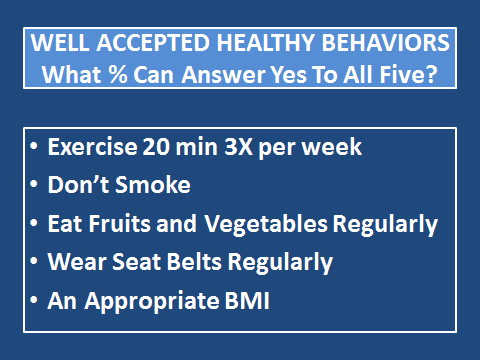
Can we slow the aging process? The answer is a definite yes and it all has to do with our lifestyles and behaviors. Here is a quiz. What percent of Americans can answer yes to all five of the following statements?
Can we slow the aging process? The answer is a definite yes and it all has to do with our lifestyles and behaviors. Here is a quiz. What percent of Americans can answer yes to all five of the following statements?
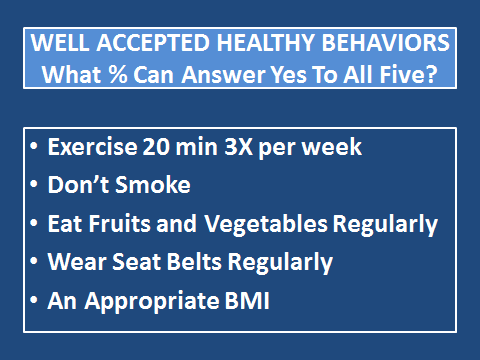
Here’s a clue. We know that about 20% of Americans smoke so the highest answer you can give to this question is that 80% could answer yes to all five. The actual answer may surprise you. It did me. Only 3% of Americans can answer yes to all five!
Let’s return to bone mineral density. The way to slow BMD decline is to exercise and to eat a nutritious diet. (Vitamin D supplements may also be necessary for those in temperate climates who get little sunshine on their skin.) So instead of a 1% decline per year it can be more of a ½% decline per year. On the other hand for couch potatoe that decline won’t be 1% but it may be more like 1½ to 2% per year. The same goes for cognition. There are certain adverse factors such as vascular conditions and the metabolic syndrome (a precursor to diabetes) and also the chemicals released through chronic stress that speed up cognitive decline. But there are also protective factors which we can control ourselves. These include being physically active, intellectually challenged, and socially engaged. It may be a surprise that physical activity is important for cognition but it has been clearly demonstrated to be critical. Intellectual challenge is different than reading a book, even a complex book. That’s not a challenge. But if you belong to a book club and have to actively defend your perspective and point of view that then becomes a challenge. Socially engaged means being involved as a human being with other human beings. This is something that is frequently lost during older years if isolation develops due to limited mobility, inability to drive, etc.
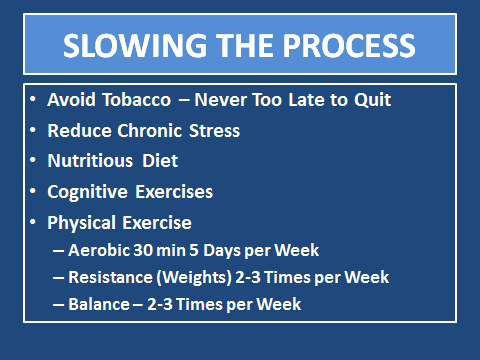
So the essential steps of slowing the aging process are: Avoid tobacco and remember it’s never too late to quit. Reduce chronic stress because the chemicals released from stress have a very adverse effect on many physiologic systems such as immune function. Eat a nutritious diet. Do cognitive exercises which challenge your intellect. Remain socially well connected. Physical exercise should include aerobic activity of about thirty minutes five days per week (just simple walking is adequate); resistance or weight training 2-3 times per week and balance exercises 2-3 times per week.
To summarize, there is a steady slow loss of physiologic function in most of our organs over time. It is possible to slow this 1% decline and with it the ultimate functional impairments. It is also possible to avoid or certainly delay age-prevalent diseases. But in both cases it’s up to us. It’s up to us to adjust our lifestyles and we preferably need to do so beginning at a young age. That said, it is never too late to begin a preventive program. We can slow physical decline with exercise, diet and reducing stress. We can avoid many diseases by not smoking. We can slow cognitive decline with physical activity, intellectual challenges and social engagement. It’s worth it.
Next post: the importance of comprehensive primary care in managing the aging process.