This week Bloomberg reported that America’s healthcare system is facing a crisis of shortage: on one hand is a mounting deficit of doctors, on the other is a forecasted shortage of future doctor positions.
Medical schools are capping their number of accepted applicants because, according to the National Resident Matching Program, that number already surpasses the total available positions.
This week Bloomberg reported that America’s healthcare system is facing a crisis of shortage: on one hand is a mounting deficit of doctors, on the other is a forecasted shortage of future doctor positions.
Medical schools are capping their number of accepted applicants because, according to the National Resident Matching Program, that number already surpasses the total available positions.
Despite an abundance of students desiring to become doctors, the lack of physicians currently available to people in rural communities is expected to spread throughout the country in the next decade.
To further complicate this issue, the 2010 Affordable Care Act passed under the Obama administration is slated to cover millions of new patients, likely creating an even greater challenge to providing patients with adequate health care.
Said Atul Grover, chief public policy officer for the Association of American Medical Colleges: Once the Affordable Care Act’s insurance expansion takes effect, “We’re going to have to find ways to see more patients with fewer physicians.”
Already bloated emergency rooms will become overfilled with patients seeking help for illnesses that could have been prevented through regular doctor visits and follow-ups.
Urgent care centers, which offer faster, lower-cost care with the help of physician assistants and nurse practitioners, will also become busier, forcing people to make multiple trips around town to find the help they need.
Instead of finding permanent, viable solutions to the shortage of doctors, we continue to cover bleeding sores with Band-Aids, staving off the infection but never actually curing the disease.
Republican Congressman Tom Price from Georgia said in the article that “We need to be proactive on this as opposed to reactive.”
I agree. The time has long passed for us to react to our rising problems with healthcare. It’s time to take a—dare I say—aggressive stance in hedging off the challenges by providing more optimal solutions.
Despite increasing awareness of telemedicine and a growing belief in its benefits, barriers to its national and worldwide implementation remain.
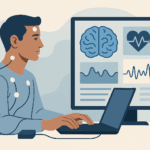
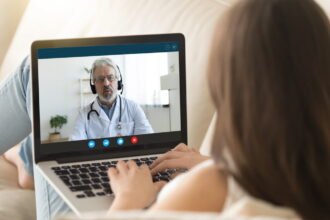
Using telemedicine, practitioners can evaluate, diagnose and treat patients remotely using the latest telecommunications technology, thus allowing patients to receive expert medical care without having to travel.
In rural communities, health care practitioners use telemedicine products to capture and transmit medical data and images to peers and specialists whenever necessary, allowing for cost-efficient expert consultations and improved patient care.
U.S. Rep. Eddie Bernice Johnson and Louisiana State Sen. Sharon Weston-Broome, both Democrats, believe in telemedicine as a practical and important solution to our growing crisis.
In a recent article, “Why telemedicine must become a healthcare priority in America,” Johnson and Weston-Broome pointed to disparities in America’s health care, including a report showing that 38% of African-American women die before age 75 from coronary heart disease compared to less than 20% of white women.
Much of these health disparities, they said, are caused by a lack of access to care. To close these gaps, they said “policymakers must continue to work diligently to remove any legislative or regulatory barriers that impede progress” and described telemedicine as “an incredibly effective solution” for providing healthcare to communities where broadband Internet is available.
However, in states where there is no telehealth mandate, billing standards are necessary. Practitioner training is needed. And “patient examination” in all 50 states must be redefined (with conditions) to include real-time, live telemedicine so that patients seen for the first time by a physician on a videoconference can establish the doctor-patient relationship necessary for prescribing prescription medications.
Some critics might argue that telemedicine will not increase the number of patients a physician will see in any given hour or day. With telemedicine, patients would be able to “visit” with their primary care physicians more often. Those not facing serious, emergent conditions would thus be diverted from going to the emergency room, preventing overcrowding and delayed access to care. In some cases, telemedicine will keep patients in their communities and when used to assess homebound patients, it can provide an early warning to conditions that, if left undetected, could require an emergency readmission to the hospital.
It’s evident that the time has come to consider other ways to save our healthcare system, and many Americans, before it truly becomes a crisis that can’t be controlled.