
By using this site, you agree to the Privacy Policy and Terms of Use.
Accept
Health Works CollectiveHealth Works CollectiveHealth Works Collective
  • Health
    • Mental Health
  • Policy and Law
    • Global Healthcare
    • Medical Ethics
  • Medical Innovations
  • News
  • Wellness
  • Tech
Search
© 2023 HealthWorks Collective. All Rights Reserved.
Reading: Beyond The Splash: How Pool Chemicals Can Harm Respiratory Health
Share
Notification Show More
Font ResizerAa
Health Works CollectiveHealth Works Collective
Font ResizerAa
Search
Follow US
  • About
  • Contact
  • Privacy
© 2023 HealthWorks Collective. All Rights Reserved.
Health Works Collective > Infographics > Beyond The Splash: How Pool Chemicals Can Harm Respiratory Health
Infographics

Beyond The Splash: How Pool Chemicals Can Harm Respiratory Health

Clear water, risky air: The surprising link between pool maintenance and long-term respiratory health.

Aaron Barriga
Aaron Barriga
Share
4 Min Read
pool chemicals harming health
photo credit: Microsoft Stock Images
SHARE

Pools are a place for exercise, fun, and relaxation, but the chemicals used to keep them clean can pose hidden risks to lung health. Most swimmers think of skin irritation or red eyes, yet the air just above the water can carry irritants that affect the respiratory system. Chlorine and other common disinfectants react with organic matter like sweat and urine to form compounds that become airborne, potentially impacting both casual swimmers and frequent pool users.

Contents
  • Chlorine and Byproducts in the Air
  • Children and Sensitive Populations
  • Ventilation and Pool Management
  • Alternative Sanitizing Methods
  • Practical Measures for Swimmers

Chlorine and Byproducts in the Air

Chlorine is the most widely used disinfectant in pool maintenance because it effectively kills bacteria, viruses, and algae. When chlorine combines with organic materials in the water, it forms chloramines. Unlike chlorine dissolved in water, chloramines can escape into the air, especially near the pool surface where people breathe.

These compounds are associated with respiratory irritation. Coughing, throat tightness, and wheezing are common among those exposed to high levels. Indoor pools are particularly risky because poor ventilation allows chloramines to accumulate, increasing the likelihood of lung irritation. Long-term exposure has been linked to asthma-like symptoms in competitive swimmers, pool staff, and frequent recreational users.

Children and Sensitive Populations

Children are particularly vulnerable because their lungs are still developing and they inhale more air per body weight than adults. Studies have shown correlations between frequent swimming in chlorinated pools and the onset of asthma in children. People with asthma or chronic obstructive pulmonary disease (COPD) may experience flare-ups even at lower exposure levels.

More Read

back health
The Quiet Strain: How Digital Habits Are Reshaping Back Health
Are Vitamin Supplements Safe?
Why Delaying Care For Minor Injuries Can Lead To Bigger Problems
Adjusting To Life After A Traumatic Brain Injury
Why Healing Spaces Depend On Healthy Building Systems

Ventilation and Pool Management

Indoor pool design plays a critical role in air quality. Proper ventilation removes chloramine-laden air and replaces it with fresh air, reducing exposure. Balanced water chemistry, showering before entering, and controlling the number of swimmers also help limit the formation of harmful compounds. Regular inspections of ventilation systems and staff education on early symptoms of chemical exposure are essential for safe operation.

Alternative Sanitizing Methods

Emerging technologies such as ozone, ultraviolet systems, and advanced oxidation processes can reduce reliance on chlorine, lowering the formation of chloramines. These systems often require higher initial investment but can improve both air and water quality. Maintenance of pool circulation equipment is also important. Routine PVC ball valve replacement, for example, ensures consistent water flow and prevents chemical buildup that can lead to increased airborne irritants.

Practical Measures for Swimmers

Swimmers can take steps to protect their lungs. Showering before entering the pool reduces organic matter that reacts with chlorine. Taking breaks from the water allows the lungs to recover from exposure to airborne chloramines. Parents should select facilities with visible ventilation systems and fresh air circulation. Athletes and frequent swimmers may benefit from medical monitoring and preventive measures, especially if they have pre-existing respiratory conditions.

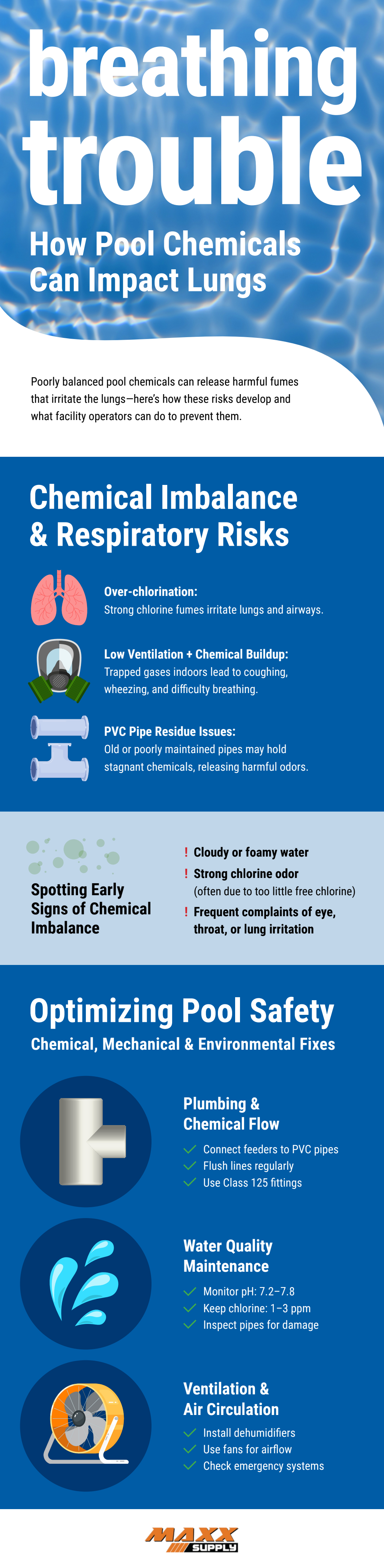
Chemical treatment is necessary to protect swimmers from waterborne pathogens, but respiratory risks must be addressed. Effective ventilation, careful chemical management, alternative sanitizing technologies, and swimmer awareness all help minimize these risks. Recognizing the invisible threats in pool air ensures a safer swimming environment while maintaining the benefits of aquatic activity. Look over the infographic below to learn more.

TAGGED:pool chemicalsrespiratory disease
Share This Article
Facebook Copy Link Print
Share
By Aaron Barriga
Follow:
Aaron Barriga is the online marketing manager for Insight Vision Center. With a knack for understanding medical procedures, and an interest in eye and vision health, Aaron loves to share what he knows and what he learns. He blogs to inform readers about the latest eye care technology and other topics related to eye care, especially LASIK. Aaron loves collecting coasters from the different bars and restaurants he visits during his travels.

Stay Connected

1.5KFollowersLike
4.5KFollowersFollow
2.8KFollowersPin
136KSubscribersSubscribe

Latest News

man with bandage on foot
How Personal Injury Claims Intersect with Healthcare Treatment and Medical Documentation in Everyday Patient Care Settings
Health care
May 9, 2026
close up of dental examination in belo horizonte clinic
A Modern Approach to Straighter Teeth Without Disrupting Daily Life
Dental health
May 9, 2026
fight againt cancer
The Healthcare Careers Being Shaped Most Directly by AI and Digital Transformation
Career Health Technology
May 8, 2026
an autistic person working hard in healthcare
DEI Challenges for Neurodivergent Workers in Healthcare
Health
May 4, 2026

You Might also Like

care settings
Global HealthcareHealth careInfographics

Hidden Risks In Care Settings: Who Faces The Greatest Threat From Healthcare-Associated Infections

December 14, 2025
3d printing in modern medicines
InfographicsTechnology

From Concept To Care: How 3D Printing Is Reshaping Modern Medicine

January 27, 2026
healthcare facilities
Global HealthcareInfographics

Preventing Contamination In Healthcare Facilities Starts With Hygiene

June 15, 2025
medicare shift
HealthInfographicsMedicare

From Volume To Value: The Medicare Shift To Value-Based Care

August 20, 2024
Subscribe
Subscribe to our newsletter to get our newest articles instantly!
Follow US
© 2008-2025 HealthWorks Collective. All Rights Reserved.
  • About
  • Contact
  • Privacy
Welcome Back!

Sign in to your account

Username or Email Address
Password

Lost your password?