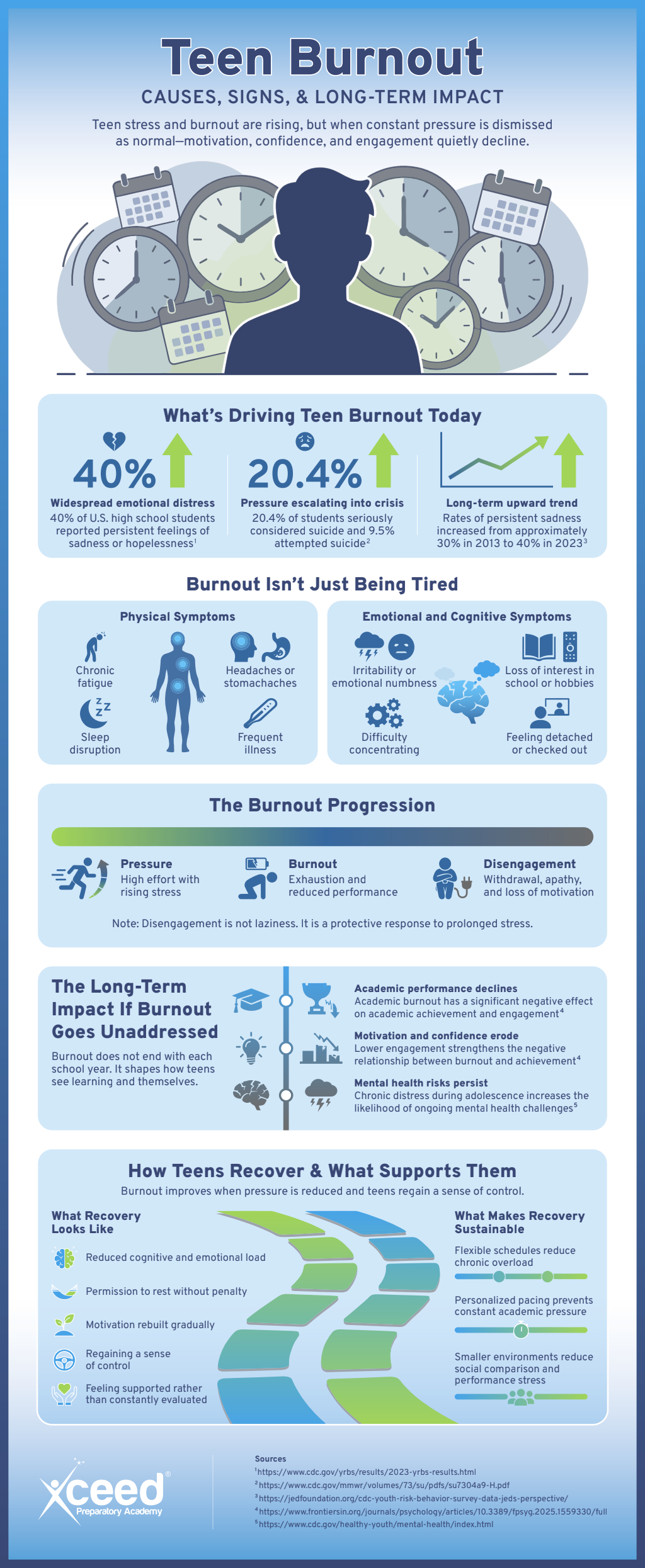
Teen burnout is becoming more common. Many teens face constant pressure from school, activities, and social expectations. Over time, this pressure can lead to physical and emotional exhaustion. Burnout is more than feeling tired. It can affect how teens think, feel, and function each day.
Common Causes of Teen Burnout
Academic pressure is one of the leading causes. Teens often balance homework, tests, and long-term goals tied to college or careers. High expectations from parents, teachers, or peers can add to this stress.
Busy schedules also play a role. Many teens manage sports, clubs, and part-time jobs along with schoolwork. Limited downtime makes it harder to rest and recover.
Social pressure is another factor. Teens may feel the need to meet certain standards online or within their peer groups. In some settings, including competitive environments such as private schools, expectations can feel especially intense. Lack of sleep and poor time management can make these pressures harder to handle.

Signs to Watch For
Burnout often shows up in small changes at first. Teens may feel tired even after rest. They might lose interest in activities they once enjoyed or struggle to stay motivated.
Emotional signs can include irritability, sadness, or a sense of detachment. Some teens may withdraw from friends or family. Others may become more anxious or easily frustrated.
Physical symptoms can also appear. Headaches, stomach issues, and changes in sleep patterns are common. A drop in academic performance may signal that a teen is struggling. These signs can develop gradually, which makes them easy to miss without close attention.
Long-Term Impact on Health and Development
If burnout continues, it can affect long-term health. Chronic stress may lead to anxiety, depression, or ongoing fatigue. These conditions can carry into adulthood if not addressed early.
Burnout can also affect how teens view school and future goals. A student who feels exhausted may lose confidence in their abilities. This can limit motivation and reduce interest in learning.
Social development may also be affected. Teens who withdraw during burnout may find it harder to rebuild connections later. Early support can reduce these risks and help teens recover more effectively.
Supporting Teens Through Burnout
Addressing burnout starts with open communication. Teens need space to talk about their stress without fear of judgment. Listening without immediate criticism can help them feel understood.
Adjusting schedules can also help. Reducing unnecessary commitments allows more time for rest and recovery. Encouraging healthy sleep habits supports both mental and physical health.
Professional support may be needed in some cases. Counselors and healthcare providers can offer guidance and coping strategies.
Teen burnout is a serious issue that can affect many areas of life. Understanding its causes, recognizing the signs, and providing support can make a meaningful difference. With the right approach, teens can regain balance and build healthier ways to manage stress over time. To learn more, check out the infographic below.