We use cookies, including third-party cookies from Google to serve personalized ads through AdSense, to operate this site and understand how it is used. By continuing to browse, you accept this use. See our Privacy Policy and Terms of Use for details, including how to opt out of personalized advertising.
Accept
Health Works CollectiveHealth Works CollectiveHealth Works Collective
  • Health
    • Mental Health
  • Policy and Law
    • Global Healthcare
    • Medical Ethics
  • Medical Innovations
  • News
  • Wellness
  • Tech
Search
© 2023 HealthWorks Collective. All Rights Reserved.
Reading: Bioengineered Skin & Skin Substitutes in Wound Care
Share
Notification Show More
Font ResizerAa
Health Works CollectiveHealth Works Collective
Font ResizerAa
Search
Follow US
  • About
  • Contact
  • Privacy
© 2023 HealthWorks Collective. All Rights Reserved.
Health Works Collective > Technology > Medical Innovations > Bioengineered Skin & Skin Substitutes in Wound Care
DiagnosticsMedical Innovations

Bioengineered Skin & Skin Substitutes in Wound Care

PatrickDriscoll
PatrickDriscoll
Share
3 Min Read
SHARE

Bioengineered skin was developed because of the need to cover extensive burn injuries in patients who no longer had enough skin for grafting. Not so long ago, a patient with third degree burns over 50% of his body surface usually died from his injuries. That is no longer the case. Today, even someone with 90% TBSA has a good chance of surviving. With the array of bioengineered skin and skin substitutes available today, such products are also finding use for chronic wounds, in order to prevent infection, speed healing and provide improved cosmetic results.
Bioengineered skin was developed because of the need to cover extensive burn injuries in patients who no longer had enough skin for grafting. Not so long ago, a patient with third degree burns over 50% of his body surface usually died from his injuries. That is no longer the case. Today, even someone with 90% TBSA has a good chance of surviving. With the array of bioengineered skin and skin substitutes available today, such products are also finding use for chronic wounds, in order to prevent infection, speed healing and provide improved cosmetic results.

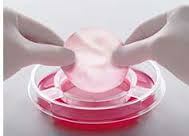
apligrafApligraf, Organogenesis

Skin used in wound care may be autograft (from the patient’s own body, as is often the case with burn patients), allograft (cadaver skin), xenogeneic (from animals such as pigs or cows), or a combination of these. Bioengineered skin substitutes are synthetic, although they, too, may be combined with other products. It consists of an outer epidermal layer and (depending on the product) a dermal layer, which are embedded into an acellular support matrix. This product may be autogenic, or from other sources. Currently most commercial bioengineered skin is sheets of cells derived from neonatal allogenic foreskin. This source is chosen for several reasons: because the cells come from healthy newborns undergoing circumcision, and therefore the tissue would have been discarded anyway; foreskin tissue is high in epidermal keratinocyte stem cells, which grow vigorously; and because allergic reactions to this tissue is uncommon.

More Read
Digital Health Illustrated: The Human Side of Big Health Data
Healthcare Innovation for an Economy Built to Last
Kiosk Offers Health Assessment
The Future of Medicine: How Cloud Computing Is Paving the Way to Better Medical Research
FutureMed 2013

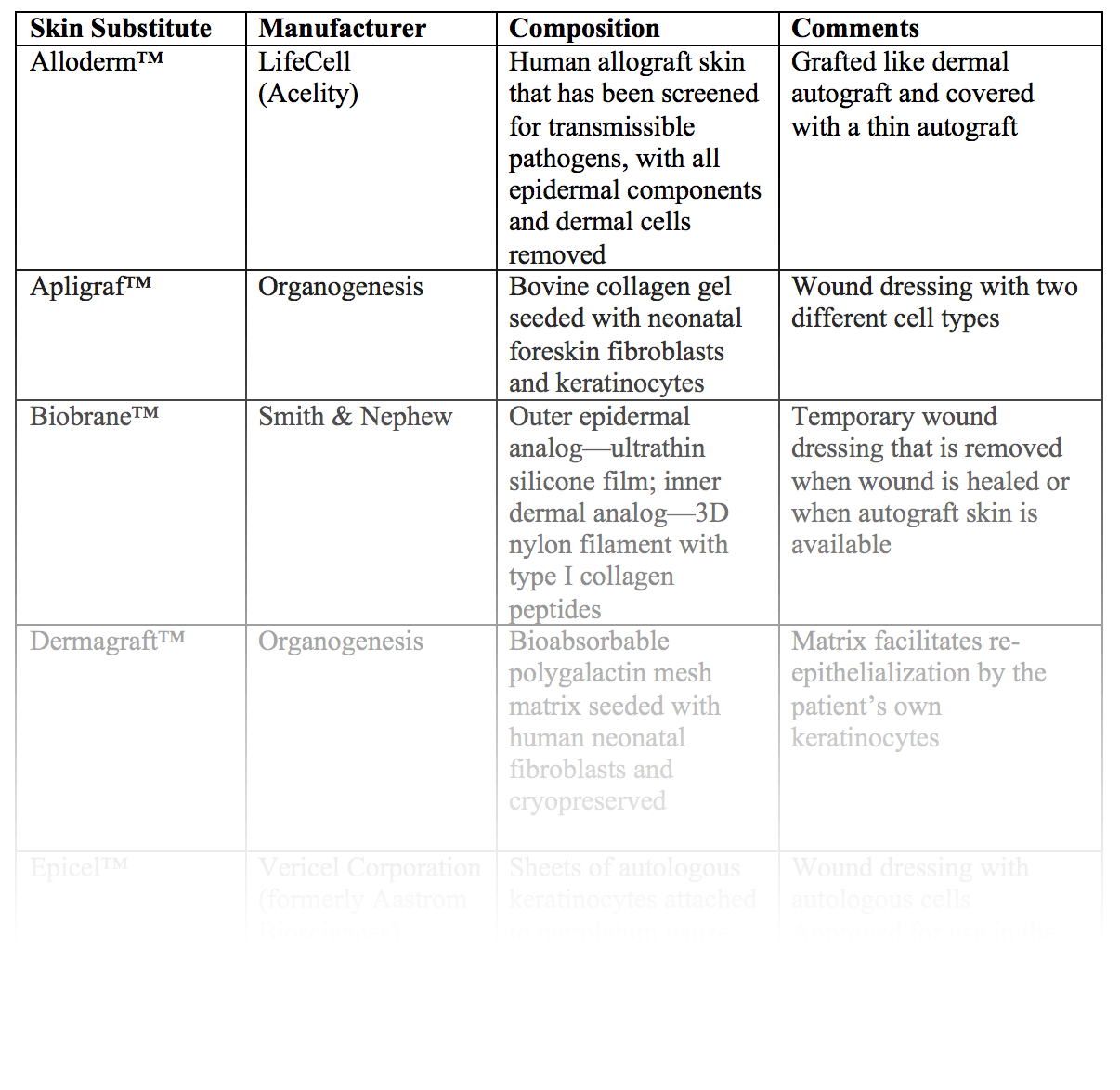
Selected Bioengineered Skin & Skin Substitutes
bio-skin

Source MedMarket Diligence, LLC; Report #S251.

TAGGED:skin
Share This Article
Facebook Copy Link Print
Share
By PatrickDriscoll
Follow:
I serve the interests of medical technology company decision-makers, venture-capitalists, and others with interests in medtech producing worldwide analyses of medical technology markets for my audience of mostly medical technology companies (but also rapidly growing audience of biotech, VC, and other healthcare decision-makers). I have a small staff and go to my industry insiders (or find new ones as needed) to produce detailed, reality-grounded analyses of current and potential markets and opportunities. I am principally interested in those core clinical applications served by medical devices, which are expanding to include biomaterials, drug-device hybrids and other non-device technologies either competing head-on with devices or being integrated with devices in product development. The effort and pain of making every analysis global in scope is rewarded by my audience's loyalty, since in the vast majority of cases they too have global scope in their businesses.Specialties: Business analysis through syndicated reports, and select custom engagements, on medical technology applications and markets in general/abdominal/thoracic surgery, interventional cardiology, cardiothoracic surgery, patient monitoring/management, wound management, cell therapy, tissue engineering, gene therapy, nanotechnology, and others.

Stay Connected

1.5KFollowersLike
4.5KFollowersFollow
2.8KFollowersPin
136KSubscribersSubscribe

Latest News

The Administrator's Guide to Auditing Regulated Waste Before an OSHA Inspection -- AI-generated illustration
The Administrator’s Guide to Auditing Regulated Waste Before an OSHA Inspection
Policy & Law
August 31, 2026
What Geographic and Specialty Variation Reveals About How Nursing Compensation Actually Works -- AI-generated illustration
What Geographic and Specialty Variation Reveals About How Nursing Compensation Actually Works
Career Nursing
August 27, 2026
Could Poor Ventilation Be Behind Your Afternoon Headaches?  -- AI-generated illustration
Could Poor Ventilation Be Behind Your Afternoon Headaches? 
Health
August 27, 2026
The Myth That Keeps People Stuck -- AI-generated illustration
The Myth That Keeps People Stuck
Addiction Recovery
August 25, 2026

You Might also Like

DiagnosticsMedical EducationSpecialtiesWellness

The Healthcare Costs Associated with Alcohol Addiction

November 16, 2015
Health careMedical InnovationsTechnology

4 Important Ways Healthcare Technology Improves Your Patient Care

September 28, 2017
BusinessHospital AdministrationMedical InnovationsNewsPolicy & LawTechnology

Healthcare: Survival of The Fittest

February 17, 2012

How can Artificial Intelligence in healthcare help patient engagement?

May 10, 2016
Subscribe
Subscribe to our newsletter to get our newest articles instantly!
Follow US
© 2008-2026 HealthWorks Collective. All Rights Reserved.
  • About
  • Contact
  • Privacy
Welcome Back!

Sign in to your account

Username or Email Address
Password

Lost your password?