We use cookies, including third-party cookies from Google to serve personalized ads through AdSense, to operate this site and understand how it is used. By continuing to browse, you accept this use. See our Privacy Policy and Terms of Use for details, including how to opt out of personalized advertising.
Accept
Health Works CollectiveHealth Works CollectiveHealth Works Collective
  • Health
    • Mental Health
  • Policy and Law
    • Global Healthcare
    • Medical Ethics
  • Medical Innovations
  • News
  • Wellness
  • Tech
Search
© 2023 HealthWorks Collective. All Rights Reserved.
Reading: Can Cosmetic Dentistry Fix Tetracycline Staining?
Share
Notification Show More
Font ResizerAa
Health Works CollectiveHealth Works Collective
Font ResizerAa
Search
Follow US
  • About
  • Contact
  • Privacy
© 2023 HealthWorks Collective. All Rights Reserved.
Health Works Collective > Policy & Law > Medical Education > Can Cosmetic Dentistry Fix Tetracycline Staining?
Medical EducationWellness

Can Cosmetic Dentistry Fix Tetracycline Staining?

Marielaina Perrone DDS
Share
6 Min Read
Teeth Whitening Tetracycline staining
SHARE

Cosmetic dentistry gives the dentist the ability to mask tetracycline staining. Tetracycline, doxycycline, minocycline are types of antibiotic that are absorbed into developing teeth causing deep stains (tetracycline staining). If tetracycline is taken by someone during functional tooth development years (age 3-10), tetracycline stains are likely to occur. Permanent teeth start developing at around three years of age and continue into the teenage years (last teeth to erupt are the wisdom teeth). 

Contents
  • Teeth Whitening and Tetracycline Staining
  • Dental Bonding and Tetracycline Staining

Cosmetic dentistry gives the dentist the ability to mask tetracycline staining. Tetracycline, doxycycline, minocycline are types of antibiotic that are absorbed into developing teeth causing deep stains (tetracycline staining). If tetracycline is taken by someone during functional tooth development years (age 3-10), tetracycline stains are likely to occur. Permanent teeth start developing at around three years of age and continue into the teenage years (last teeth to erupt are the wisdom teeth). 

Once the teeth erupt into the mouth, they are no longer susceptible to tetracycline staining.  A teenager can take the antibiotic and not get tetracycline staining. This is not the case for a younger person with teeth developing inside the jaw. They will get permanent tetracycline staining. Because of this, the medical community has stopped prescribing tetracycline to children under the age of 10 years old or to pregnant women (whose developing baby can also be affected by tetracycline staining). The stains have no medical implications but are very unaesthetic. Tetracycline leaves behind a dark stain that can be either striated in nature or cover the entire tooth surface. Tetracycline stained teeth are usually brown or grayish in color.

When tetracycline was approved for human use, it was not known that tetracycline would permanently stain teeth in development.  Tetracycline was developed as an alternative to Penicillin. Tetracycline is most often used to treat urinary tract infections, genital infections, acne, skin infections, and infections that cause stomach ulcers.  The tetracycline became incorporated inside the developing teeth and left the teeth permanently dark in color.

More Read

recover trauma car accident
How to Cope with Trauma after an Accident
Creative Ways Hospitals Can Use Video to Build a Sense of Community
Symptoms of Serotonin Imbalances You Need to Know
Can the Internet Cure the Zika Virus?
The Effects of Sleep Problems on Overall Health

Before the development of modern cosmetic dentistry there were few alternatives to cover this esthetically. Cosmetic dentistry has a few ways of dealing with this condition. These include teeth whitening and porcelain veneers.

Teeth Whitening and Tetracycline Staining
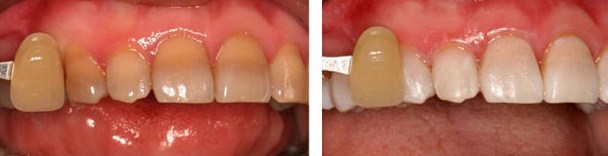
Teeth Whitening Tetracycline staining

Cosmetic Dentistry – Teeth Whitening for Tetracycline Staining

Teeth whitening can be very successful with tetracycline stained teeth when the staining is not very dark. Patients with minimal tetracycline staining on their teeth may have to continue to use the bleaching material daily for up to 6 months for noticeable results that will last.  There are in office and at home whitening options in cosmetic dentistry for treating these stains. Over -the -counter type whitening will not be effective at all in teeth with tetracycline staining. The longer period of whitening at home can cause sensitivity and gum problems. This procedure needs to be closely monitored by the cosmetic dentist to ensure there is no damage to the enamel or gum tissue. In some cases of more severe tetracycline staining, teeth whitening is an insufficient treatment. This is due to how deeply embedded the staining is in the patient’s tooth enamel.  Instead, porcelain veneers or dental bonding would be the standard approach to cover the remaining tetracycline staining after whitening procedures are complete.

Dental Bonding and Tetracycline Staining

Your cosmetic dentist may use dental bonding to cover the tetracycline staining that is present. By using dental bonding techniques your cosmetic dentist can mask the stains and create a new color as well as shape to your teeth. However, if the tetracycline stains are too deep and dark in the teeth, the staining may show through the dental bonding. This will create a lighter gray tooth rather than the bright, white teeth you may want. When this is the case, teeth whitening to remove as much of the tetracycline staining as possible, followed by dental bonding is a very good cosmetic dentistry treatment option.

Porcelain Veneers and Tetracycline Staining

Porcelain veneers are the best option we have in cosmetic dentistry for the treatment of tetracycline staining. Porcelain veneers are wafer thin and custom designed to reshape your teeth and color just the way you want it. With porcelain veneers,,  we are able to adjust the opacity of the porcelain to allow the cosmetic dentist the ability to truly mask the tetracycline staining,(pre-whitening may still be necessary for the best overall result).

Thanks to cosmetic dentistry patients no longer have to suffer from tetracycline staining. Now these patients can fully smile just like everyone else without feeling self conscious. A smile can be the first thing people notice. With cosmetic dentistry’s many advances, you no longer have to settle for tetracycline stained teeth. You now have options that can help you smile full of self confidence.
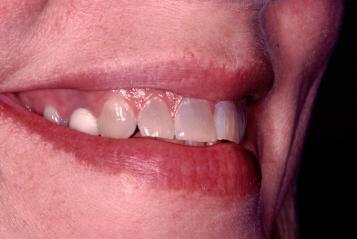
 

Tetracycline Staining

Tetracycline Staining Before Cosmetic Dentistry
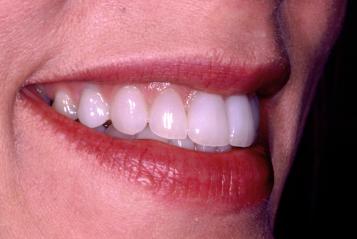
tetracycline staining after cosmetic dentistry

Tetracycline Staining after Cosmetic Dentistry


© 2012, Marielaina Perrone DDS. All rights reserved. Las Vegas Cosmetic Dentist

 
 
TAGGED:cosmetic dentistryteeth whitening
Share This Article
Facebook Copy Link Print
Share

Stay Connected

1.5KFollowersLike
4.5KFollowersFollow
2.8KFollowersPin
136KSubscribersSubscribe

Latest News

The Myth That Keeps People Stuck -- AI-generated illustration
The Myth That Keeps People Stuck
Addiction Recovery
August 25, 2026
What Hospitals Need to Know About EU MDR -- AI-generated illustration
What Hospitals Need to Know About EU MDR
Business Hospital Administration
August 18, 2026
How to Choose an On-Demand Medical Interpreting Provider for Your Hospital -- AI-generated illustration
How to Choose an On-Demand Medical Interpreting Provider for Your Hospital
Health care
August 12, 2026
The Chemistry Of Drug Consistency -- AI-generated illustration
The Chemistry Of Drug Consistency
Policy & Law
August 12, 2026

You Might also Like

Home Health

Try These 5 Holistic Methods For Stress Management

December 11, 2018
Biotech is Game Changer in Cancer Treatment Advances
eHealthHealth careHealth ReformMedical EducationMedical InnovationsPublic HealthWellness

The Revolutionary Advent Of Precision Medicine In Cancer Treatment

February 23, 2019

Western Medicine vs. Alternative Medicine in India

September 8, 2012
The ACA has put patients at the center of healthcare services. A patient-centric healthcare approach in this digital era means a revised definition of quality in the physician-patient relationship. When it comes to healthcare services, patients shell out a hefty amount from their pocket and want nothing less than the best. The services in healthcare are no longer limited to just cost as consumers now evaluate quality and experience in the same equation. Research highlights from the 2015 Healthcare Consumer Trends by National Research Corporation states that reputation in healthcare matters more to consumers when choosing a brand than any other industry, e.g. hospitality, retail, airline, etc. The new generation of quality measurements in healthcare require a different mind-set and a different 'toolbox' to handle the hurdles. It’s the need of the hour for healthcare providers and others across the healthcare value chain to adopt the patient-centric approach for surviving in the vast competitive ocean of healthcare services. Patient-centric care is an approach that develops through effective communication, empathy and a positive physician-patient relationship. The primary purpose is to improve patient care outcomes and satisfaction and to reduce patient symptoms and unnecessary costs. It’s a win-win situation for both physicians and patients. While healthcare providers are able to support their patients in becoming more compliant with treatment and management of their conditions/diseases, patients feel more satisfied with the care that they are receiving. PwC’s Health Research Institute’s annual report 2016 states that health systems should keep an eye on the consumer experience as they expand and extend. More partnerships and more caregivers could mean confusion for patients and poor customer experiences. To differentiate their practice among competitors, patient satisfaction can be used as a competitive distinguishing factor. Although patient satisfaction cannot really provide tangible benefits, but an experience that exceeds patient expectations for what a practice/hospital can provide is very important as it creates loyal patients who return for future health needs and refer their family and friends. Happy and satisfied patients are a secret marketing weapon for healthcare providers, whether they are physicians, dentists, physiotherapists or hospitals. Your patients are the new-age digital health decision-makers. In this era of Internet and social media, they now have multichannel access to information related to health. Needless to mention, they have gained new power to make their decisions; whether it’s choosing a healthcare provider or referring a physician to family and friends. By converting your satisfied patients to be your brand advocates, you can capitalize and use their voice as an effective marketing strategy to reach out to many other potential patients. To strive and thrive, in the U.S. many healthcare organizations are applying patient-centric approaches to healthcare. It’s all about what matters to patients, so it makes a lot of sense for the healthcare industry to place patients' healthcare experience at the center of their policies and procedures. The best deliverables are a combination of great communication for a positive physician-patient relationship, disciplined measurement and analysis of patient feedback and commitment to technology innovation – the formula for improving patient engagement and care.
BusinessHealth ReformWellness

The Link Between Patient Satisfaction and Long-Lasting Relationships

April 28, 2016
Subscribe
Subscribe to our newsletter to get our newest articles instantly!
Follow US
© 2008-2026 HealthWorks Collective. All Rights Reserved.
  • About
  • Contact
  • Privacy
Welcome Back!

Sign in to your account

Username or Email Address
Password

Lost your password?