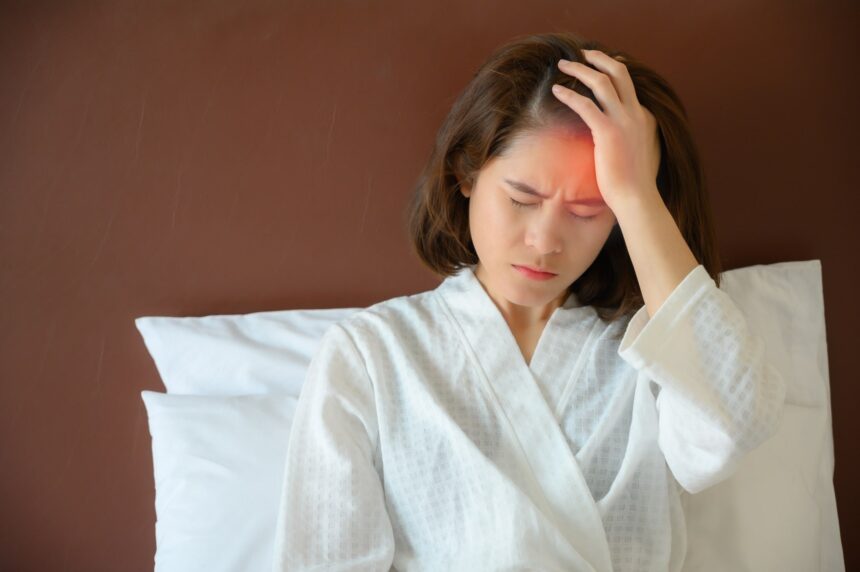
Have you ever felt a sharp pain in your face or head that sometimes consists of upper neck pain? Then you’re not alone. Around the world, the majority of adults experience a headache, and there are various types of common headaches that most individuals will experience many times. These are migraine, chronic daily headaches, tension headaches, and cluster headaches. Similarly, there are less common types of headaches that one can also have. These are hormone headaches, exercise headaches, new daily persistent headaches, and rebound headaches.
Headaches also have symptoms that you can take note of. Some of the signs that can be seen from those with common headaches are pain on both sides of the head, nausea, facial swelling, constant pain without throbbing, upset stomach, abdominal pain, and much more.
Moreover, headaches don’t happen on their own. There are probable causes you may not be aware of that have made it possible. Know more about it through this article.
1. Temporomandibular Joint Disorder
The temporomandibular joint disorder (TMD) is one of the dental issues that can cause headaches. Other dental issues resulting in headaches are teeth grinding, cavities or infection, and bad bites. TMD is a dental issue where the temporomandibular joint (TMJ) has an internal problem or is unaligned. This dental issue can be a problem for you because the TMJ connects the skull and the jaw; and if it has issues, it can result in pain at the jaw’s location or even cause tension headaches.

Likewise, TMD can be a result of a missing tooth. When there’s a missing tooth, the bottom and top teeth don’t align anymore, allowing your TMJ to adjust itself when having a bite to keep the jaw working smoothly—the sideways movement of your TMJ results in tension that eventually leads to TMD.
And so, if you have TMD, it’s advisable to check in with your personal dentist to ensure it won’t hamper your activities. Your dentist will know what to do, and one way they’ll address it is to have a dental implant. If you want to understand dental implants more and see an available dentist, you can click here.
2. Smell Sensitivity
Pleasant odors may be good for many people, and a person may use a good smell to enhance health. One way to do that is through aromatherapy—a holistic therapy in which pleasant scents promote health like getting proper sleep. On the contrary, not all people benefit from smelling good smells, and others may become sensitive to it and develop osmophobia.
Osmophobia is a type of phobia that’s common among headache patients. It’s defined as the aversion or hypersensitivity of a person to certain smells. Strong odors such as smoke, perfumes, fumes, odor from cleaning products, or smell from a new carpet are some examples of what causes osmophobia.
Osmophobia causes headaches because strong odors, even if they’re pleasant, may cause an individual’s blood vessels to swell and dilate, which can trigger the nerve system in the brain connected to head pain. Therefore, if you have head pain caused by sensitivity to smells, it’s good to check with a neurologist or chiropractor.
3. Weather Changes
You should know that changes in weather conditions can cause a headache, at least some of the time. Weather changes such as humidity and temperature, storms, and dusty environments may result in migraine and tension-type headaches.
Similarly, changes in barometric pressure (this refers to the weight of the air that falls in humid temperatures and high altitudes) may cause headaches to some people. Some scientists think that changes in the barometric pressure cause the pressure between your sinuses, leading to a chemical imbalance resulting in a headache. This pain can vary depending on which sinus is most affected. The pain can be between and behind your eyes, forehead pain, or a more diffused headache in the back or front of your head.
4. Genetics
Headaches, especially migraines, might tend to run in families. Usually, if one or both parents have a migraine, there’s a 50-75% possibility that their kids will also have one. Also, recent gene-sequencing technology has discovered that multiple gene mutations may be the reason for migraines that occur within families. Genome-Wide Association Study (GWAS) was the technology employed in this research.
Moreover, some specific migraine traits may be connected to a strong history of migraine within the family, and these are:
- Migraine headaches with aura
- Migraine headaches that begin at an early age
- More persistent episodes of migraines
- Migraine headaches that need medication for an extensive period
Also, one type of migraine can have a strong link to genetics, and this is called a familial hemiplegic migraine (FHM) in an autosomal dominant pattern. An individual is only required to inherit one copy of the mutated gene to have this type of migraine. There are four types of FHM, and these are the following:
- FHM Type 1. This is the most common FHM as a result of the mutation in the CACNA1A gene.
- FHM Type 2. The mutation in the ATP1A2 gene allowed this FHM to occur. Seizures may also be one of the effects of type 2 FHM.
- FHM Type 3. This type develops due to mutations in the SCN1A gene.
- FHM Type 4. When a doctor can’t find the gene that created FHM, then FHM type 4 is the type of FHM diagnosed to a person.
Wrapping Up
Many will experience headaches at some point in their lives. It’s a common phenomenon with its own types, symptoms, and causes. Furthermore, headaches are a condition that shouldn’t be left alone. Headaches can hinder actions like attending work, doing one’s hobby, and being present in family activities. Hence, proper treatment and medication should be applied so it won’t become worse.
You should employ proper measures to address it and be prepared for it. One way to prepare is to know the causes that trigger it. Common causes that trigger headaches are temporomandibular joint disorder, weather changes, and smell sensitivity. Overall, keep these things in mind as they can be handy.