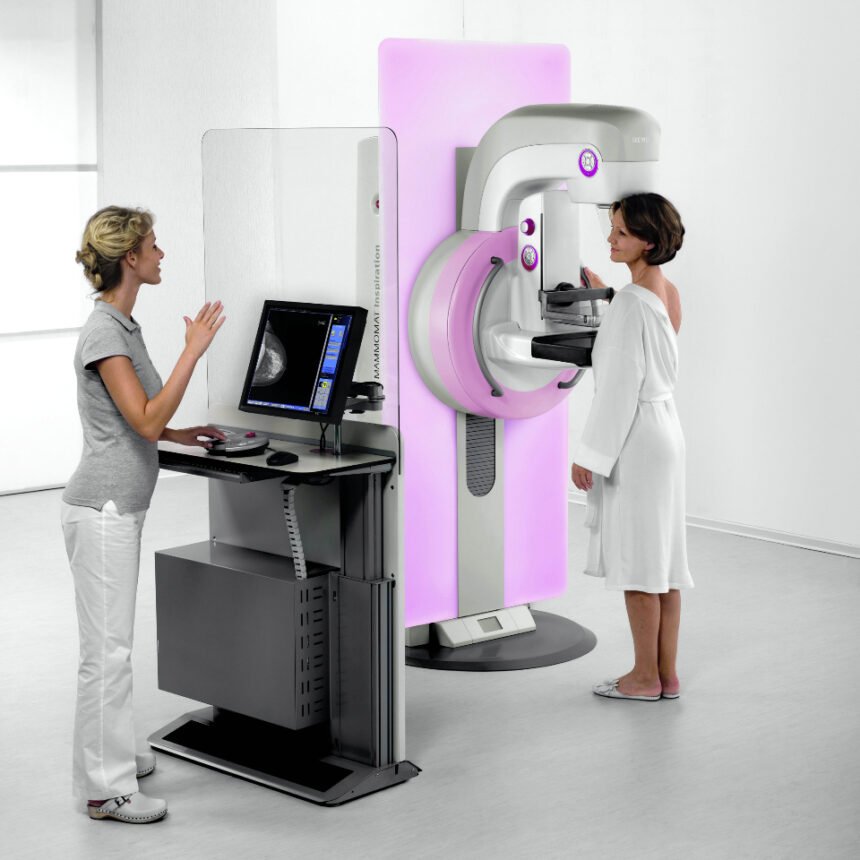
The lower dose radiation mantra has been repeated so loud and so long that some in the radiologic community think that it has lost its power. Siemens Healthcare has an interesting take on the issue at the annual RSNA meeting in Chicago, and a system that exemplifies the company’s philosophy on the low dose goal.
“We’re not talking about low dose anymore, we’re talking about the right dose,” said
The lower dose radiation mantra has been repeated so loud and so long that some in the radiologic community think that it has lost its power. Siemens Healthcare has an interesting take on the issue at the annual RSNA meeting in Chicago, and a system that exemplifies the company’s philosophy on the low dose goal.
“We’re not talking about low dose anymore, we’re talking about the right dose,” said
More Read

Jan Freund, head of product marketing management for computed tomography at Siemens. “We have a campaign we call Care Right and we ask the question of whether 1 millisievert, somehow the magic threshhold being discussed, the appropriate dose for all patients? The idea is to find the right dose to produce the best image quality in the case of each patient.”
Freund explained that a low dose may be appropriate or it may not, so the goal is not to compromise image quality. In other words, it’s not one low dose fits all. “It’s not about just the capabilities to reduce dose,” he said, “but when you have a patient in front of you who has to be diagnosed, what is the appropriate dose.”
At the other end of Siemens’ vast acreage in the exhibition hall is the MAMMOMAT® Inspiration Prime Edition – which the company has designed to be the first mammography system that lowers patient dose up to 30 percent without compromising image quality. The MAMMOMAT Inspiration Prime Edition is intended to lower dose by replacing the standard scatter radiation grid with a new software algorithm for progressive image reconstruction. This new algorithm is intended to identify scatter-causing structures and calculates a corrected image, enabling complete use of primary radiation so physicians can achieve high-quality images using less dose.
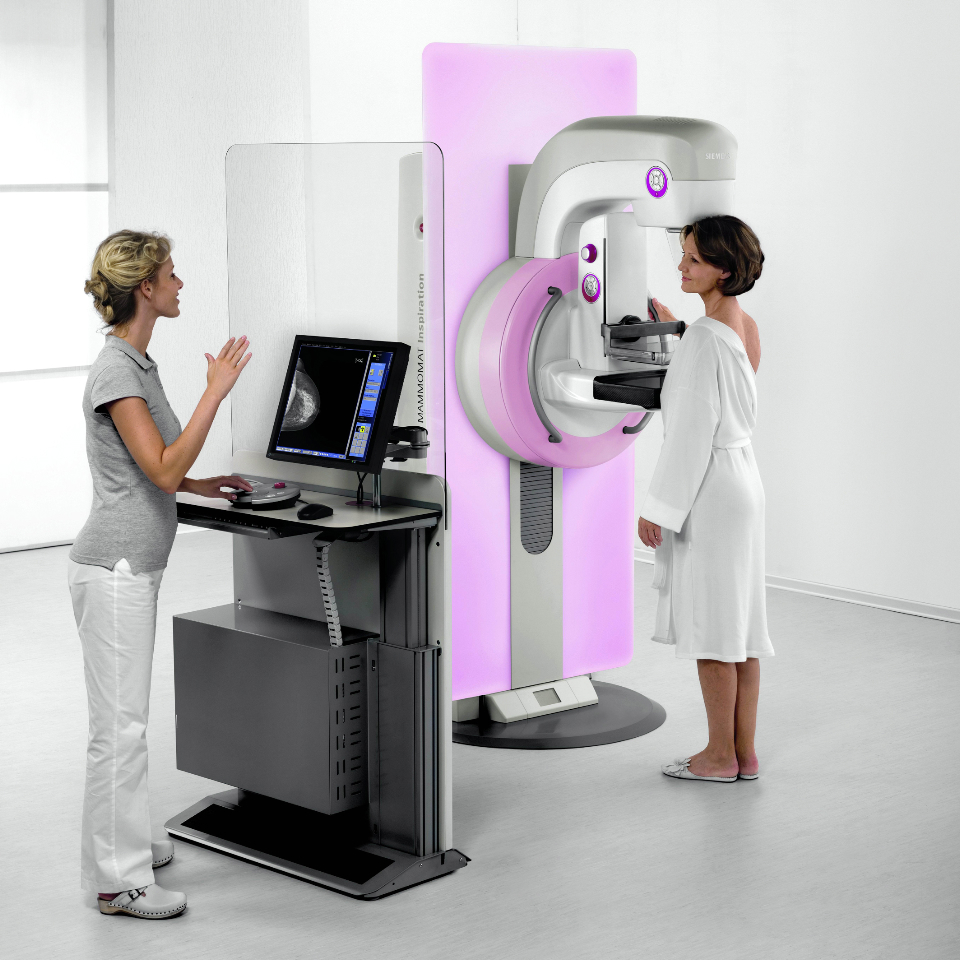
figure 1: Siemens Healthcare is launching the Mammomat Inspiration Prime Edition – the first mammography system that lowers patient dose up to 30 percent without compromising image quality. The Mammomat Inspiration Prime Edition lowers dose by replacing the standard scatter radiation grid with a new algorithm for progressive image reconstruction.
Axel Hebecker, head of women’s health at Siemens, explained how the conventional mammography systems scatter some radiation, providing lower contrast and lower resolution and thus diminishing image quality. In digital X-ray breast imaging, he said, radiation passes through the examined breast to a detector. Primary radiation supplies the information needed to produce the X-ray image, while scattered radiation is absorbed by a scatter grid positioned between the breast and the detector. But these scatter grids also absorb part of the primary radiation, forcing the use of a higher dose to obtain images of desired quality. Since mammography means regular screening of healthy women, minimizing dose is extremely important.
Siemens’ new reconstruction algorithm for the Mammomat Inspiration system – known as Prime (Progressive Reconstruction, Intelligently Minimizing Exposure) – eliminates the need for the scatter radiation grid. The Prime algorithm is designed to correct the scattered radiation by identifying scatter-causing structures and recalculating the image. The primary radiation that radiologists rely upon remains intact. “So we get the same image quality with a lower dose,” said Hebecker.
The grid-free imaging technology of the Mammomat Inspiration Prime Edition is intended to reduce radiation dose up to 30 percent compared to its predecessor model, depending on the thickness of the patient’s breast tissue. “For smaller breasts, the percentage of dose reduction is 30 percent. With larger breasts, the percentage is approximately 10 or 11 percent,” Hebecker said. “This is why we say ‘up to 30 percent’ because with larger breasts the absolute reduction is the same but the relative reduction is smaller because you have to use a larger dose.”
Visitors to the Mammomat booth seemed impressed with the image quality. As far as this system is concerned, the right dose is a low dose.