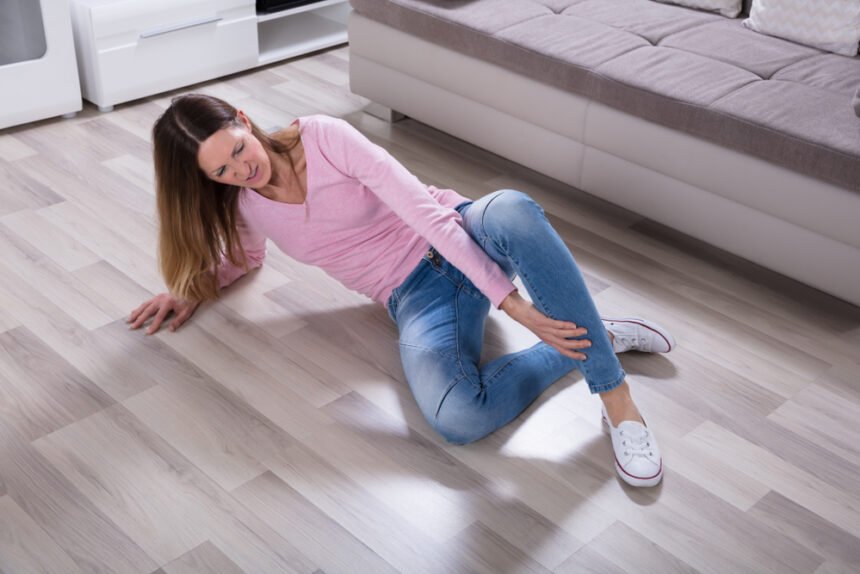
Falls are the single most common cause of accidental injuries in the United States. The CDC reports that around 3 million older Americans end up in the emergency room due to falls every year. They account for over 20% of all emergency room visits, which means that fall injuries are nearly twice as likely to lead to an emergency room visit as a motor vehicle accident.
There are a number of reasons that fall injuries occur. Although it is difficult to quantify them, it appears that flooring issues are near the top of the list.
There are a number of important steps that you can take to make sure that flooring does not lead to fall injuries. These tips are particularly important for protecting the elderly. Some of these tips are listed below.
Choose flooring materials with a high friction coefficient
One of the most common reasons that people fall is that floors can be slippery. It will obviously be slippery when liquids or other viscous materials are present. However, the flooring material itself plays an important role here.
More Read

It is best to use flooring materials that have a high friction coefficient. It will be less likely for people to slip on them, even if water spills on the surface.
What flooring materials are least likely to cause slipping? There are actually a number worth looking into. Some of the best include the following.
Nonslip vinyl flooring
Nonslip vinyl flooring is another great option to consider. This type of flooring is already very popular, because it has lustrous aesthetics and it is not likely to stain.
From a safety standpoint, vinyl flooring is great for preventing slips and falls. It has enough friction to minimize slipping risk considerably. There is another benefit of using vinyl flooring. It also has built-in padding. This means that if you do slip and fall, you are less likely to suffer an injury as a result.
Ceramic tiles
Ceramic tiles might not seem like the best option if you want to minimize slips, but they are actually among the best. Despite having a smooth surface, they also are very durable. Many of them come in slip-resistant variations, which is ideal if you want to minimize the risk of falls. As an added benefit, it is unlikely that people will trip on a ceramic tile floor.
Cork
Cork flooring has become popular in many homes. There are a number of reasons that this trend has emerged in recent years.
One advantage of cork flooring is that it has a very low risk of people slipping. This is largely because it easily absorbs moisture, so there will be less water on the surface for people to slip on. Many cork floors are also designed to be more water resistant, which further reduces the risk.
Know how to prevent warping
Warping is a serious concern for any wooden floors. You need to prevent warping to minimize the risk of falls.
Fortunately, there are some important steps that can help minimize this risk. You should start by making sure that it is installed properly, but there are other steps to take too. They include:
- Get rid of the damaged planks and beams quickly. This will minimize stress from being distributed on other beams and spreading the problem across the room.
- Refinish the flanks to get rid of dust, residue and other particles that well harm the integrity of them.
- Wipe off liquid spills right away.
- Fix any leaks in your pipes.
- Don’t wear high heels in the house.
- Don’t use steam mops on your floors without sealing them first.
There are a number of steps that you can take to minimize the risk of warping. You should follow them closely to avoid these problems.