Over the years, there has been a growing demand for better dental technology as people became more interested in their oral health. Thankfully, the last couple of decades brought with it dramatic improvements in the quality of dental care people receive. Today, people enjoy longer-lasting results, faster healing times, and safer procedures in the dental health industry. A significant aspect of the industry where this development has become quite visible is the diagnostic technology. This is thanks to the introduction of dental X-rays and 3D imaging. Thankfully today, every dental expert, including North Bramalea Dental in Brampton, is fast getting in on this technology to provide better dental care services for their patients.
Here’s everything you need to know about this latest phenomenon in the dental world.
3D imaging and its benefits
With 3D dental X-rays, dentists can get a better view of dental problems during diagnosis. Thanks to this, they can come up with an effective treatment plan that addresses the problem. The best part is that the patient only has to stay still for at least 40 seconds to avoid any distortions in the image collection, and this diagnostic technology gets to work. While 2D dental x-rays provide only a two-dimensional image of the mouth, 3D imaging is more detailed as it uses cone-beam computed tomography (CBCT) equipment to create a 3D version of the mouth and skull.
With robust digital processing software, the machine will use these pictures to create a 3D image that assists in treatment planning and accurate diagnosis. Here are some impressive benefits of 3D imaging:
1. Reduced exposure to radiation
Regular 2D x-rays come with many risks, and one of the biggest is the amount of radiation that it exposes the patients to. However, 3D x-ray beams are produced by CBCT scanners that concentrate all the radiation into a specific area. It means that there is minimal exposure to radiation because it is better focused, leading to improved image quality. The advantage of this to the human body is numerous, especially as there are many side-effects associated with prolonged, repeated radiation exposure. In addition, with 3D x-rays, there is a reduced incidence of exposure to several health risks, including malignant tumors and eye damage.
2. Higher accuracy and lower scan time
Whereas it’s easy for anything to escape the eyes of a trained dentist running 2D scans, we can’t say the same for 3D scans. These are way more accurate when capturing problems that could quickly go unnoticed with 2D scans. Even better, 3D imaging is a great way to differentiate between different types of tissues during dental x-rays. With this, the dentist can correctly identify any infection, abnormal anatomy, or pathology for proper treatment implementations.
Apart from this high degree of accuracy, there’s also the fact that using 3D imaging for dental x-rays reduces scan time significantly. It can take less than twenty seconds and a single rotation to capture all scan images from different angles and nothing more than forty seconds for a full mouth x-ray. Compared to 2D scans, this is a considerable reduction in scan time, and most dentists don’t experience image defects on 3D scans. When scans take too long, it’s easy for the images to get distorted by the patient’s natural movement. However, this is not a factor when the process is done in less than a minute.
3. Interactive and user-friendly
3D imaging is friendly to both the patient and the dentist. There is no need to bite down on a mold for the patient as they would do with the traditional 2D scans. In this case, the 3D imaging dental x-ray scans the patient’s entire head while all they have to do is stay still. So, if a patient has special needs or is struggling with tooth or gum sensitivity, the 3D scans will not affect this negatively. For dental practitioners, it’s so easy to learn how to use 3D dental equipment. All it takes is a little training session, and they’ll understand how to use the equipment in no time.
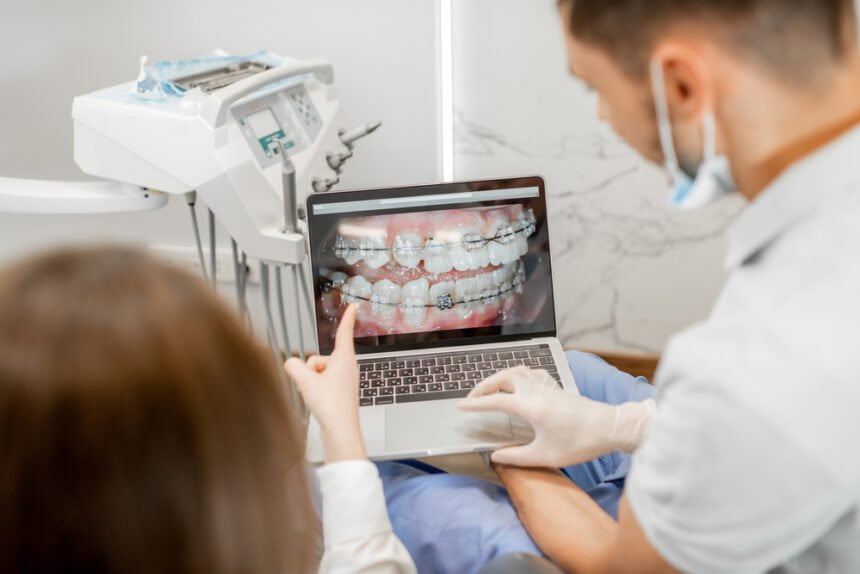
It is also quite interactive as dental practitioners can demonstrate features, zoom in and reorganize data in 3D while explaining treatment plans. Again, this is not possible with 2D imaging.
Conclusion
3D imaging in the dental x-ray industry is one diagnostic technology that is here to stay. It is quickly getting adopted across the dental field, and there’s nowhere else to go but up. This article has provided information to teach you some top important things you should about the technology. We also highlighted a few information on how it can benefit you.