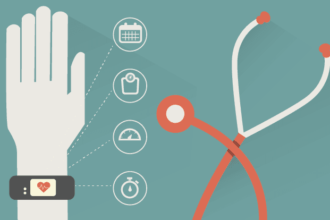
The face of individual health care is changing and improving, thanks to wearables. Wearable health and fitness devices are becoming more popular by the day and with our mobile devices and wearables prompting us to keep up with good health habits, overall health is improving too. As individuals are more aware of their health, more steps are being taken to make improvements such as staying more active, eating healthier, drinking more water, and remembering to take medications on time.
The face of individual health care is changing and improving, thanks to wearables. Wearable health and fitness devices are becoming more popular by the day and with our mobile devices and wearables prompting us to keep up with good health habits, overall health is improving too. As individuals are more aware of their health, more steps are being taken to make improvements such as staying more active, eating healthier, drinking more water, and remembering to take medications on time. Just as impressive as the idea of users taking better care of themselves is the projected growth for wearables. Estimates put the industry over $173 billion by 2020.
Just as individuals are using wearables and mobile fitness devices to monitor their health and make improvements, clinical trial companies are able to improve upon the quality and volume of data they are collecting. Wearable electronics have the potential to make data collection more often and accurate, and reduce costs. As the wearable industry grows, the potential for application in clinical trials also will increase.
Clinical trials are able to collect data from wearables in a number of ways. While smart watches and wristband wearables are most popular, there are other wearable technologies that will come to the forefront for both healthcare and clinical trials. Smart fabrics, intelligent sensors, ingestables, and even smart contact lenses are all emerging into the wearables market. One of the possible negative aspects of some wearable electronics is that they require user input, which leaves room for errors or misreporting. As new technologies come on the market, they may be able to close this gap. Ingestibles have recently been approved by the FDA and are able to monitor electrocardiogram activity, diagnostic imaging and more (definitely more than vitals measured with wristband devices). The future of ingestibles is positive as they will be able to monitor blood levels, medication levels, and other internal factors that previously would require a doctor’s visit or lab blood draw. These types of new wearables don’t require in-clinic monitoring and less visits. Data will also be able to be transmitted remotely.
Just as Apple technology has paved the way with other technologies in the past, the future of wearables appears to rest again with Apple, especially in the area of clinical trials. In 2015, Apple launched The Research Kit, an application that comes with the Apple Watch. The application allows users to download clinical apps and the data collected is anonymized. Instantly, millions of users can learn about clinical trials and opt in to participate through the data that is already collected through their smartphone. John Wilbanks’, the developer of a Parkinson’s App for The Research Kit called mPower is quoted as saying “After six hours, we have 7,406 people enrolled in our Parkinson’s study. Largest one ever before was 1.700 people.” Bloomberg reported that Stanford University’s cardiovascular trial attracted more volunteers in one day after releasing their MyHeart Counts App than it would normally acquire in a year. (Data from ClinicalLeader.com.) As Apple Watch sensors and measurement tools improve along with the rest of the industry, the potential for obtaining big and better data to answer important healthcare questions increases as well.