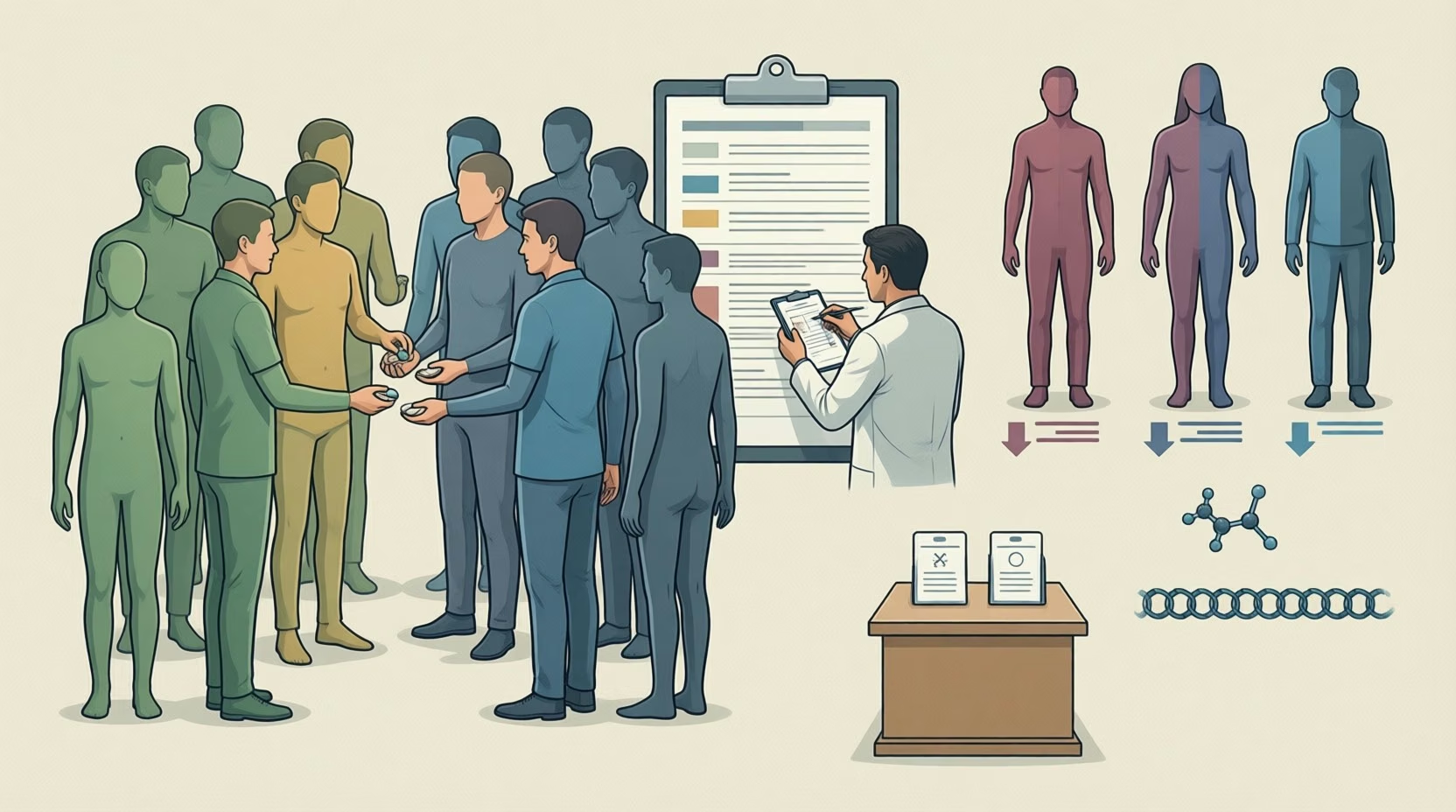
First published on MedCityNews.com. When Orexigen Therapeutics needed to recruit some 9,000 patients for a clinical trial examining the cardiovascular effects of its weight loss drug candidate, big data came to the rescue.
First published on MedCityNews.com. When Orexigen Therapeutics needed to recruit some 9,000 patients for a clinical trial examining the cardiovascular effects of its weight loss drug candidate, big data came to the rescue.
Only it wasn’t big healthcare data. Rather, the pharmaceutical company’s contractor, Blue Chip Marketing, mined consumer data to look for lifestyle clues that indicated certain people were more likely to meet the inclusion criteria of the study.
According to Blue Chip’s executive vice president, Ken Shore, the company was able to find the participants it needed nearly four times faster than originally projected.
Other industries like banking, retail, internet and even health insurance have been using so-called lifestyle based analytics for quite some time to target their marketing efforts. Applying it to clinical trial recruitment allows medical companies to find likely research participants without the challenges of having to rely on privacy-protected medical data to identify patients.
“We are really trying to eliminate any investment or effort spent on patients who wouldn’t qualify for a particular study,” Shore explained. In the case of Orexigen, for example, it didn’t make sense to spend money sending direct mail to healthy, active people when it needed people who were overweight and at-risk for cardiac complications.
So the firm developed algorithms that factored in certain habits indicative of an inactive lifestyle — for example, frequent fast-food purchases or a premium cable subscription. These kinds of data points are collected every day by credit card companies and service providers. Blue Chip worked with data companies like Experian to identify potential subjects and target its direct-mail marketing to those people.
“With the database that we’re able to market to through the use of LBA, the response rate is four times greater than a traditional database,” Shore said. “A lot of that stems from the fact that we’re more confident that the people we’re reaching out to are that much more appropriate for the study.”
Even though the companies that house and sell that kind of consumer data aren’t violating HIPAA, lifestyle-based analytics is still stirring up some privacy concerns. A recent Wall Street Journal article includes accounts of consumers targeted by similar clinical trial recruitment efforts who have filed complaints with the Federal Trade Commission over concerns that their privacy is being violated.
When I asked Shore whether this kind of marketing would become more commonplace in clinical trials, he expressed that although it was more cost-efficient than traditional marketing in this case, it isn’t the panacea for long, costly clinical trial recruitment. We might see more of it, but only in cases when it’s appropriate and relevant, like that of Orexigen’s weight loss drug. Rare, genetic diseases, on the other hand, aren’t easy to identify based on lifestyle clues. “Large, chronic conditions are the best fit for LBA,” Shore said.
[Image credit: BigStock Photos]