Electronic medical records (EMRs) make a lot of sense. Ideally they capture, store, and report on all the pertinent information that’s floating around out there concerning your health. One of the supposed advantages of EMRs is their ability to sort through vast quantities of health data to “alert” physicians 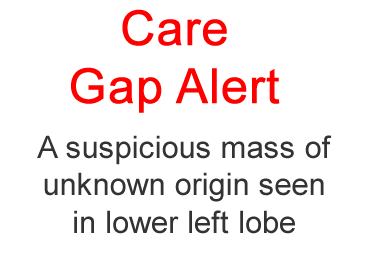 Electronic medical records (EMRs) make a lot of sense. Ideally they capture, store, and report on all the pertinent information that’s floating around out there concerning your health. One of the supposed advantages of EMRs is their ability to sort through vast quantities of health data to “alert” physicians to important gaps in your care.
Alerts are triggered when something in your EMR is flagged (think red flag) indicating that something that is supposed to happen to you has not yet happened….and vice versa For example, EMRs can alert physicians when you are overdue for a screening test. They can also alert physicians to lab and radiology test results that need to be followed up on.
It Is A Great Way To Engage Patients
Since everyone is so concerned about getting patients more engaged in their health care…why not start by turning the computer screen around and showing patients the “alerts” in their EMR. I am sure that will get most patients’ attention.
More Read

Here’s why this is necessary
A study in a recent issue of the Journal of General Internal Medicine found that care gaps persisted among primary care physicians using EMRs and alerts. Researchers found that:
- Physicians failed to follow-up abnormal lab test resultsin a timely fashion (
- Physicians failed to follow-up abnormal radiology test results in a timely fashion in 1% to 36% of patients.
Remember these where practices in which the EMR system was capable of generating electronic alerts telling the treating physicians that action was needed. These follow-up rates are not all that different from similar studies of physician practices without EMRs.
The lack of timely follow-up by physicians reported in these studies resulted in otherwise preventable hospitalizations and delays in initiating time-sensitive cancer diagnosis and treatment.
In my wife’s case, her Non Small Cell Lung Cancer was identified in a hospital employee health screening when it was Stage 1… yet she was not told of the finding for some 5 years later at which time she was Stage 4. This despite a “paper copy” of the radiologist report (chest X-ray) being sent to her PCP, OB-GYN and Employee Health Medical Director.
Why The Lack Of Timely Follow-Up?
Researchers have found that primary care physicians in integrated delivery systems receive an average of 57 alerts per day. Among the reason given for the lack of timely follow-up, despite the alerts, were the following:
- Physicians were found to be less likely to acknowledge alerts when they are behind schedule.
- Physicians focused their attention on alerts concerning patients with greater “clinical burdens” (e.g., providers were more likely to acknowledge alerts about elderly or highly co morbid patients).
- Physician lack of knowledge – physician knowledge of EMR alert-management features in one study ranged between 4% and 75%. Almost half (46%) of providers did not use any of these features, and none used more than two. Put another way, many physicians don’t know how to use all the features of their EMR system.
- Physicians ignored or turned the alert function off
The Take Away?
If you are a patient in a practice that uses an EMR, politely tell your physician that you would like to see any alerts that pertain to you. If there aren’t any – fine. If there are, simply ask your doctor what’s the plan for addressing the outstanding issue. He or she may well have a good reason for ignoring the alert which I am sure they would be happy to explain to you.
If you are a patient in a “pencil and paper” practice, ask your physician what his/her policy is regarding test result notification, including timeliness. Ask what their policies and procedures are to make sure that no one – particularly you – falls through the cracks. Never leave your doctor’s office without a copy of all your test results!
If you are a physician with an EMR system…learn how to use the darn thing. Your patients will appreciate you for it and I dare say you prevent what happened to my wife and me.
That’s what I think. What’s Your Opinion?
Sources:
Hysong, S. et al. Provider management strategies of abnormal test result alerts: a cognitive task analysis. Journal American Medical Informatics Association. 2010;17:71–77.
Singh, H. et al. Timely Follow-up of Abnormal Diagnostic Imaging Test Results in an Outpatient Setting. Archives of Internal Medicine. 2009;169(17):1578-1586
Sittig, D. et al. Improving Test Result Follow-up through Electronic Health Records Requires More than Just an Alert. Journal of General Internal Medicine. 2012 Oct;27(10):1235-7.