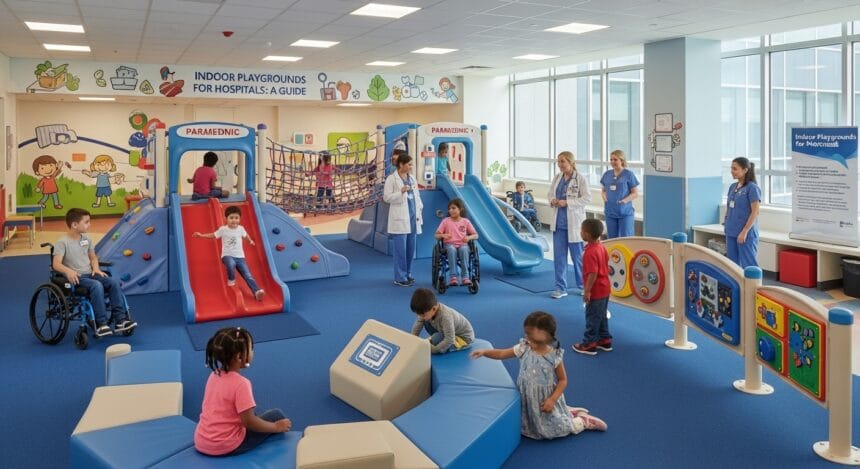
Hospitals can be intimidating places for children. The combination of bright lights, unfamiliar equipment, sterile smell, long waiting times and fear of the unknown can make medical visits stressful for young patients and their families. One way you can make the experience more pleasant for them is by adding an indoor playground. Read on to discover how an indoor playground can make children feel more at ease in a hospital.
- The Benefits of Indoor Playgrounds for Hospitals
- 1. Reduces Stress and Anxiety for Young Patients
- 2. Supports Physical and Mental Development
- 3. Encourages Social Interaction
- How to Implement an Indoor Playground in Your Hospital
- Evaluate Your Available Space
- Determine Your Goal
- Put Safety and Hygiene First
- Add Inclusive Design and Varied play
- The Trusted Choice in Hospital Playgrounds
- Frequently Asked Questions About Indoor Playgrounds for Hospitals
- How to design an indoor playground?
- Are indoor playgrounds safe for healthcare environments?
- Where should hospitals place indoor playgrounds?
- Playtime Pays Off
The Benefits of Indoor Playgrounds for Hospitals
More than 30 million children visit the emergency department every year, and that doesn’t cover routine visits, medical checkups and children who have to undergo ongoing treatments. Here are three ways indoor playgrounds can help your young patients and their families.
1. Reduces Stress and Anxiety for Young Patients
With doctor anxiety peaking between 6 months and 4 years old, many pediatric patients are at an age when medical visits can be especially stressful. The unfamiliar sights, sounds and procedures can make them feel frightened or anxious. Indoor playgrounds in hospitals can provide a helpful escape. Many children see them as safe, homelike spaces that bring a sense of normalcy into a large institutional environment.
When children focus on play, they typically forget about the stress connected to their visit. Climbing, exploring and interacting with other kids helps them release nervous energy and regain a sense of control. Play also promotes laughter, which lowers their cortisol levels and helps reduce stress. Plus, spending time in an indoor playground can make waiting times feel shorter. Instead of sitting anxiously in a waiting room, children have something positive to look forward to.

2. Supports Physical and Mental Development
In addition to entertainment, play also supports healthy development. Indoor playgrounds in hospitals give young patients opportunities to move their bodies. This helps them maintain normal blood sugar, lower the risk of several chronic diseases and support a healthy weight.
Kids can also build important motor skills in an indoor playground by running, jumping, skipping, climbing, and moving in exciting ways. For example, some play spaces include features like ball pits, where they can practice throwing and catching while improving coordination. Moreover, activities like climbing structures can strengthen muscles and improve balance. Even small playgrounds can support healthy development. Simple activities with modeling clay or play-dough help children develop fine motor skills by using the small muscles in their hands and fingers.
Play is good for brain development, too, since it allows them to explore with their senses, ask questions and satisfy their curiosity. Imaginative play and pretend help them develop creativity, while problem-solving activities help them build critical thinking skills, understand cause and effect and strengthen memory.
You can also build an indoor playground in your hospital for children recovering from surgery or illness. Gentle play can act as an enjoyable form of physical therapy to encourage healing without making children feel like they’re doing hard work.
3. Encourages Social Interaction
Hospitals can be an isolating place for children, as these facilities separate them from their normal routines, friends and school activities. Having an indoor playground in your hospital helps address this problem by creating a social space where they can interact with kids their age. Through play, children can talk, laugh and form small friendships.
Parents also benefit from these spaces. Watching their children laugh and play during a hospital visit can bring comfort during a stressful time. Additionally, parents can meet other families who may be experiencing similar challenges related to illness or hospitalization.
How to Implement an Indoor Playground in Your Hospital
If you’re thinking about installing an indoor playground in your hospital, here are a few steps that can help you add one successfully.
Evaluate Your Available Space
Start by identifying where the playground could go. If you’re adding it to an existing facility, think about areas where children and families already spend time. Common areas include waiting rooms, the pediatric department and rehabilitation areas.
Determine Your Goal
Next, decide what you want the playground to achieve. Your goal might be to reduce stress during long waiting times, support pediatric therapy or improve patient experience scores. Knowing your purpose will help guide the type of equipment and layout to choose.
Put Safety and Hygiene First
Safety and hygiene are essential in healthcare facilities where children may have different medical needs. You can consult with a professional playground design and manufacturing team to help you understand how to make the spaces as safe as possible, meet healthcare standards, and still be fun enough for kids to use.
Add Inclusive Design and Varied play
To ensure more children, including those who use mobility devices, can participate, create an inclusive space with ADA-compliant equipment. Consider adding digital play like motion-activated games, sensory play where children can explore textures and shapes and active play structures such as small slides and climbing blocks. You can also add quiet areas with books or art supplies for children who feel overstimulated or who prefer calm activities.
The Trusted Choice in Hospital Playgrounds
Soft Play has been providing play environments since 1984. Over the years, it has become an industry leader in designing indoor playgrounds for hospitals that do more than entertain. The company treats play as a form of therapy, which is why many of its playground solutions support physical therapy, occupational therapy and emotional well-being. This helps children to enjoy activities that promote their healing while also having fun.
One advantage hospitals and other healthcare settings will appreciate is flexibility. Soft Play offers modular playground solutions, so its equipment can fit a wide range of hospital spaces. You can install compact play panels in waiting areas or create a larger indoor playground in a dedicated room. It also allows customization with branding or themed elements.
Since the playgrounds are ADA-compliant, children with mobility devices and different abilities can access and enjoy the equipment. Moreover, Soft Play puts safety and hygiene at the heart of its design. The company uses foam sculptures and durable rubber in its equipment to provide children with comfort and protection. Its components are also made from medical-grade materials with antimicrobial properties to support infection control and make them last even with frequent cleaning.
Frequently Asked Questions About Indoor Playgrounds for Hospitals
The following are some commonly asked questions about hospital indoor playgrounds.
How to design an indoor playground?
You can design the right indoor playgrounds for hospitals by partnering with an experienced company. They have the solutions to help you create a customized play area that fits your space, meets healthcare requirements and supports children of all abilities.
Are indoor playgrounds safe for healthcare environments?
Yes. Many companies offer indoor playgrounds for hospitals with soft materials, enclosed structures and durable surfaces that meet strict safety standards.
Where should hospitals place indoor playgrounds?
Common locations include pediatric waiting rooms, children’s wards, rehabilitation spaces and family lounges. The best location depends on your hospital layout and patient needs.
Playtime Pays Off
Indoor playgrounds for hospitals may seem like a simple addition, but their impact can be significant. These play spaces give children the opportunity to move, explore and laugh.