

What’s the first thing that comes to your mind when you see or hear the term, “breast cancer?” Is it the image of thousands of women walking hand in hand on an awareness-building fundraising journey? Is it Breast Cancer Awareness Month? Is it the color pink being worn by NFL football players? Or is it perhaps the heartbreaking memory of a loved one lost? Chances are that none of these associations include men, unless they are playing the supportive role of husband, father or brother.
What’s the first thing that comes to your mind when you see or hear the term, “breast cancer?” Is it the image of thousands of women walking hand in hand on an awareness-building fundraising journey? Is it Breast Cancer Awareness Month? Is it the color pink being worn by NFL football players? Or is it perhaps the heartbreaking memory of a loved one lost? Chances are that none of these associations include men, unless they are playing the supportive role of husband, father or brother.
The truth is a different story: Each year several thousand men are, indeed, diagnosed with breast cancer.
Breast cancer in men is rare, but it’s real. According to the National Cancer Institute at the National Institutes of Health, 2,190 cases of male breast cancer were diagnosed in 2011, less than one percent of all breast cancers in the United States.

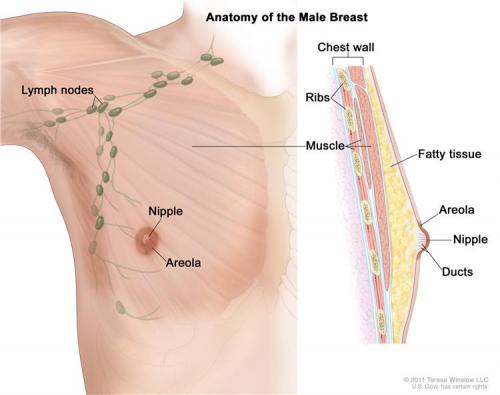
What many people do not know is that women and men have breast tissue, but the tissue in men tends to stay small and flat. However, this tiny amount of nonfunctioning tissue – located in a small concentrated area right behind the nipple on the chest wall – can still experience uncontrolled growth of abnormal cells.
Risk Factors
As with any cancer, there are certain risk factors for male breast cancer, the primary factor being increasing age. Breast cancer in men is most common between the ages of 60 and 70, with the median age being 67.
Another risk factor is the presence of abnormally high estrogen levels. Hormonal medicines, being overweight, heavy alcohol use, liver disease, and environmental estrogen exposure (from hormones used to fatten beef cattle) can all cause elevated estrogen levels, thus increasing a man’s breast cancer risk. Men with Klinefelter syndrome, radiation exposure or a strong family history of breast cancer are also at a higher risk for developing breast cancer.
Reducing the Risk
Women in the United States are typically advised from an early age to perform breast self-examinations and be on the lookout for any changes that may warrant a doctor’s visit. This is also a smart risk-reducing practice for men to adopt. Most men do not think to perform self-examinations on their breasts. This is where doctors and nurses need to educate patients. Specifically, men need to watch out for signs like: nipple pain, an inverted nipple, enlarged lymph nodes under the arm, sores on the nipple and areola, nipple discharge or a lump in the breast.
Risks for any cancer can be both environmental and genetic. Certain risk factors cannot be controlled, but others can, such as limiting one’s alcohol intake and maintaining a healthy weight through a balanced diet and regular exercise.
It is important to note that while there are men with the above-mentioned risk factors who never get breast cancer, there are even more men with no risk factors who do get it.
A Look at the Anatomy of the Male Breast
Breast cancer is best understood when one has some working knowledge of normal breast structure.
Don’t Neglect the Signs
Men often have the reputation of dragging their feet when it comes to regularly scheduled visits to their physician. Unfortunately, neglecting routine preventive care can result in a delayed diagnosis, whether it’s breast cancer or some other life-altering condition. If you’re a man and have never considered the possibility of getting breast cancer, it’s time to do so this October. Yes, male breast cancer is rare, but so are a lot of life threatening diseases. Don’t take a gamble on something as important as your life. Make Breast Cancer Awareness Month the beginning of a new habit to promote better health.





_9_2_1-250x220.jpg)
