Readers of this blog, and those with whom I have shared my philosophy of medical practice, know that I am a conservative practitioner. I rail against overdiagnosis and overtreatment. Less medicine results in more healing and protection. In an example, I have explained previously why I advise patients not to undergo total body scans, despite the lure that they offer a cancerophobic public. Readers of this blog, and those with whom I have shared my philosophy of medical practice, know that I am a conservative practitioner. I rail against overdiagnosis and overtreatment. Less medicine results in more healing and protection. In an example, I have explained previously why I advise patients not to undergo total body scans, despite the lure that they offer a cancerophobic public.
I’ve never undergone a CXR in my life. I’ve never entered medicine’s Tunnel of Adventure, also known as a CAT scan. My fear would be that the scan would show various internal imperfections of no meaning that would generate anxiety, expense and a cascade of medical tests to follow up on the ‘abnormalities’. Any real patient reading this who has been around the block once or twice, will validate my scanophobia. Not a week goes by in my practice, that I am not facing a worried patient who was found to have some trivial finding on a scan that nearly always is entirely innocent. Often, the scan was not necessary in the first place.
Not surprisingly, I have never had a stress test. I should say that I have never had a cardiac stress test. As a living breathing human being, I face stress tests every day. Not sure what I mean here? Consider the last time you called an airline’s customer service representative. If you have done so and have not suffered angina during process, then you are likely to have no significant coronary artery disease. You have passed the stress test.
As I write this, I am seated in the Detroit airport, waiting for my connecting flight to take me to Boston. Every aspect of air travel is a stress test; from the moment that I book tickets on line to the time that I sink into the plush and spacious seat that can comfortably accommodate a skinny gerbil.
I have just discovered that my flight is delayed 50 minutes, or so they say. I fear that the dreaded Delay Creep (DC) might set in here. Here’s how this works. They announce a 50 minute delay. Forty minutes later, the delay is extended 35 minutes. A half hour later, an announcement advises the smiling passengers that an update will be forthcoming at a time of their choosing. DC in its purest form ends hours later with the flight’s cancellation. My mom had this exact experience on her way to visit me in Cleveland. Did the $14.00 food voucher make her whole?
Air Travel is Stressful
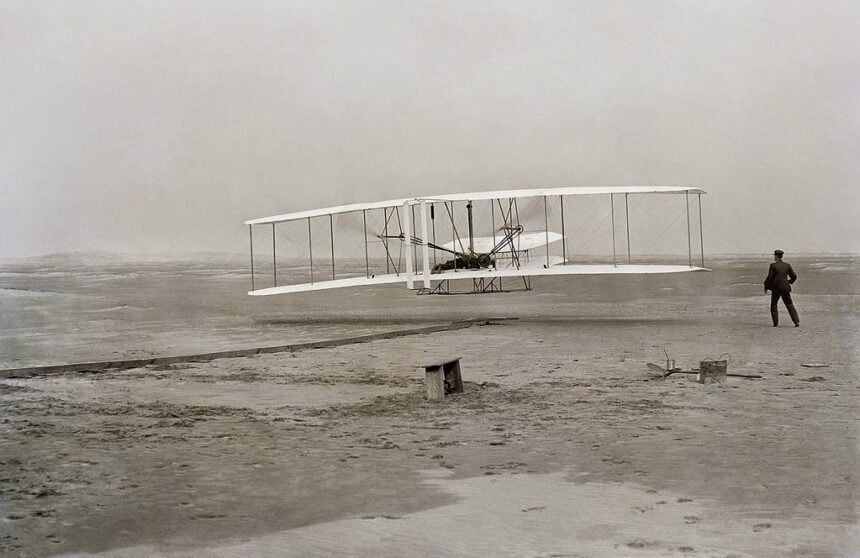
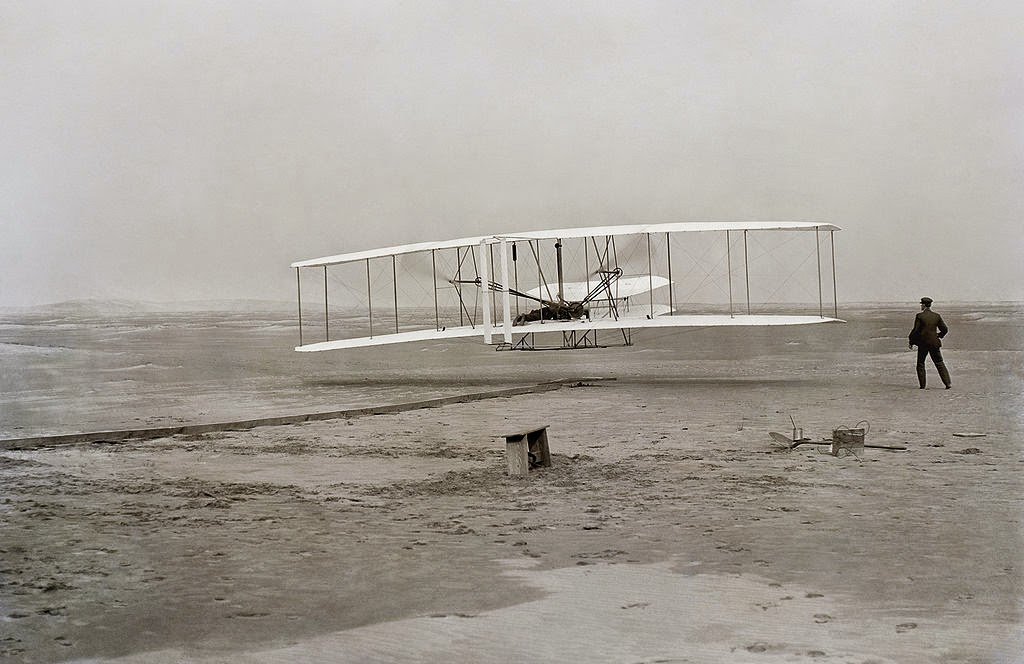
The Wright Brothers – 1903
Patients have complained long before I earned a medical degree about unreasonable waits to see their doctor. We do our best to run an on time shop, but there are times that we miss the mark. Sometimes, it is our fault. We come to the office late. We squeeze patients into the schedule rather than add them on at the end of the day or tomorrow. We don’t build in ‘firebreaks’ into the schedule knowing that every day brings delays that are not anticipated. For example, if at the conclusion of a patient’s office visit, the patient’s tells me that her husband has cancer, should my response be, “Our time is up today, but please give him my best wishes”?
Sometimes, patients cause delays by arriving late or not doing the paperwork that we request to be done in advance. Additionally, some of our elderly need extra time at home to get ready and need transportation to get to our office. For the most obvious reasons, sometimes they just don’t make it on time despite their intentions to do so. When this happens, which of the following responses do readers advise?
“Glad you made it! Take a few deep breaths in the waiting room and we’ll be with you as soon as we can.”
“Back of the line, Granny!”
Some emergency rooms are using Twitter and other means to update their patients on the wait time.
Can physicians improve in their on-time performance? We have seen in recent years that there is a potent force that can influences physician behavior. Reimbursement. If payment is linked to how long you have to wait for us, then our schedules will run like a Swiss chronometer.
Everyone’s time is valuable. The next time you’re in the waiting room, consider any extra waiting time to be a gift. This is your opportunity to collect your thoughts, read another chapter or two of a gripping novel, write a thank you note to someone in longhand or consider buying a gift for a special person for no reason. Don’t make it a stress test.
Healthcare patients / shutterstock