 With the creation of RIS, PACS and speech recognition, radiology once led the technology revolution in the healthcare industry. Unfortunately, now it is a sector of that industry that has fallen behind, on account of it lagging in the adoption of Meaningful Use (MU) criteria. But just because radiology is behind does not mean adoption is impossible.
With the creation of RIS, PACS and speech recognition, radiology once led the technology revolution in the healthcare industry. Unfortunately, now it is a sector of that industry that has fallen behind, on account of it lagging in the adoption of Meaningful Use (MU) criteria. But just because radiology is behind does not mean adoption is impossible.
This was the discussion presented by Dr. Keith Dreyer at New York Medical Imaging Informatics Symposium (NYMIIS) in New York City on September 16. In fact, MU adoption is picking up in the industry, but not as fast as the rates among physicians and hospitals. The numbers say that as of 2013, about 14% of radiologists are involved in the MU stages, while 50% of physicians are participating. Dr. Dreyer explained that this gap exists because of the silos and compartmentalization that exists between radiology practices and other departments in health facilities. RIS/PACS currently function separately from the EHR, and while progress is being made is alleviating this issue, there is still much to be done.
Ordering, scheduling and communication between physicians and patients are improving, but there remains a vital need for workflow and interpretation of studies. Between the information housed in the RIS/PACS and the EHRs, this is essentially two programs doing practically the same thing in terms of the information stored. Convergence is necessary if workflow and interpretation are to be improved.

Dr. Dreyer explained the fact that only 14% of radiologists are involved in MU is troubling considering that 90% of radiologists are eligible for the incentives. But the growth is promising—while 450 radiologists participated in MU in 2011, that number increased by 3,500 in 2012, and is predicted to increase by 6,000 in 2013, and by 8,000 more in 2014. Growth is occurring, but radiology is still going to be playing catch-up to the rest of the healthcare sector.
To provide guidance, Dr. Dreyer outlined a 10 step plan to help radiologists work their way through MU:
- Understand the MU program—the deadlines and responsibilities.
- Understand your organization’s plan for MU of eligible professionals (EPs)
- Gain institutional acceptance for participation in the organization’s MU/EP plan
- Understand and identify the certified EHR technology (CERHT) to be used for compliance
- Determine MU measures that are available and required in your practice
- Decree MU policies for activities, interpreting the regulations specific to your radiology practice
- Create a comprehensive set of MU compliance documents
- Review compliance documents with institutional stakeholders (CMIO, CIO, etc.)
- Review MU compliance documents among radiology staff
- Implement the strategies early with the appropriate dashboard to measure successes
Following the run-through of these 10 steps, Dr. Dreyer then went on to provide advice for radiology departments of different sizes—small practice/imaging center, medium practice/single hospital and large practice/multi-hospital system/imaging centers. The larger practices are the ones more likely involved in MU because these are the organizations that either already installed their own CEHRT or are able to access the health system’s CEHRT. Because of this, Dr. Dreyer went into more detail about the two smaller categories.
With the small practices and imaging centers, Dr. Dreyer recommended investigating the technology that is common across all centers similar to this size. This should provide some essential background information on the most appropriate solutions to implement. Based on the research collected, he said that it is possible for smaller practices to install a stand along CEHRT solution.
For the single hospital and medium practices, he recommended using existing CEHRT for program compliance. These smaller practices should convince hospital leadership to expand their MU program to include radiologists, since it is most likely focused only on physician EHRs. Much of the data entry will be performed by others, which makes it difficult to take advantage of special exclusions, and may require a pack for use of the technology.
To wrap up his talk, Dr. Dreyer reiterated how MU is marking a new era for radiology. He said that once that complete execution could help and hurt some depending on financial costs and ability to properly maintain the data. Overall, there is no denying that imaging health records are beginning to play a great role in the healthcare space. So much so that we are now beginning to see patients access their images, which is not required until MU stage 3. The MU pace of adoption is speeding up, and radiology cannot afford to be fall behind any further than it already is.
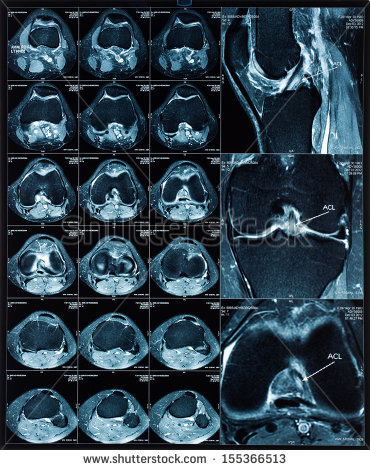
(Medical imaging / shutterstock)




-330x220.jpg)