 A period of a renewal of life, vigor, interest is how renaissance is defined by Random House Dictionary. I think we are currently undergoing an orphan drug renaissance.
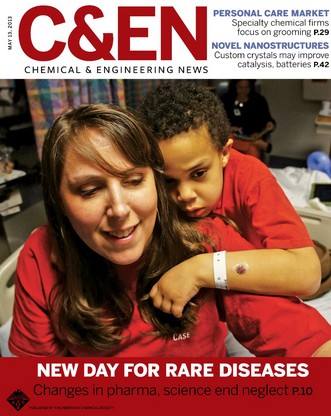
A period of a renewal of life, vigor, interest is how renaissance is defined by Random House Dictionary. I think we are currently undergoing an orphan drug renaissance. This renewed interest is displayed in the cover story of Chemical & Engineering News featuring my friend Melissa Hogan and her son Case. In addition to lovely photos of rare disease families, there are three well written articles by Lisa M. Jarvis that provide an overview of the orphan drug niche.
In Orphans Find A Home, Jarvis explains the changes that have made the tremendous growth of orphan drugs possible: The Orphan Drug Act of 1983, companies like Genzyme and BioMarin have shown orphan drugs are a sustainable business model and the mapping of the human genome. In the piece, Small Audience, Large Payoff, Jarvis describes the orphan drug pricing model and the interest of larger pharmaceutical companies in the space.
HIV activists with the power of social media
I like to compare the role that rare disease advocates play in awareness, funding, research and governmental policymaking to HIV activists. In the late 1980s and 1990s, HIV activists brought attention and funding to the disease and put pressure on the FDA to change. Their efforts made a tremendous difference. Similarly, today there are rare disease advocates who are working to impact individual rare diseases and the overall space. And they have the power of the internet and social media at their disposal!
More Read

Jarvis illustrates the important role that rare disease advocates play in Patients Advocate for Change. She tells the story of Jill Wood whose son Jonah has Sanfilippo syndrome type C (MPS III). Wood recently founded a virtual biotech company to develop any drug candidates that might arise from their research.
This paragraph neatly sums up the reaction so many rare disease advocates get:
Whether it’s to a congressman or a reporter, Wood speaks about Jonah’s disease with urgency, rattling off scientific facts at a speed that can be disorienting for rare disease newbies. After she walks away from a group, there’s often a moment of stunned silence while people digest what they’ve heard, followed by a quiet comment: “Wow. She is amazing.”
The article also mentions the incredible accomplishments of Lori Sames and the Duchenne Muscular Dystrophy families. Sharing these type of inspiring stories was the impetus for Siren’s book, Uncommon Challenges; Shared Journeys. It’s available on Amazon with the profits going to the rare disease organizations mentioned in the book.
Significant growth
A recent report from EvaluatePharma predicts worldwide orphan drug sales to total $127 billion by 2018 with a compound annual growth rate of +7.4% per year between 2012 and 2018. The authors forecast that orphan drugs will be 15.9% of worldwide prescription sales by 2018 (excluding generics). In 1998 orphan drugs represented only 5.1% of worldwide prescription sales.
Do you agree that the rare disease space is experiencing a renaissance?