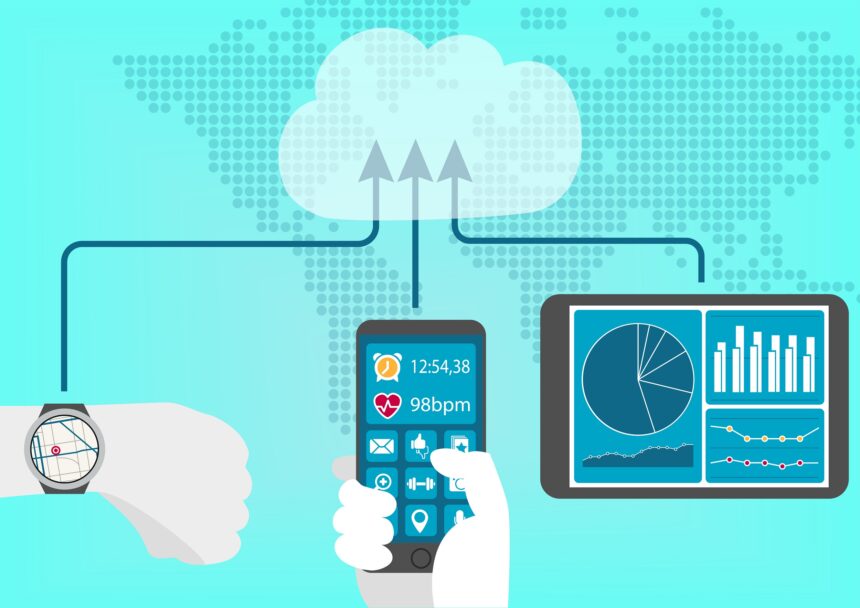
Wearables, mHealth apps, remote sensors, and other connected devices have stridden into the healthcare sphere with head held high, becoming fertile ground for patient-generated health data (PGHD). Such data differs from that obtained within a clinical environment, because the responsibility to collect the information mainly rests with patients or their family members, not with caregivers. Moreover, individuals decide by themselves how to use and share the data.
Some stats
: 76% of patients say the Patient-Generated Health Data usage lives up to their expectations, helping improve their health. 85% of doctors believe that wearables are able to foster patient engagement, and the data generated by these devices plays a key role in monitoring health conditions. However, not all the clinicians welcome this PGHD initiative. According to other findings, merely 15% of physicians agree to include wearables in their treatment plans and discuss this idea with patients. These stats show that there is a dispute about the need to leverage PGHD in a move to increase engagement and bolster wellness.
ONC steps in
The Office of the National Coordinator for Health Information Technology (ONC) has held a wealth of activities to demonstrate the value of PGHD .
- In April 2012, the institution published a white paper to discuss PGHD?s pros and cons. They also covered technical, operational, legal, and other challenged posed to providers, patients, and stakeholders adopting PGHD technologies.
- In early 2014, the organization narrowed and directed public attention to additional opportunities. In their brief, they outlined physician, patient, technical, privacy, and security concerns about PGHD.
- In 2015, ONC partnered with Accenture to develop a policy framework on PGHD. Their white paper gives a window into gathering patient-generated data while maintaining its integrity. This project also gives a close look at PGHD towards the near future (up to 2024) and motivates individuals to donate their health information for research.
PGHD?s role in enhancing patient care
Ardent supporters of personalization technologies explain that PGHD presents a more balanced picture of patients? conditions. Here are some other advantages of this technology:
- Remote monitoring. PGHD proves its worth by showing how individuals feel between medical consultations. Patients can deliver the needed data without scheduling additional appointments and those recovering at home receive round-the-clock assistance.
- Chronic disease control. Thanks to wearables and other IoT devices, physicians get relevant information on an ongoing basis, rather than within a definite period of time. Thus, PGHD is becoming particularly vital for managing chronic diseases: monitoring blood glucose levels via home equipment, measuring pulse via a smartwatch, or controlling weight via an mHealth app.
- Patient engagement. Along with medical portals, social media communities, and educational health programs, PGHD represents another way of empowering, engaging, and inspiring patients to enhance their wellness.
- Better decision-making. PGHD bridges the gaps in the existing clinical information. Physicians check for details on individuals? biometrics, surface more detailed results, and make changes in treatment, if necessary. That all enables clinicians to accelerate decision-making.
- Optimized treatment plans. ONC is not the only body that champions gathering volunteers? health data. The White House spearheaded a similar project ? Precision Medicine Initiative (PMI) ? calling for patients to present their biometrical data for research, allowing caregivers to upgrade their treatment plans.
- Population health management. Together with EHR and claims data, PGHD is becoming a key player in analyzing public health. Such data has already proved its usefulness in raising adherence rates and improving wellness.
- Cost saving. Many clinicians are convinced PGHD can reduce costs. As a case in point, 73% of hospitals that had applied personalization technologies achieved successful financial outcomes.
Voicing unease about PGHD
The PGHD technology has just started gaining its pace, and healthcare providers are still trying to understand its place. Despite many benefits, there are barriers to a wider Patient-Generated Health Data adoption.
- Socioeconomic disparities. There is a wide spectrum of factors that may put a patient in a pole position or restrict their access to IoT devices. Those factors include usability, health literacy, education, age, economic, and other similar disparities.
- Poor integration. This barrier is probably the most challenging to deal with. There are certain impediments to integrating PGHD with third-party software, such as the lack of interoperability with EHR systems and read-only nature of patient portals. In other words, the limited capacity of such systems doesn?t allow users to easily input and analyze health information.
- Security breaches. The data gathered or transmitted via IoT devices is susceptible to cyber and physical attacks. That makes software vendors put their thinking cap on to find the ways of protecting patients? information.
Addressing the challenges
The interrogative nature of this article?s title is no accident. Although Patient-Generated Health Data represents a game-changing factor in delivering better care, still there is a range of hurdles. The solutions to the challenges include automating the process of collecting and analyzing PGHD, creating user-friendly system interfaces, and administering data for the right patient at appropriate time. Moreover, hospitals should task software providers with devising effective ways to integrate PGHD with third-party systems.